


Pick your next pottery project
137 projects, every one of them with a guide or a slab mold behind it. Filter by how you want to make it, how far along you are, and what you want to be holding at the end. That is the whole page.
60 of these need real practice first. They are marked. Picking one too early is how a month disappears.

Three questions, then a list
Showing all 137 projects

20 Easy Projects Beginners Can Hand-Build
Twenty small projects that need no wheel and no experience, each one you can finish in a session. Pick one, make it, pick the next.

How to Throw on the Pottery Wheel
The complete guide. Ten fundamentals, twenty one things that go wrong with the cause of each, and three skill levels with the cutoffs spelled out.
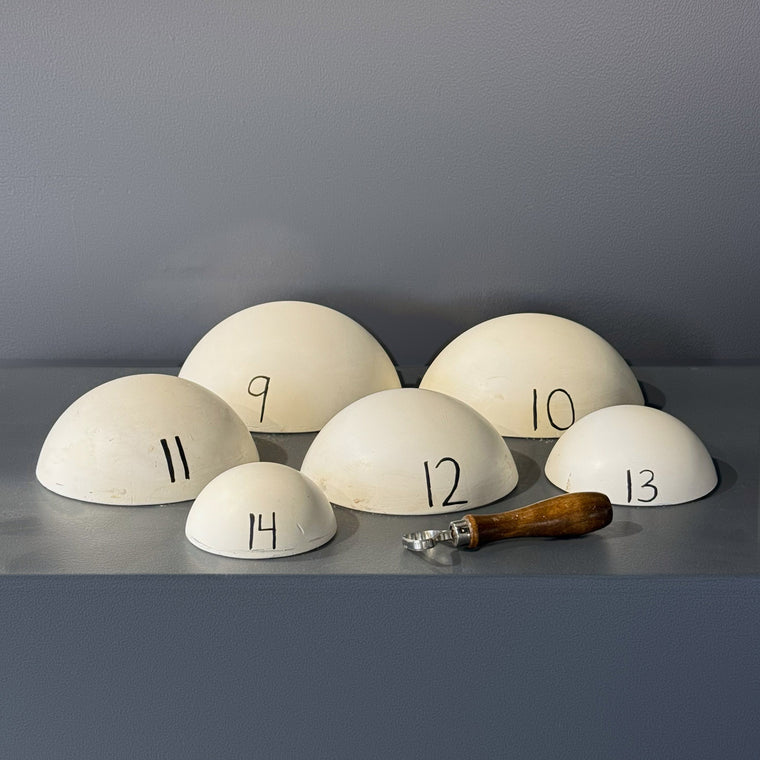 Slab molds 9 to 14
Hemisphere Bowl (set of 6)
One of the two largest domes in this graduated family, and the one that makes the everyday serving bowl - big enough for a shared side dish, small enough to hold in one hand while you eat out of it.
1 to 3.5 lbs of clay to start, rolled 1/3 in thick

Imprinting Textures
Real flowers, leaves, fabric and lace pressed straight into a slab. What leaves a crisp mark, what burns away, and what sticks.

Ceramic Tiles That Stay Flat
The simplest thing to make and the easiest to warp. Almost all of it happens while it dries.
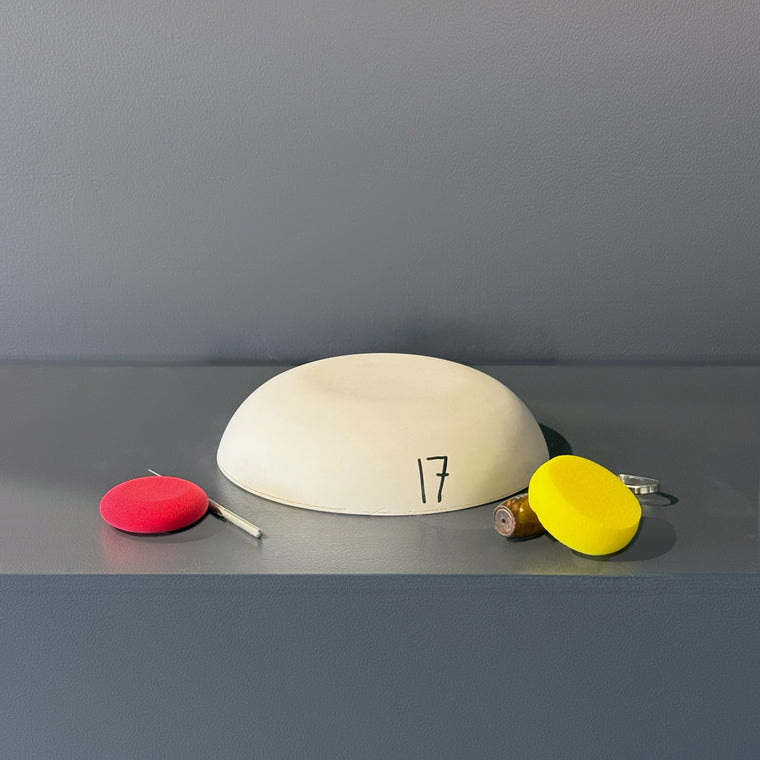 Slab mold 17
Everyday Pasta Bowl
The classic everyday bowl proportion - wide enough to be useful, shallow enough that food sits up where you can see it.
6 lbs of clay to start, rolled 1/2 in thick

40 Ways to Add Texture, and When to Apply Each
One long reference. Forty techniques, from stamps and roulettes to slip trailing, faceting and sandblasting, each with the stage of the clay it actually wants.

Ceramic Jewelry: Earrings, Beads and Pendants
Small, quick, and the fastest way to learn how much clay shrinks. Holes, findings, and what survives being worn.
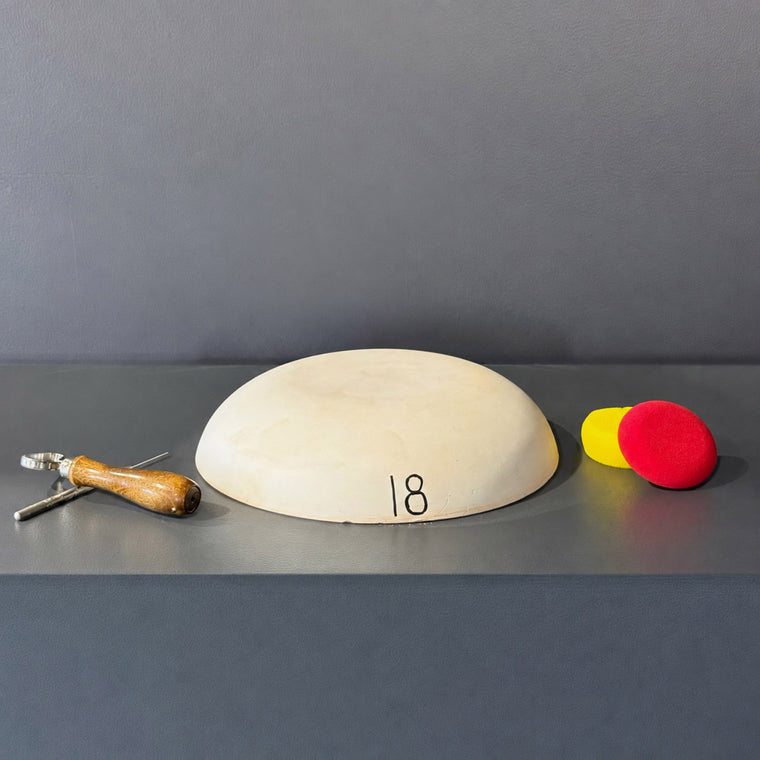 Slab mold 18
Large Serving Bowl
A step up into serving territory. The low profile keeps the piece from feeling heavy despite its width, so it works as a salad bowl that lives on the table, a shallow fruit bowl, or a low centerpiece bowl you f
7 lbs of clay to start, rolled 1/2 in thick

Kintsugi with Epoxy and Mica
The version you can do at a table in an evening. Two-part epoxy, mica powder, and a mend that is meant to be seen rather than hidden.

Making Planters Based on What You Are Planting
A succulent and a fern want different pots. Drainage, depth, width and wall thickness, decided by what is going to live in it.
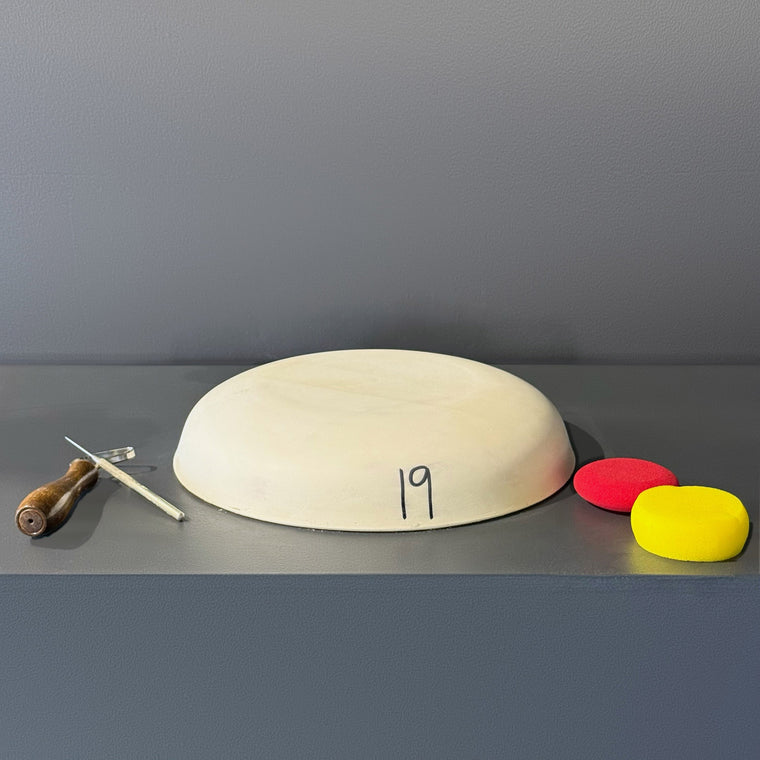 Slab mold 19
Wide Shallow Fruit Bowl
Almost a platter with a lip. That flat generosity is the point - bread and cheese, a pile of stone fruit, a bowl of limes on a bar cart.
7.5 lbs of clay to start, rolled 1/2 in thick

How to Make a Pinch Pot
The oldest way to make a pot and still the fastest way to understand what clay will and will not do.
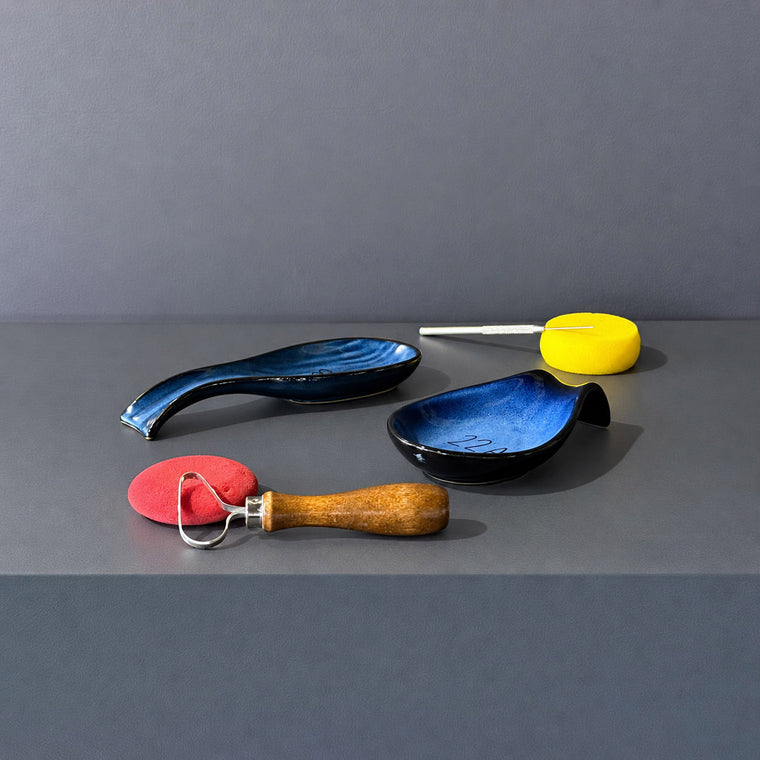 Slab molds 22
Teardrop Spoon Rest (set of 2)
A found-object mold at the smallest useful scale. The teardrop outline gives a finished piece with a point and a curve, which is exactly the geometry a spoon rest wants - the handle sits in the taper.
1 to 1.5 lbs of clay to start, rolled 1/3 or 1/2 in thick

How to Coil Build Pottery
Building height without the walls leaning, and blending the joins so the finished piece does not read as a coil pot at all.
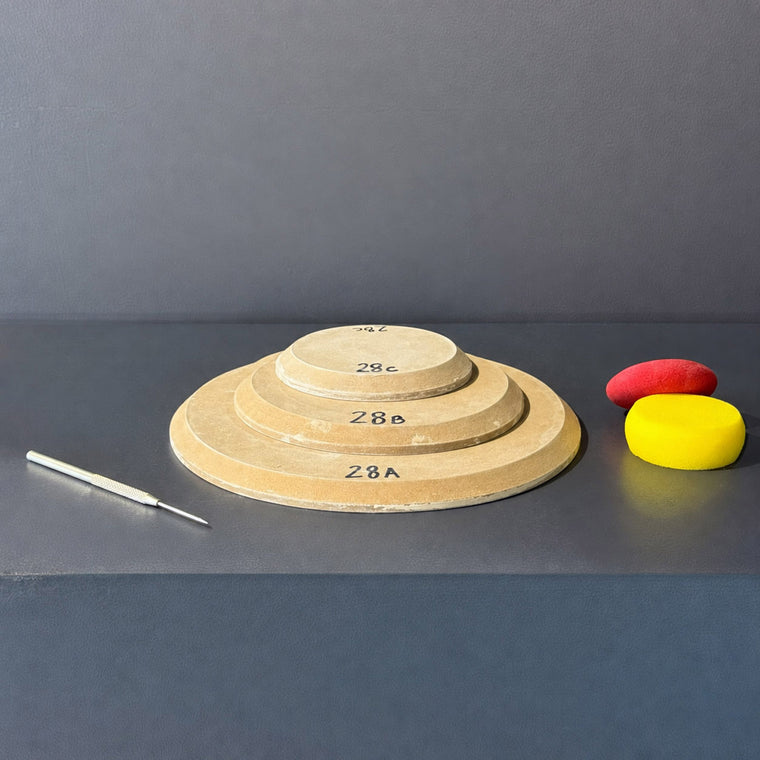 Slab molds 28
Round Nesting Plate (set of 3)
A three-piece round nesting set in HDF. Because all three share one profile, pieces made across the set stack and read as a family, which is the whole point of a graduated set - you get a coherent collection in
1.5 to 8 lbs of clay to start, rolled 1/3 or 1/2 in thick

How to Make a Slab Mug
A mug built from a flat sheet, seam and all, with no wheel anywhere near it.
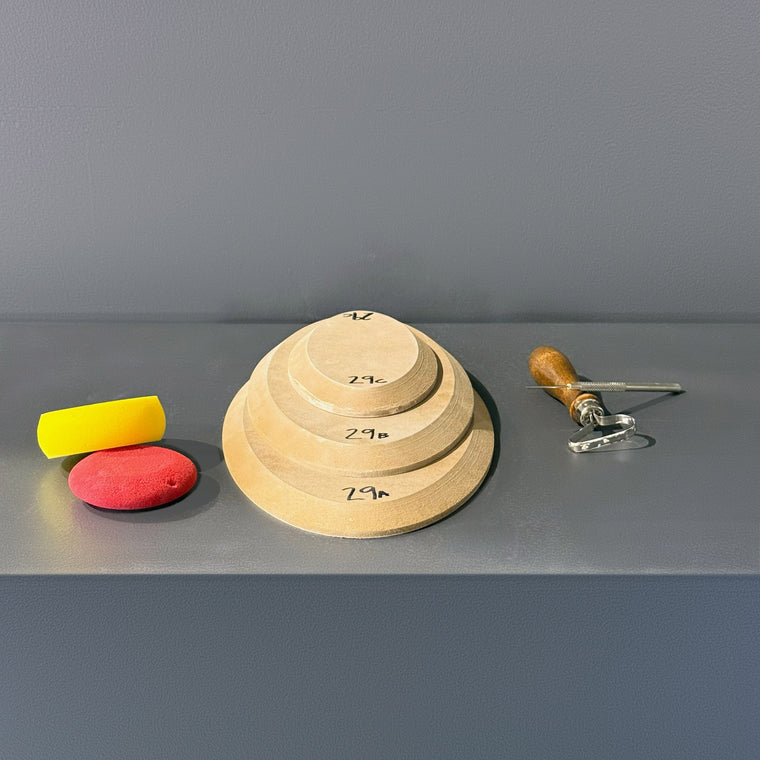 Slab molds 29
Oval Nesting Dish (set of 3)
A three-piece oval nesting set in HDF. Ovals give a table direction in a way circles never do, and a graduated trio of them arranged together looks composed rather than accidental.
1.5 to 5.5 lbs of clay to start, rolled 1/3 or 1/2 in thick

A Beginner's Guide to Sculpting
Where to start when the thing you are making is not a pot. Solid or hollow, how thick, and the point at which it has to be hollowed out.
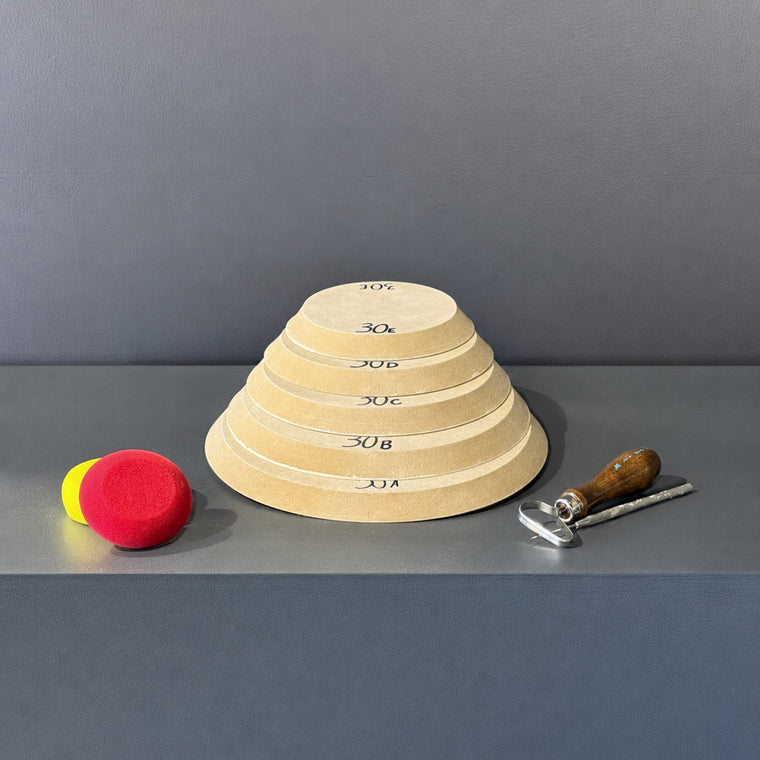 Slab molds 30
Chamfered Round Plate (set of 5)
A five-piece round set in HDF with a chamfered edge, so every finished piece gets a clean angled rim rather than a soft rolled one.
2 to 7 lbs of clay to start, rolled 1/3 or 1/2 in thick

Using Cookie Cutters on Clay Slabs
The plastic wrap trick that stops shapes sticking and rounds every edge as you cut, plus how to dry flat shapes without curling.
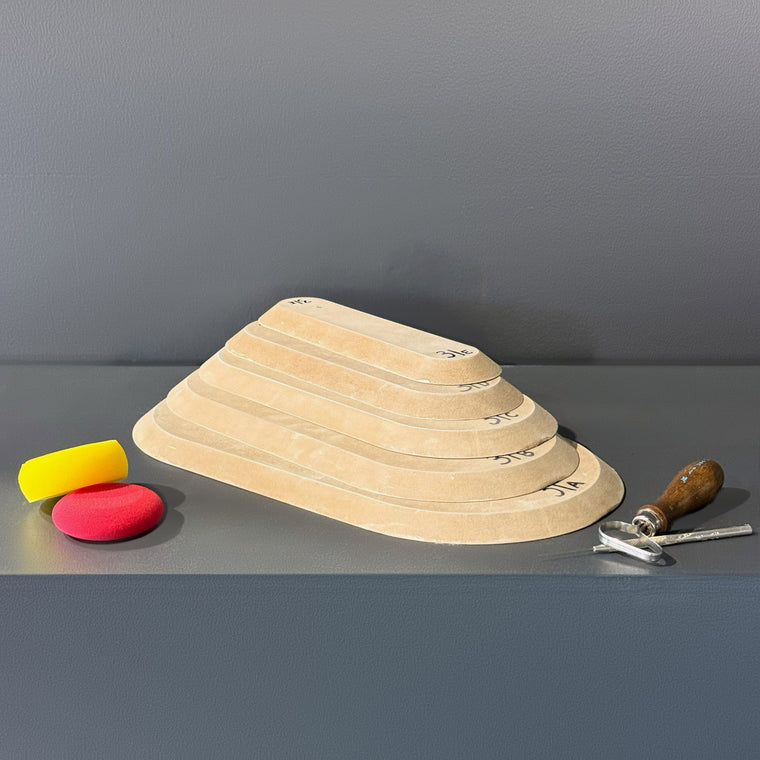 Slab molds 31
Rounded Rectangle Tray (set of 5)
A five-piece set of soft-cornered rectangles in HDF. Rectangular ware is the hardest thing to build convincingly by hand, so a graduated set like this is genuinely valuable - straight sides and matching corners
4.5 to 9 lbs of clay to start, rolled 1/2 in thick

Using Any Dish or Pan as a Slump Mold
Your kitchen is full of slab molds you already own. Plastic wrap in between, or you will be explaining to somebody why their salad bowl has a pot in it.
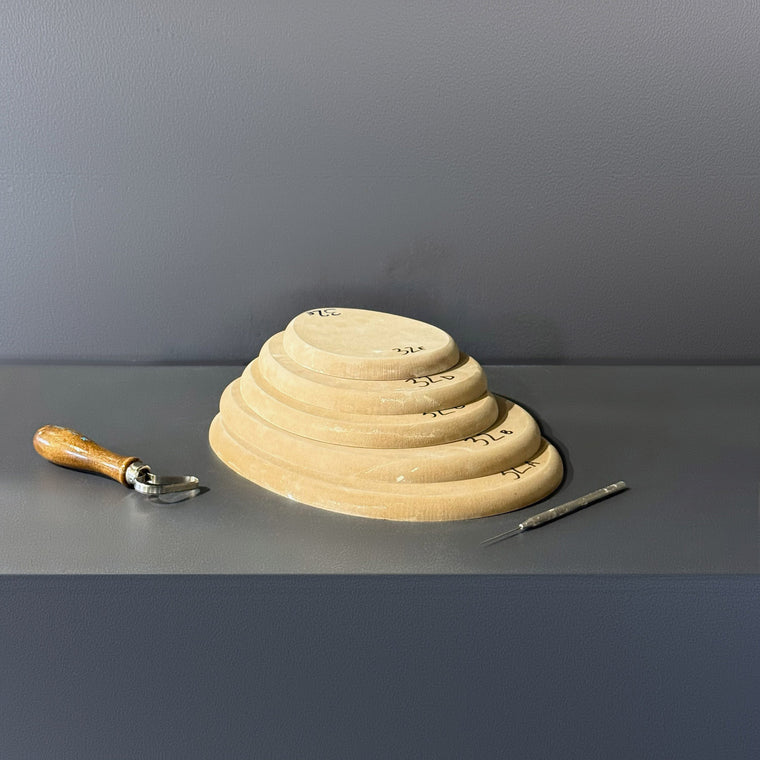 Slab molds 32
Egg-Shaped Plate (set of 5)
A five-piece oval set in HDF. Ovals read as more intentional than circles and they fit a rectangular table more efficiently, which is why oval serving pieces keep coming back into fashion.
2 to 6 lbs of clay to start, rolled 1/3 or 1/2 in thick

Making Your Own Stamps and Maker's Mark
Carve one, bisque it, and it works forever. The one tool on this list you will still be using in ten years.
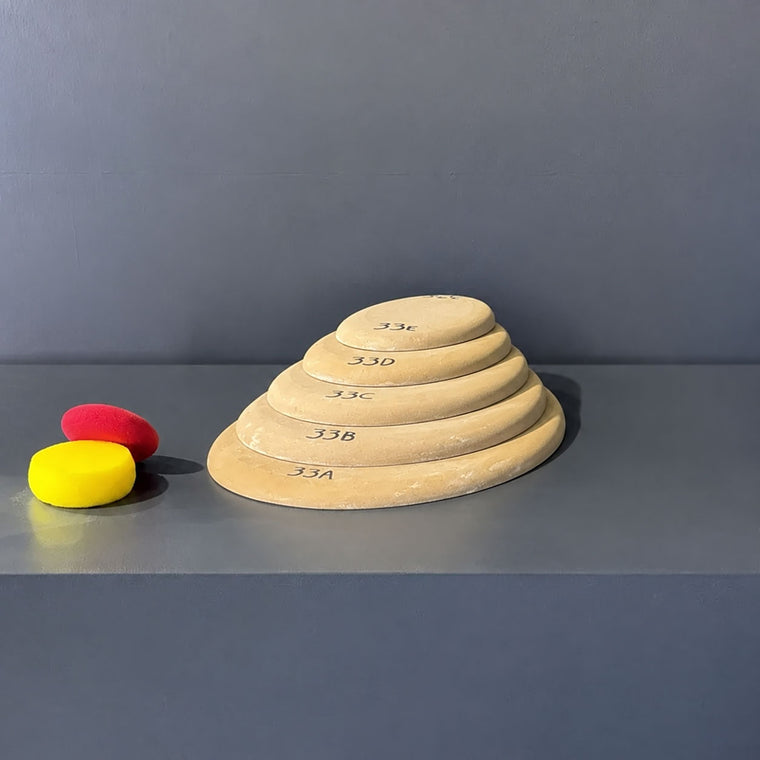 Slab molds 33
Organic Oval Plate (set of 5)
A five-piece oval set in HDF, running smaller than its sibling set - this is the family for small dishes and personal ware rather than serving pieces.
2 to 6.5 lbs of clay to start, rolled 1/3 or 1/2 in thick

Making a Glaze Catcher
Insurance for a glaze you know is going to run. Thrown catchers, pinch pot catchers, and the glue and clay ball trick on a cookie.
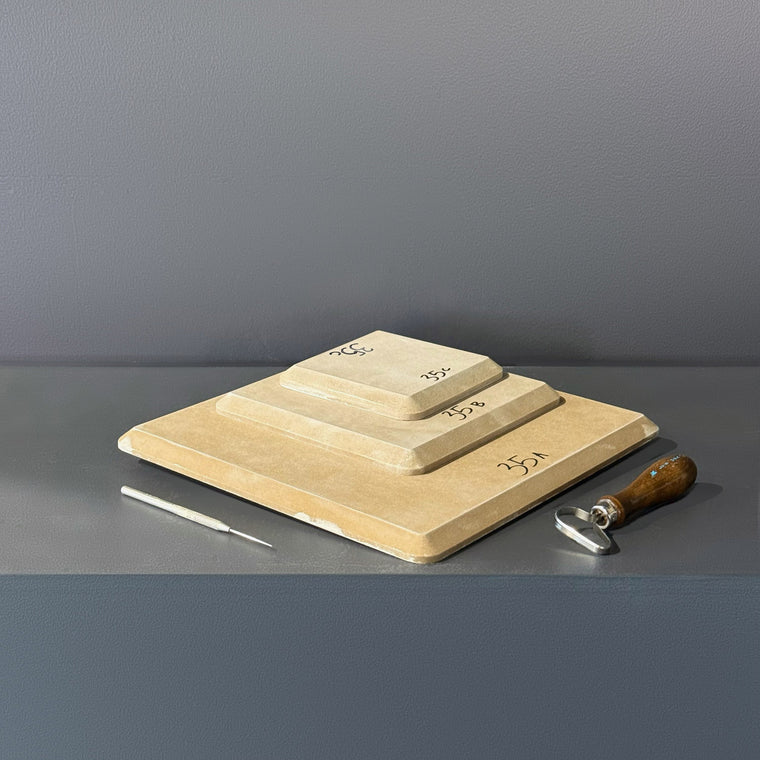 Slab molds 35
Square Tray (set of 3)
A three-piece square set in HDF. Squares fill a table more efficiently than circles and stack better in a cupboard, and a graduated trio gives you a full place setting in one geometry.
2.5 to 14 lbs of clay to start, rolled 1/3 or 1/2 in thick

Making Your Own Damp Box
A tub, a plaster slab and some water. It holds work at leather hard for weeks instead of days, which is most of what stops a project stalling.
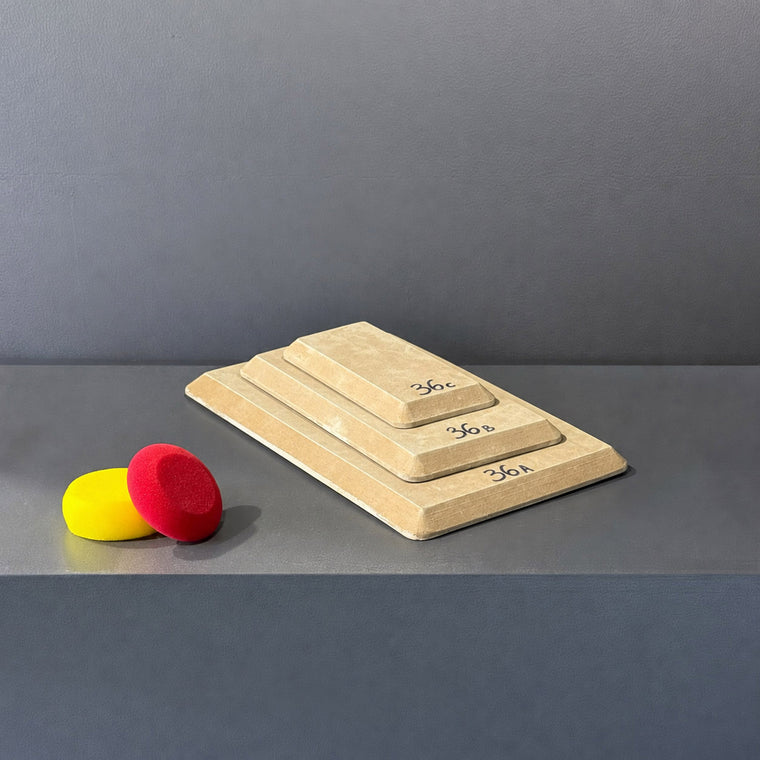 Slab molds 36
Rectangle Tray (set of 3)
A three-piece rectangular set in HDF, thin enough that pieces come off nearly flat.
2 to 9 lbs of clay to start, rolled 1/3 or 1/2 in thick

Making, Logging and Dialing in Test Tiles
Tiles that stand up, take a number and show a glaze the way a pot will, then a log that turns a pile of them into a library. Ours are already fired for choosing; yours are for combinations, coats, texture and your own clay.
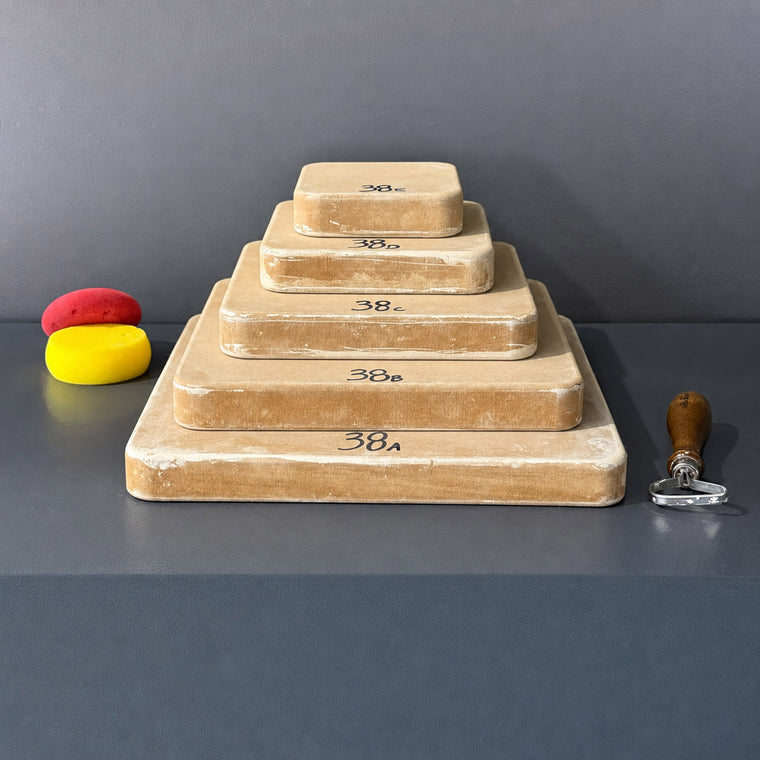 Slab molds 38
Deep Rectangle Dish (set of 5)
A five-piece set of deep, soft-cornered rectangles in HDF. The combination of a rectangular footprint and real depth is rare and hard to build by hand - these give you rectangular vessels rather than rectangula
1.5 to 10.5 lbs of clay to start, rolled 1/3 or 1/2 in thick
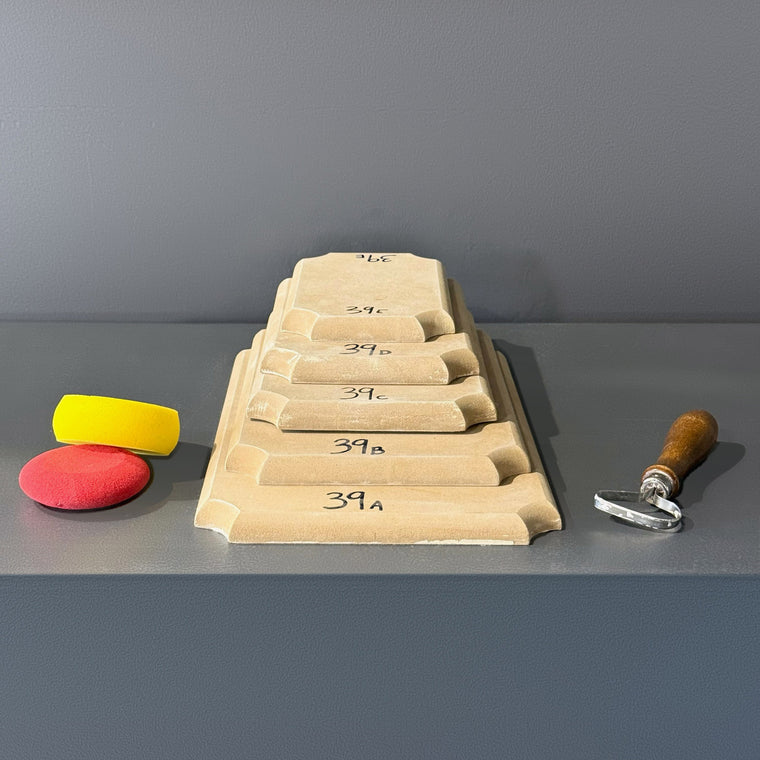 Slab molds 39
Notched-Corner Tray (set of 5)
The largest of the wave-edge set, and a rectangle rather than a square - about three to two, which is the proportion most serving boards want.
4 to 7.5 lbs of clay to start, rolled 1/2 in thick
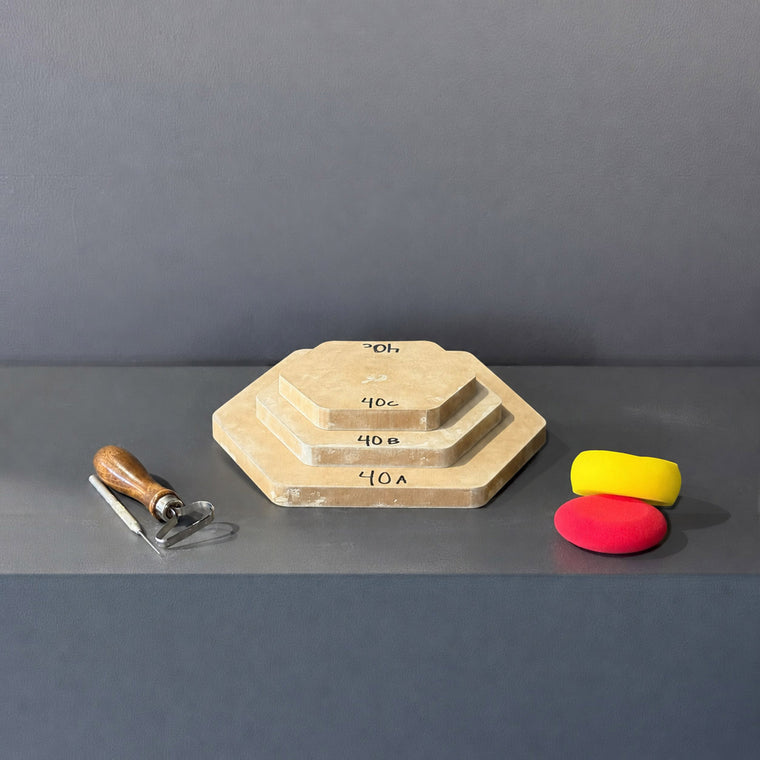 Slab molds 40
Hexagon Tray (set of 3)
A three-piece octagonal set in HDF, and thin, so pieces come off nearly flat.
2 to 7 lbs of clay to start, rolled 1/3 or 1/2 in thick
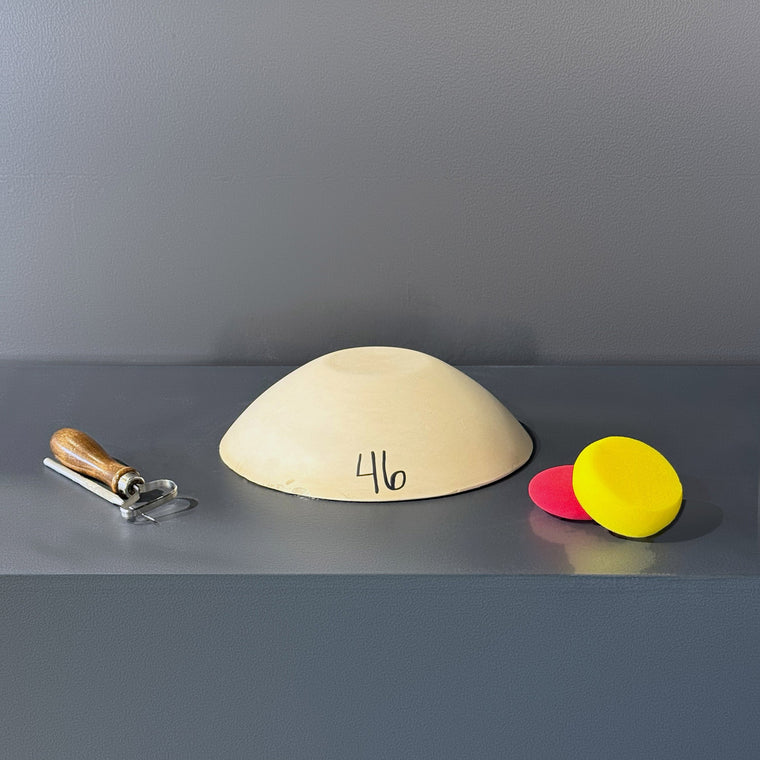 Slab mold 46
Oval Serving Bowl
An oval reads as intentional in a way a circle does not - it has a front and a back, so it sets a table with direction.
5 lbs of clay to start, rolled 1/2 in thick
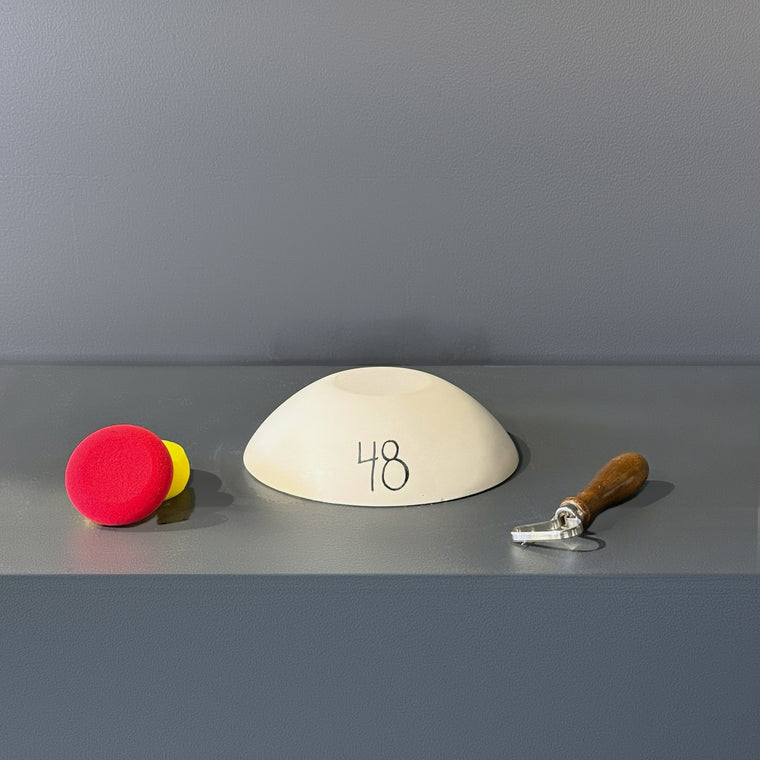 Slab mold 48
Everyday Cereal Bowl
The workhorse middle size. Eight inches is the diameter of a cereal bowl, a soup bowl, a ramen bowl if you go a little deeper with the rim - which is to say this is the mold you use to make things that get eate
4.5 lbs of clay to start, rolled 1/2 in thick
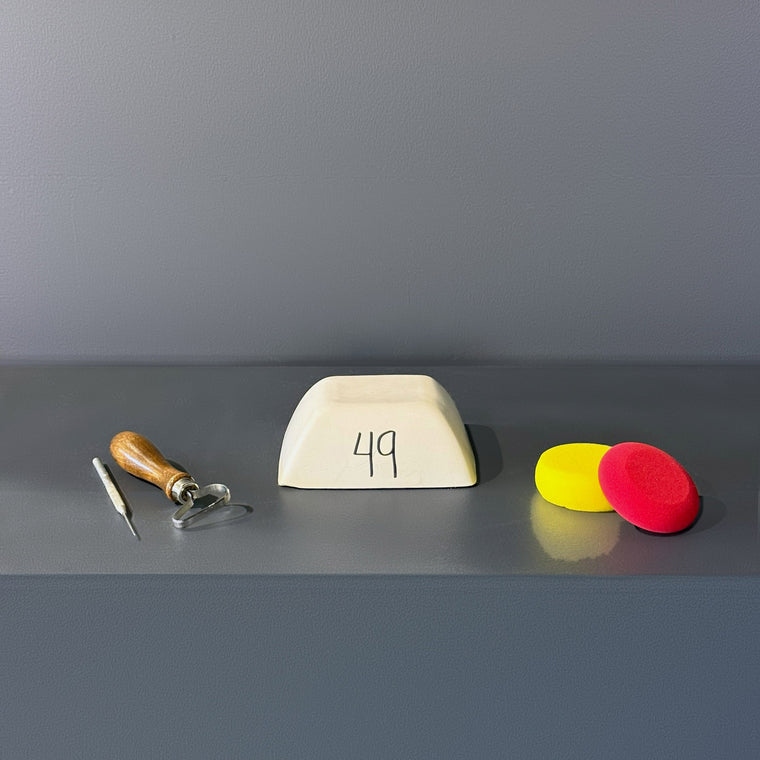 Slab mold 49
Butter Dish Dome
Small, rectangular and soft-cornered - the shape of a butter dish, a soap dish, a business-card tray, a dish for cufflinks or rings.
2 lbs of clay to start, rolled 1/3 in thick
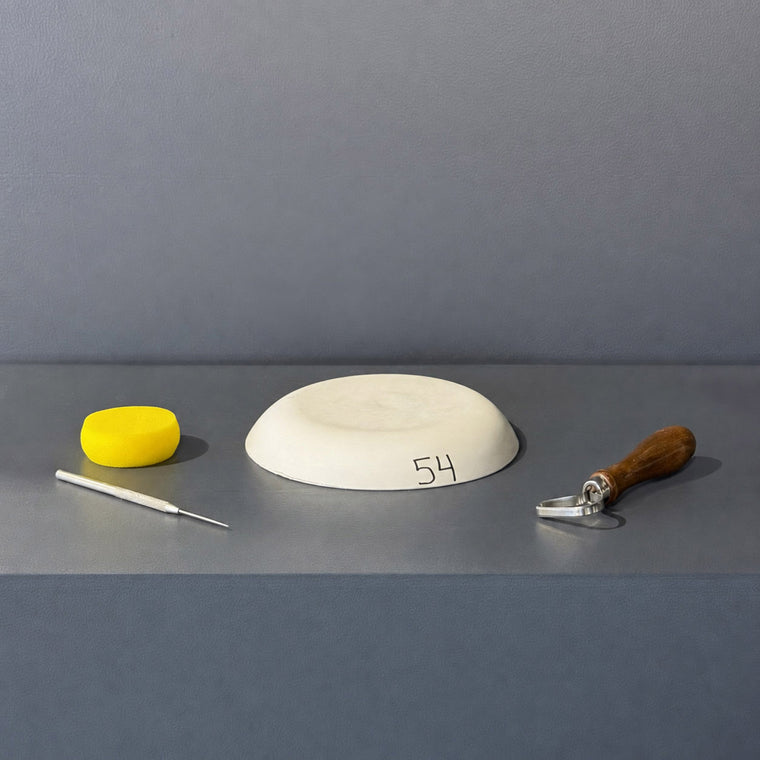 Slab mold 54
Shallow Oval Dish
A small, low oval - the shape of a soap dish, a butter dish base, a spoon rest, a dish for rings beside the kitchen sink.
3.5 lbs of clay to start, rolled 1/2 in thick
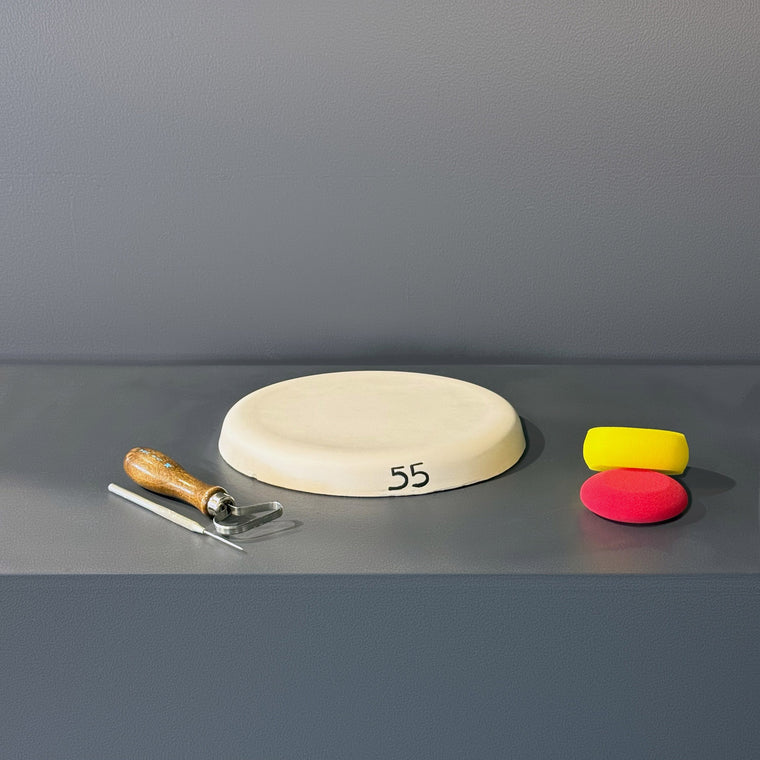 Slab mold 55
Round Salad Plate
Nine inches and barely any depth puts this exactly at side-plate and salad-plate size.
4.5 lbs of clay to start, rolled 1/2 in thick
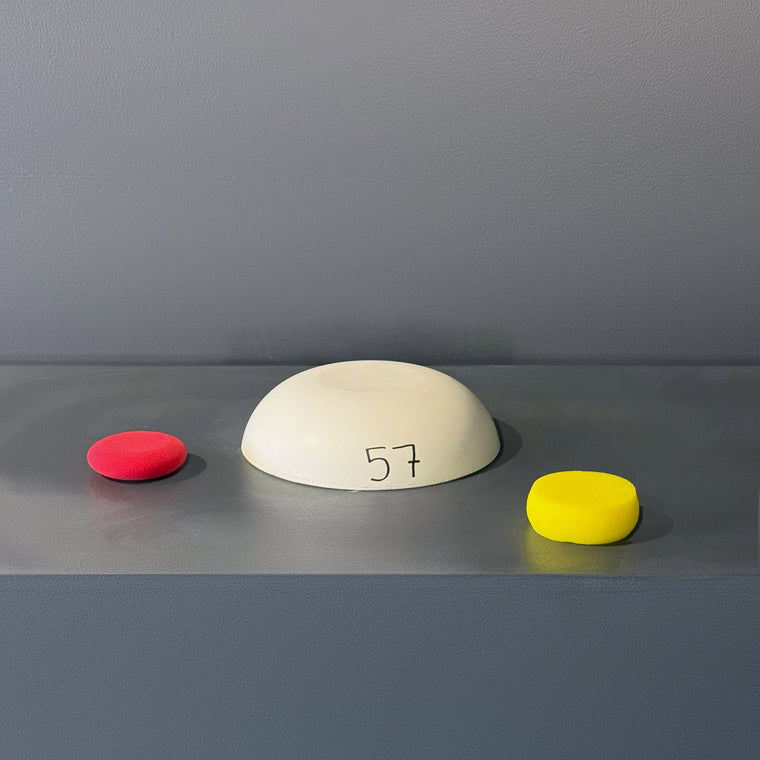 Slab mold 57
Round Soup Bowl
A clean, quiet eight-inch bowl with nothing to distract from the surface.
4 lbs of clay to start, rolled 1/2 in thick
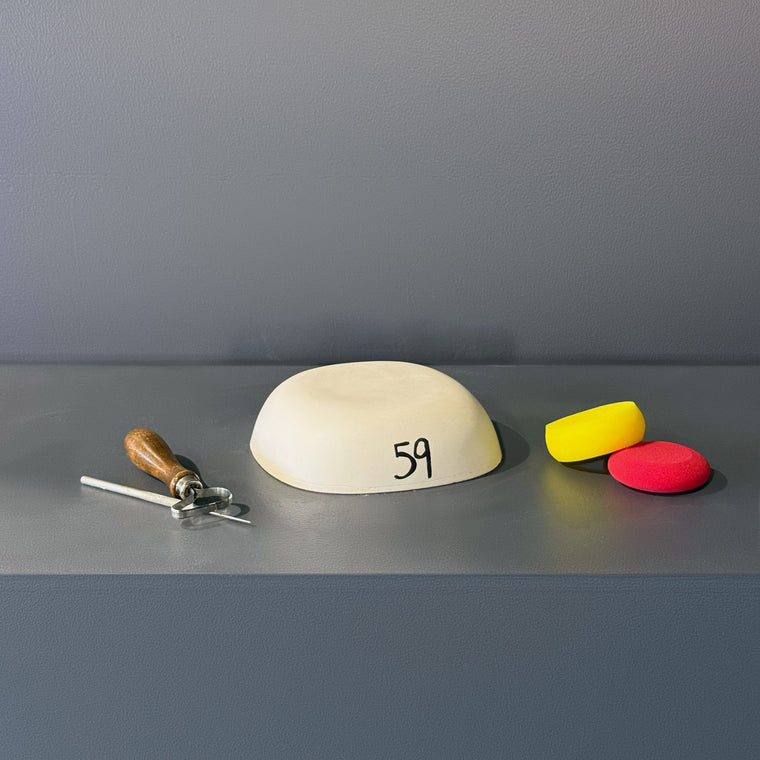 Slab mold 59
Personal Serving Bowl
Small enough to feel personal, big enough to be useful - this is the individual serving bowl.
2.5 lbs of clay to start, rolled 1/3 in thick
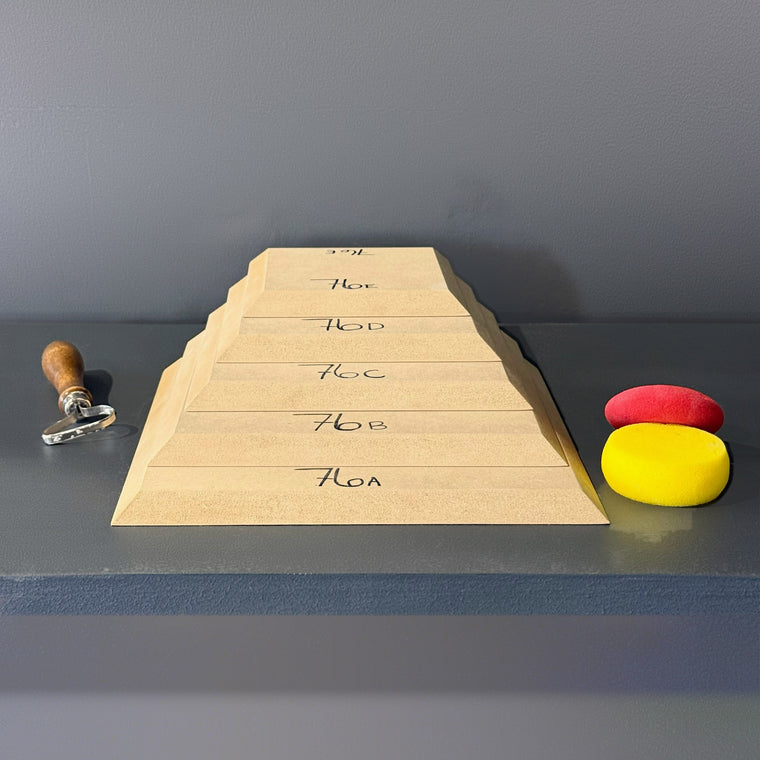 Slab molds 76
Square Plate (set of 5)
A five-piece set of soft triangles in HDF, stacked into a stepped pyramid.
1.5 to 6 lbs of clay to start, rolled 1/3 or 1/2 in thick

Ceramic Mosaics, from First Cut to Grout
Making your own tesserae rather than buying them, then cutting, laying and grouting them. The one project where a cracked pot is raw material.

Miniature Pottery, Thrown and Built
Everything gets harder as it gets smaller. Tools, clay choice, and why a tiny pot dries out before you have finished it.
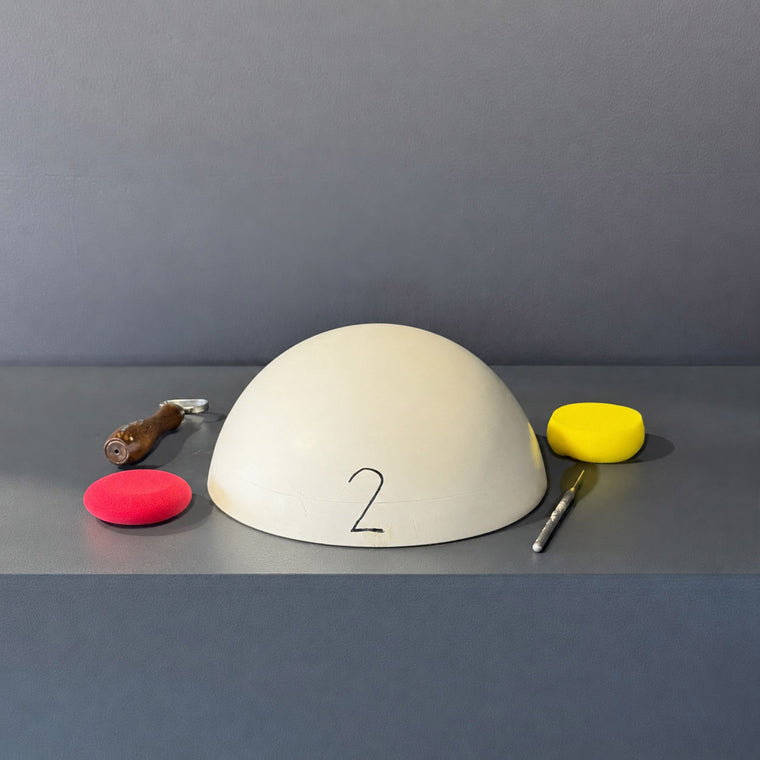 Slab mold 2
Deep Round Serving Bowl
A true hemisphere, and that geometry is what makes it useful - the finished bowl has real depth relative to its width, so it holds soup, cereal, popcorn or a good serving of pasta without anything sliding out.
7.5 lbs of clay to start, rolled 1/2 in thick

Carving and Sgraffito
Cutting a pattern back through a colored surface to the clay underneath, and the stage the pot has to be at for it to work.

A Ceramic Wall Clock That Actually Works
A flat form with a hole in the middle, sized for a movement you have already bought.

Throwing on a Mini Wheel
A small wheel is not just a wheel that costs less. What the torque and the wheel head size actually change about how you throw.
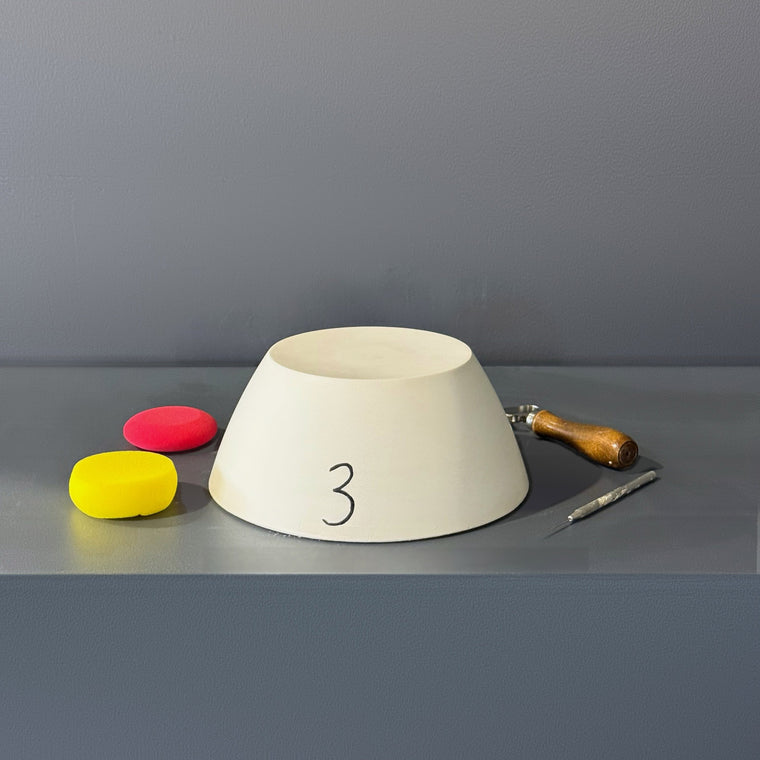 Slab mold 3
Flared Utility Crock
The straight flared wall on this one produces a very different silhouette from the round domes - crisp, architectural, more mid-century than farmhouse.
6 lbs of clay to start, rolled 1/2 in thick

Melting Glass Into Pottery
At our temperature glass is liquid, not soft. How to contain it, why it cracks, and why most guides online do not apply here.

How to Make Kitchen Strainers
Anybody can put holes in a bowl. Getting it back out of the kiln in one piece is the part worth learning.

Making and Using Chucks
How to hold a pot that will not sit on its own rim. Making your own, and what each kind is actually for.
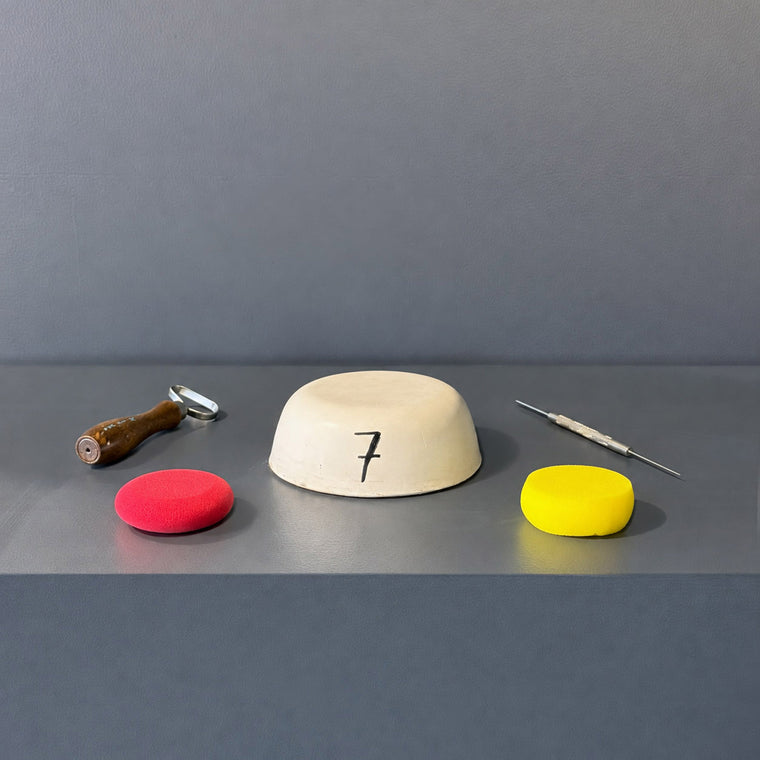 Slab mold 7
Soft Square Bowl
A square footprint with all the sharpness sanded out of it, which is a surprisingly hard shape to throw on a wheel and an easy one to get from a slab.
2.5 lbs of clay to start, rolled 1/3 in thick

Mason Stains in Clay, Slip and Glaze
One jar of powder colors clay, slip, engobe or glaze, and the percentage changes for each. What they are and every way people use them.

Hand-Built Footed Serving Bowls
Lifting a wide bowl off the table, and what a foot does to how it dries.
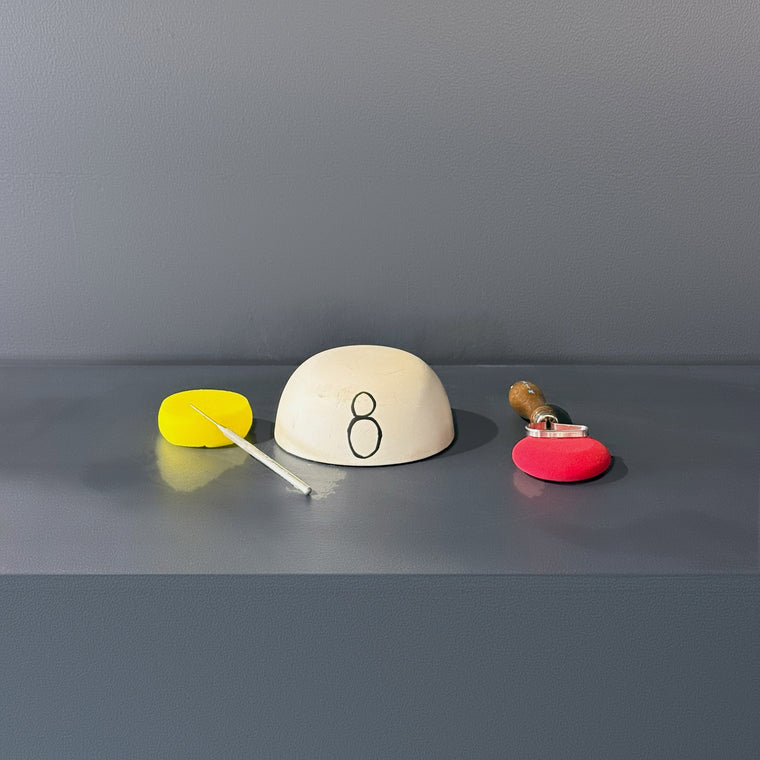 Slab mold 8
Deep Personal Bowl
Deeper than a hemisphere, so the wall comes up steeper and the finished piece behaves more like a cup or a deep ramekin than a bowl.
2 lbs of clay to start, rolled 1/3 in thick

Ceramic Spoons and Ladles
A bowl and a handle that have to balance, dry evenly and survive being used. Much harder than it sounds.
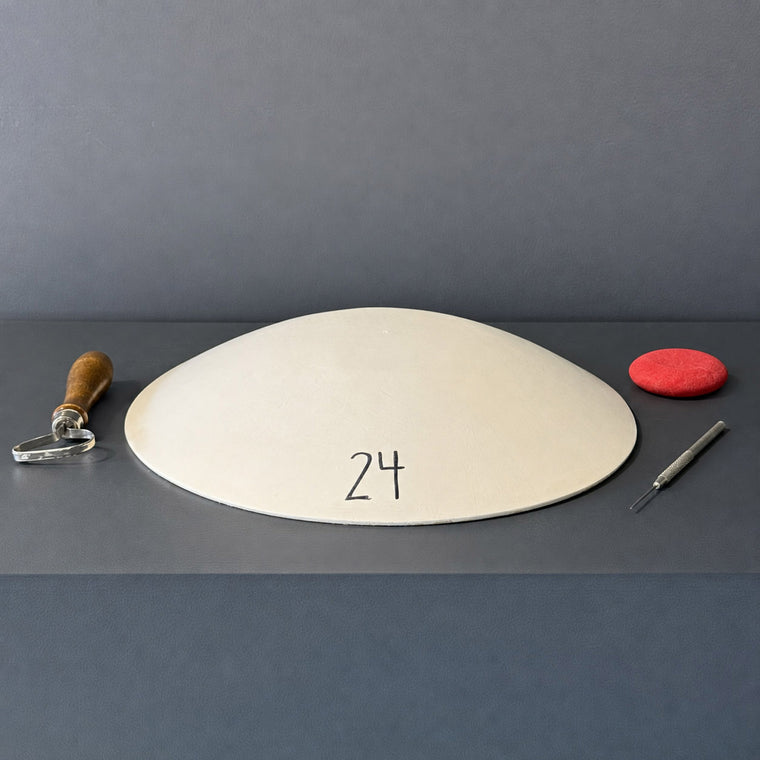 Slab mold 24
Large Oval Platter
A classic oval serving platter at the size most tables can actually accommodate.
7 lbs of clay to start, rolled 1/2 in thick

Chip and Dip Platters That Do Not Crack
A wide platter with a bowl attached to it, which means two very different thicknesses drying next to each other.
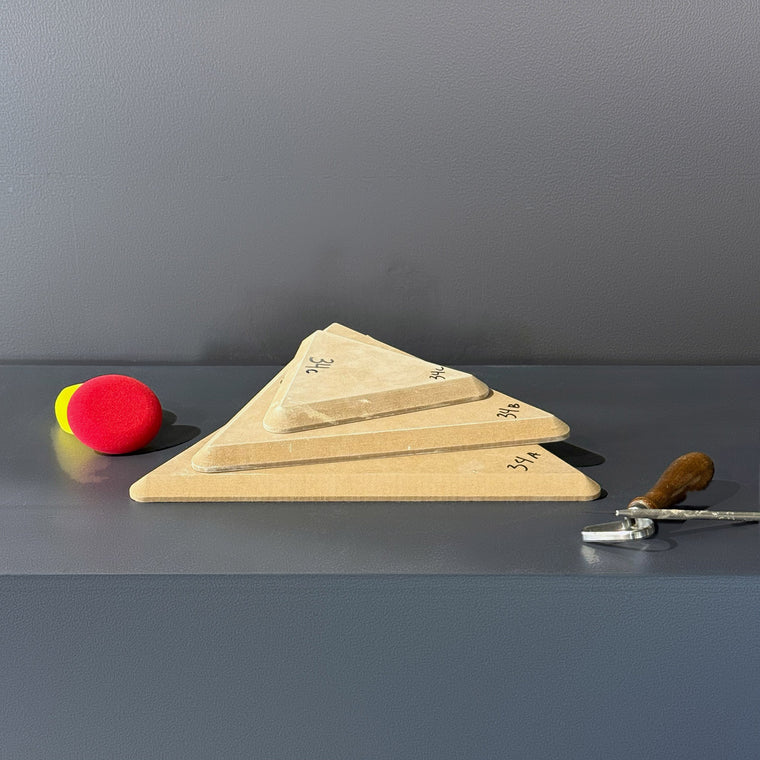 Slab molds 34
Triangle Tray (set of 3)
A three-piece set of soft triangles in HDF, and the thinnest boards in the collection - the finished pieces come off almost flat, more plate than bowl.
1 to 5.5 lbs of clay to start, rolled 1/3 or 1/2 in thick

Lidded Boxes and Treasure Boxes
Building it sealed and cutting the lid out afterward, so the two halves always match.
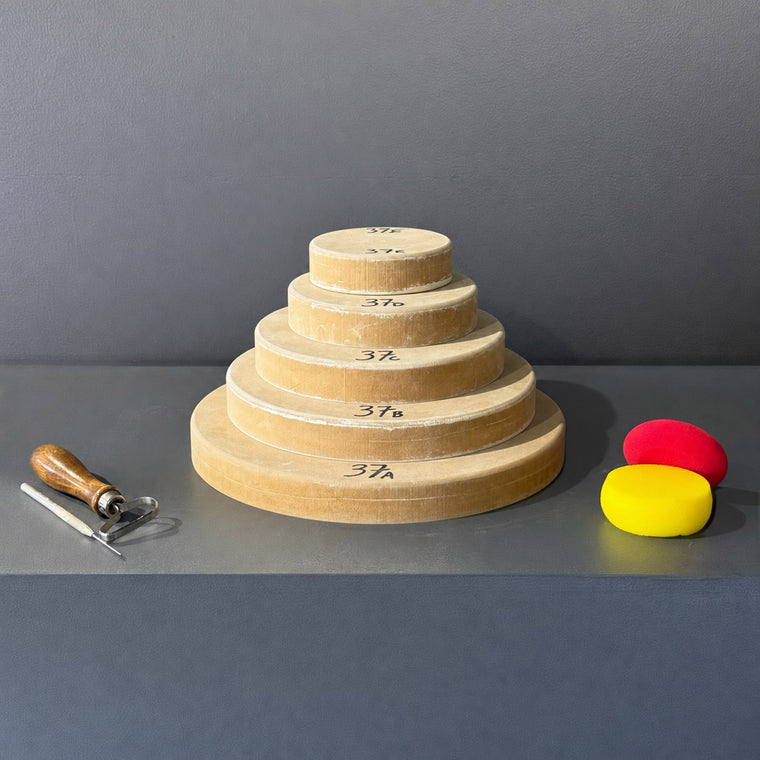 Slab molds 37
Deep Round Dish (set of 5)
A five-piece round set in HDF, noticeably thicker than the other board sets.
1.5 to 9 lbs of clay to start, rolled 1/3 or 1/2 in thick

Butter Dishes with a Domed Lid
Two pieces that have to fit each other after both of them shrink.
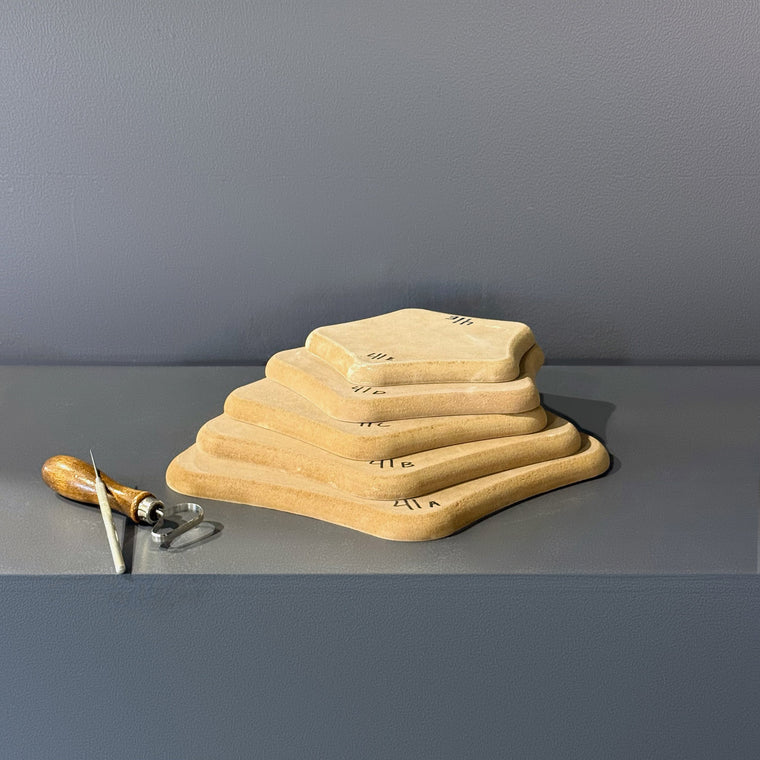 Slab molds 41
Wavy Star Plate (set of 5)
A five-piece set of loosely squared organic shapes in HDF - square enough to stack and store, irregular enough that nothing looks machine-made.
2.5 to 10.5 lbs of clay to start, rolled 1/3 or 1/2 in thick

Hanging Wall Vases
Four ways to build a wall pocket, why the flat back bows as it dries, sizing the hole for shrinkage, and hanging it safely.
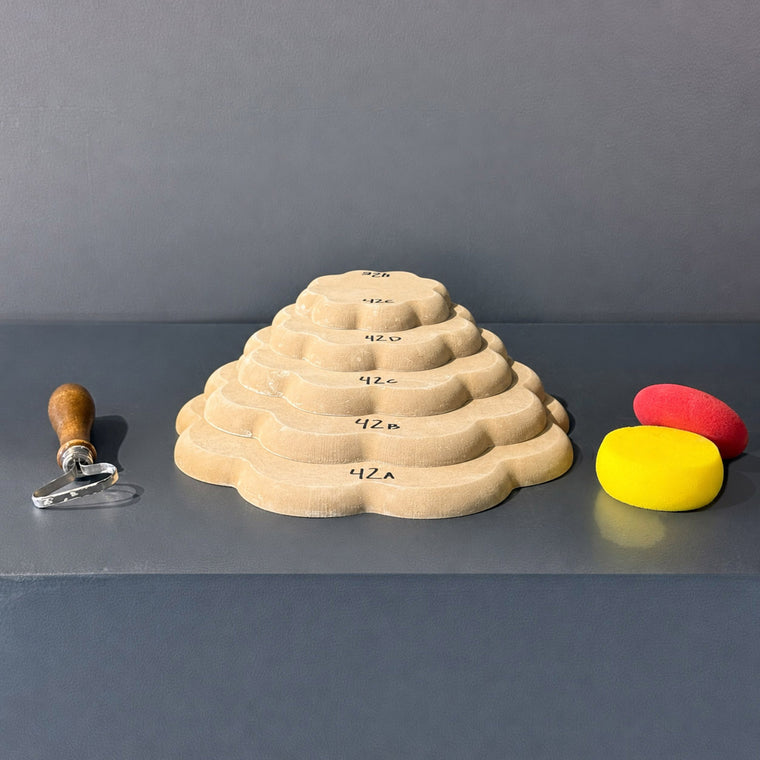 Slab molds 42
Scalloped Petal Plate (set of 5)
A five-piece scalloped set in HDF, cut in a soft petal outline. It is the most decorative family here, and the shape does the work - a plain white glaze on a scalloped plate looks finished with no other decorat
1.5 to 8 lbs of clay to start, rolled 1/3 or 1/2 in thick

Kurinuki: Carving a Pot from a Solid Block
Start with a solid lump and take everything away that is not the pot. No joins to fail, and a surface no other method gives you.
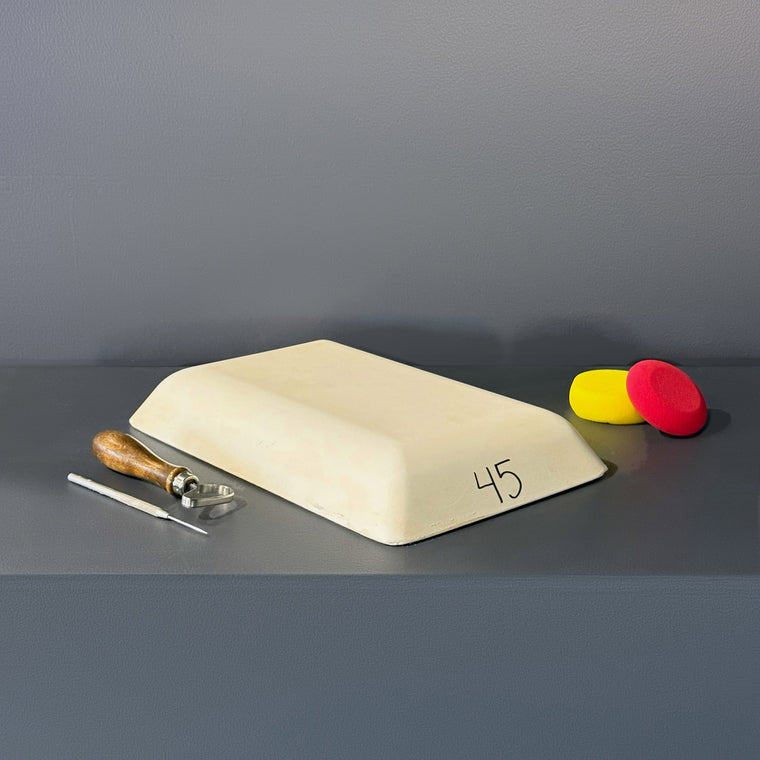 Slab mold 45
Rectangular Serving Tray
A shallow rectangle with cut edges, which produces a tray with a crisp perimeter rather than a soft one.
9.5 lbs of clay to start, rolled 1/2 in thick

Making Figurines and Characters
Faces, hands and the proportions that make a character read. Plus how to build one that survives drying and firing in one piece.
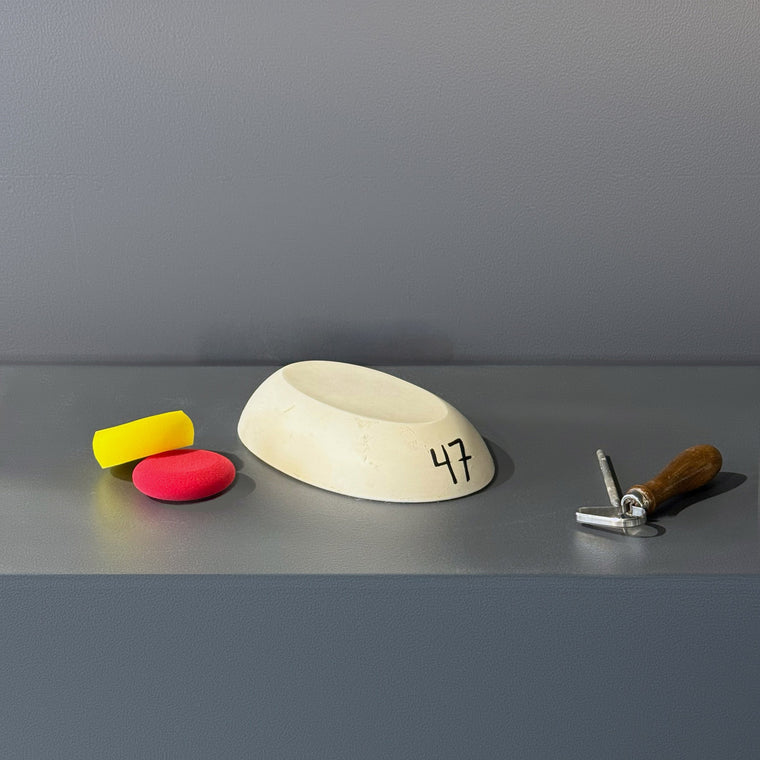 Slab mold 47
Freeform Organic Dish
The deliberately imperfect one. The outline wanders, so no two orientations of the finished piece look quite the same and the result reads handmade even before you touch it.
3 lbs of clay to start, rolled 1/2 in thick
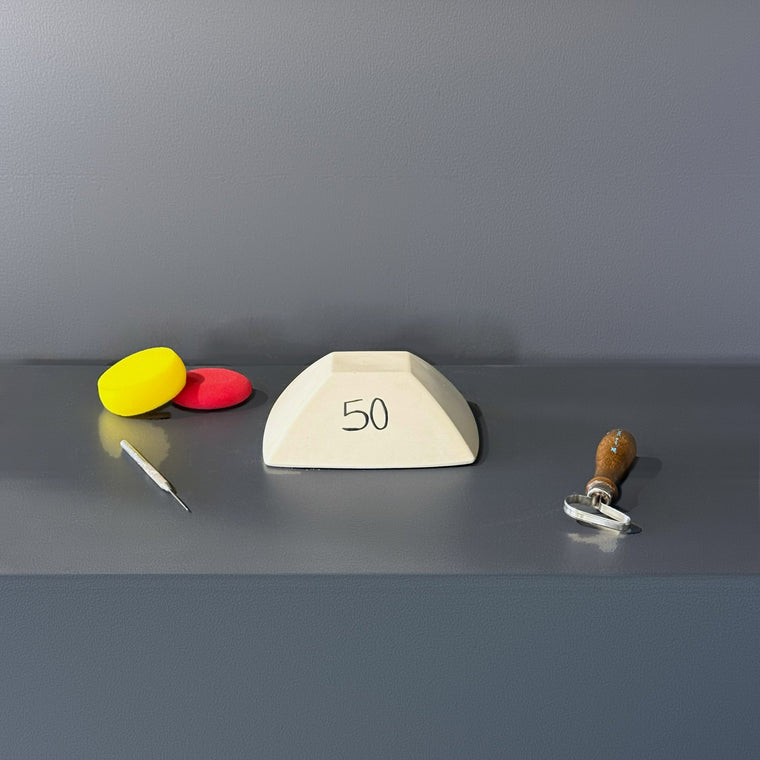 Slab mold 50
Tapered Sugar Bowl
The tapered sides give the finished piece a slight pedestal quality - it sits up rather than sprawling.
2 lbs of clay to start, rolled 1/3 in thick
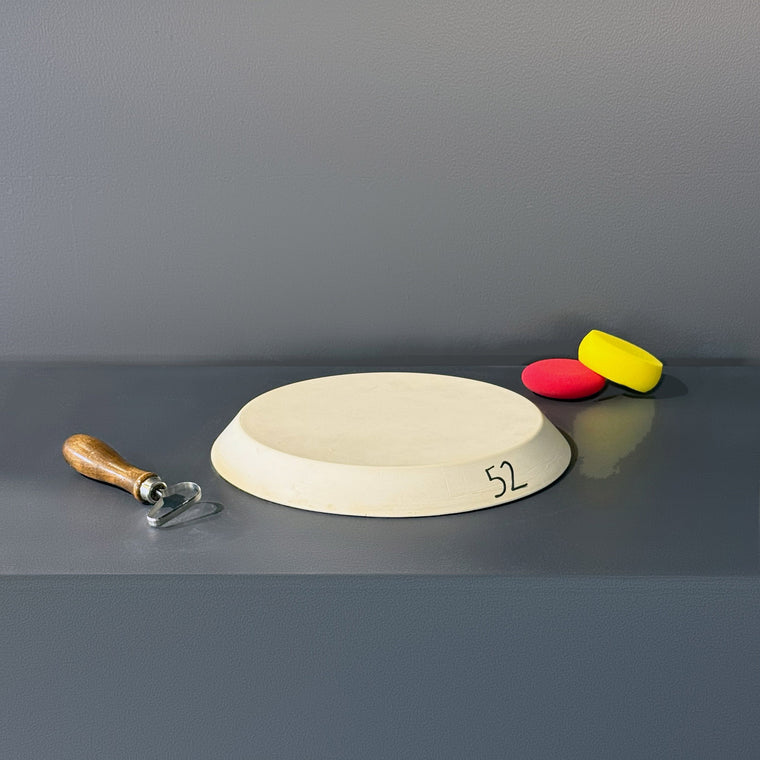 Slab mold 52
Rimmed Dinner Plate
That stepped rim is the whole reason this mold exists. It gives the finished plate a defined edge - a place for a thumb, a border for a glaze to break over, and a visual frame around whatever is on it.
5.5 lbs of clay to start, rolled 1/2 in thick
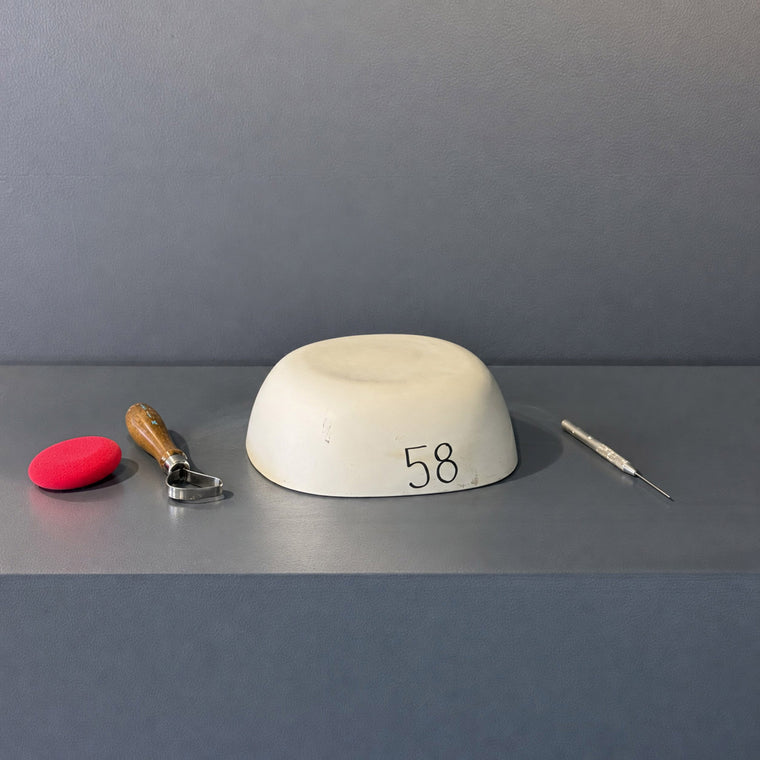 Slab mold 58
Soft Square Serving Bowl
A rounded square with a bit of height to it, so the finished piece has corners you can see but edges you can still run a thumb along.
5 lbs of clay to start, rolled 1/2 in thick
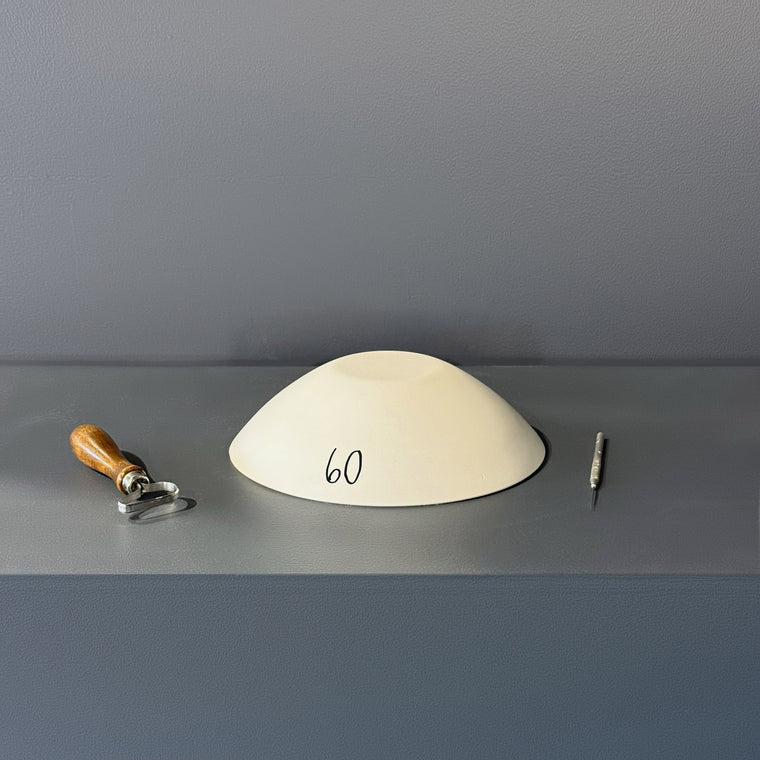 Slab mold 60
Leaf Dish
The points at each end are what make this one special - the finished piece reads as a leaf or a boat rather than a generic dish.
5 lbs of clay to start, rolled 1/2 in thick
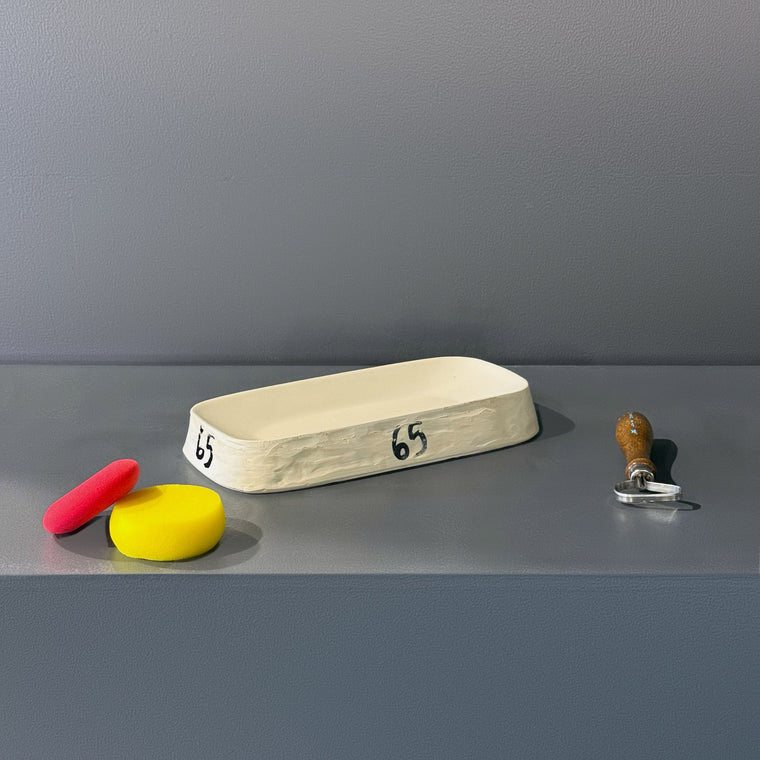 Slab mold 65
Slim Spoon Tray
A narrow press-mold trough at a friendlier scale than its big sibling.
5 lbs of clay to start, rolled 1/2 in thick
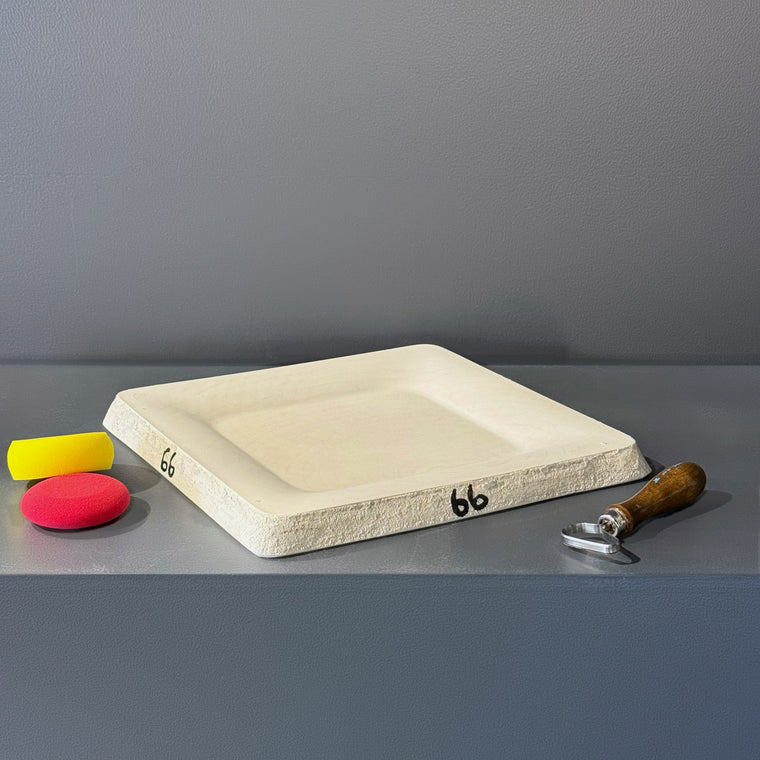 Slab mold 66
Square Sushi Tray
A square with a shallow recessed well, which gives the finished piece a defined interior and a clean flat border.
11 lbs of clay to start, rolled 1/2 in thick
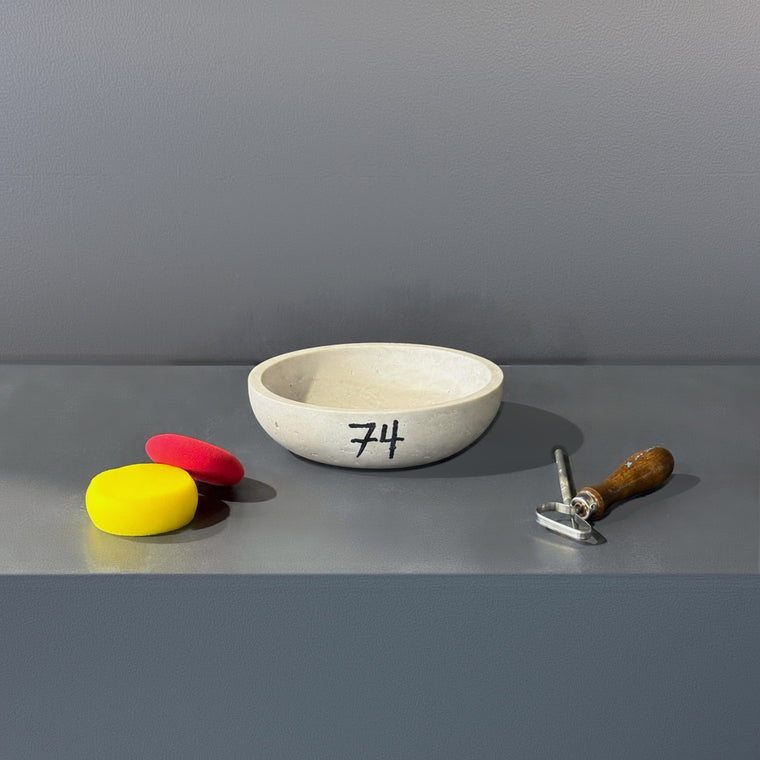 Slab mold 74
Stone-Slump Bowl
A stone bowl used as a slump mold. Stone gives a harder, more precise interior curve than wood or plaster, so the finished piece comes out crisp and symmetrical - closer to a wheel-thrown profile than most slab
2.5 lbs of clay to start, rolled 1/3 in thick

Ceramic Chains with Links That Move
Links built closed around each other, so they can never be assembled later. Making them, joining them, and firing them without a single break.

Planters with an Attached Drip Tray
One piece instead of two, which sounds easier and is the opposite.
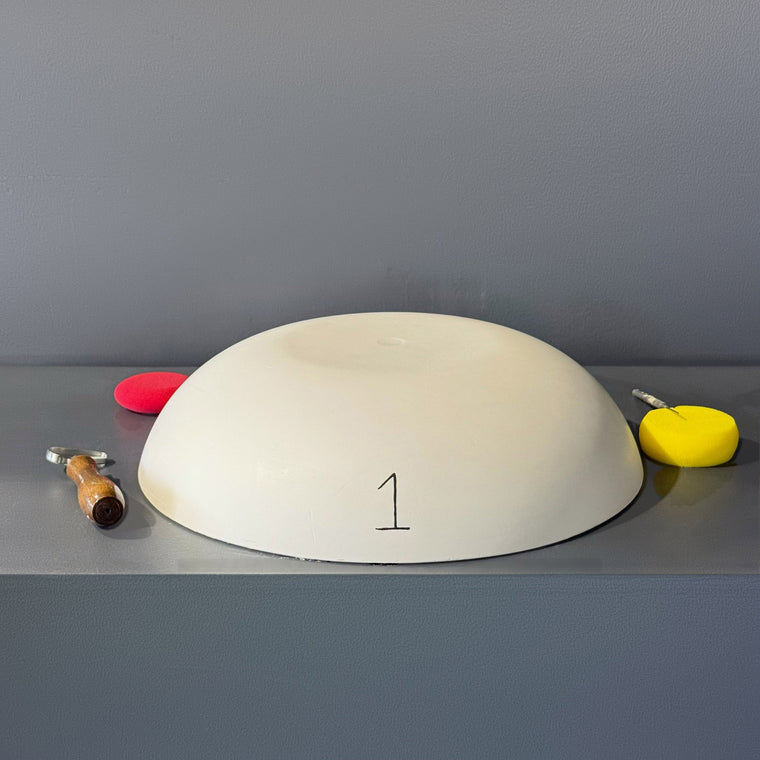 Slab mold 1
XXL Serving Bowl
This is the anchor of the collection and the mold most people reach for when they want one big, generous piece.
12 lbs of clay to start, rolled 1/2 in thick

Mishima, Slip Inlaid into Carved Lines
Carve the line, flood it with slip, then scrape the surface back until only the line is left. A drawn mark that sits flush with the clay instead of on top of it.

Ocarinas, Whistles, Flutes and Drums
Ocarinas, whistles and drums. The pitch is decided by the volume of air inside, which shrinks with everything else.

Lidded Jars with a Gallery
Cutting a seat for the lid to sit in, and measuring it so it still fits after the kiln.
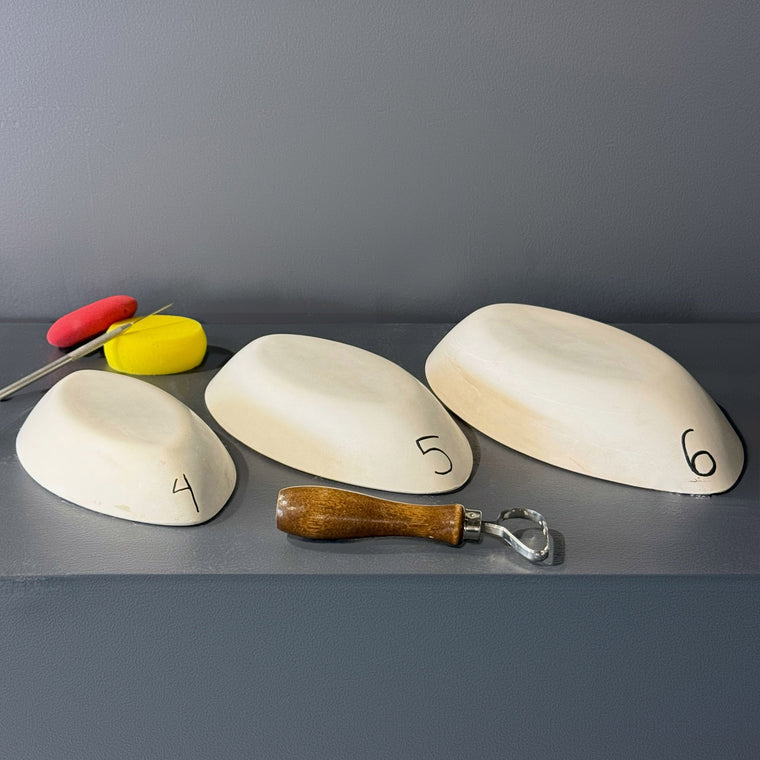 Slab molds 4, 5, 6
Petal Dish (set of 3)
The smallest of a trio of elongated petal dishes - twice as deep as it is wide, so the finished piece is a long narrow dish rather than a round one.
2.5 to 3.5 lbs of clay to start, rolled 1/2 in thick

Relief Carving
Cutting the background away so the design stands proud. The opposite of sgraffito, and it wants a much thicker wall.

Creating a Ceramic Chess Set
Thirty two pieces that have to match each other and a board they have to sit on. The longest project on this page, and worth it.

Pitchers and Ewers That Actually Pour
A spout that cuts the flow cleanly instead of dribbling down the front.
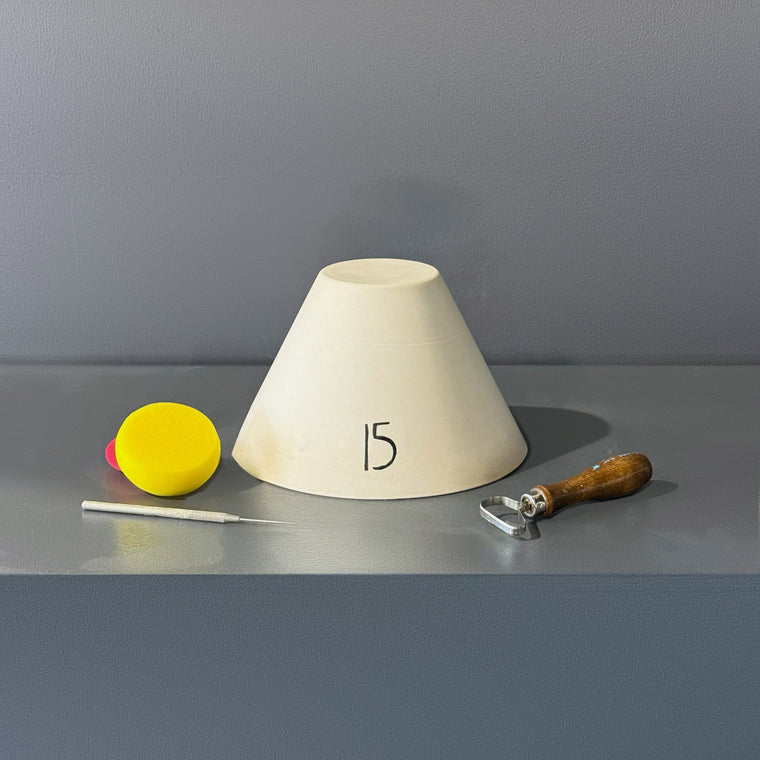 Slab mold 15
Tall Flared Crock
One of the tallest forms in the plaster collection, and the proportions do the heavy lifting - a 9 inch base rising to 6 inches gives you a genuinely upright vessel rather than a bowl.
9 lbs of clay to start, rolled 1/2 in thick

Geometric Carving and Faceting
Repeating patterns that have to meet themselves on the far side of a round pot. Dividing the wall is the hard part, not the cutting.

Making Smokeware and Water Vessels
Why the bowl stays unglazed, building an airway that survives shrinkage, venting hollow chambers, and designing something you can clean.

Throwing Oil Bottles and Cruets
A narrow neck that pours a controlled stream, and a base that does not tip.
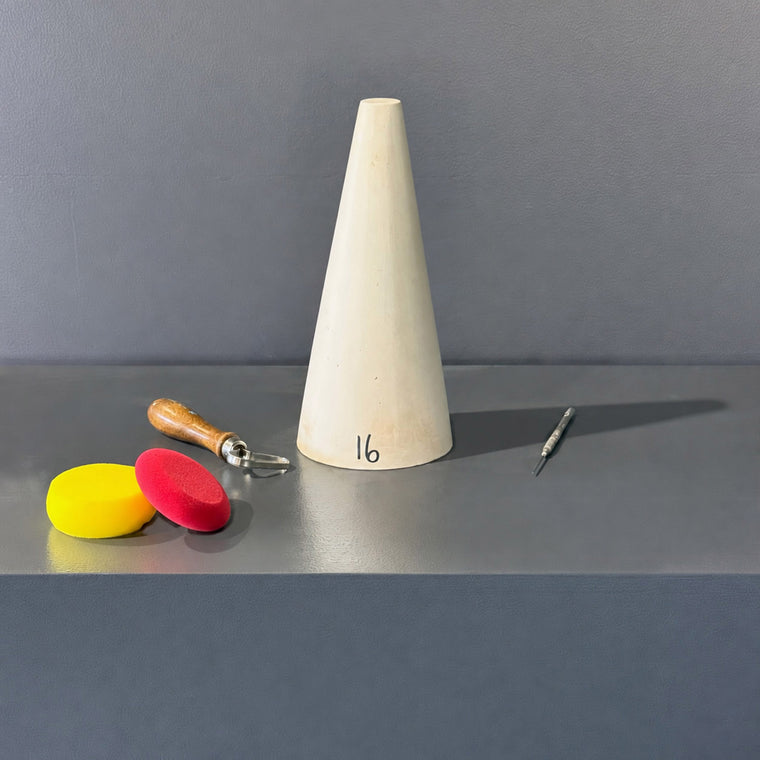 Slab mold 16
Tall Cone Form
The most sculptural mold here. Wrapped in a slab it gives you a tall tapered cone - a bud vase for a single stem, a hanging planter, a lantern with the pattern pierced through, or a set of three at graduated he
3 lbs of clay to start, rolled 1/3 in thick

Burnishing and Terra Sigillata
A shine you get from polishing rather than from glaze. The surface underneath pit firing, naked raku and horsehair work.

Making Your Own Plaster Slump Mold
Cast a permanent plaster version of a dish you already like. Done at home, never here, because plaster and a shared clay studio do not mix.

Stopperless Salt Shakers That Fill from Below
Fills from the bottom and does not pour out when you turn it back over. Air pressure does the work, and the hole sizes are the whole trick.
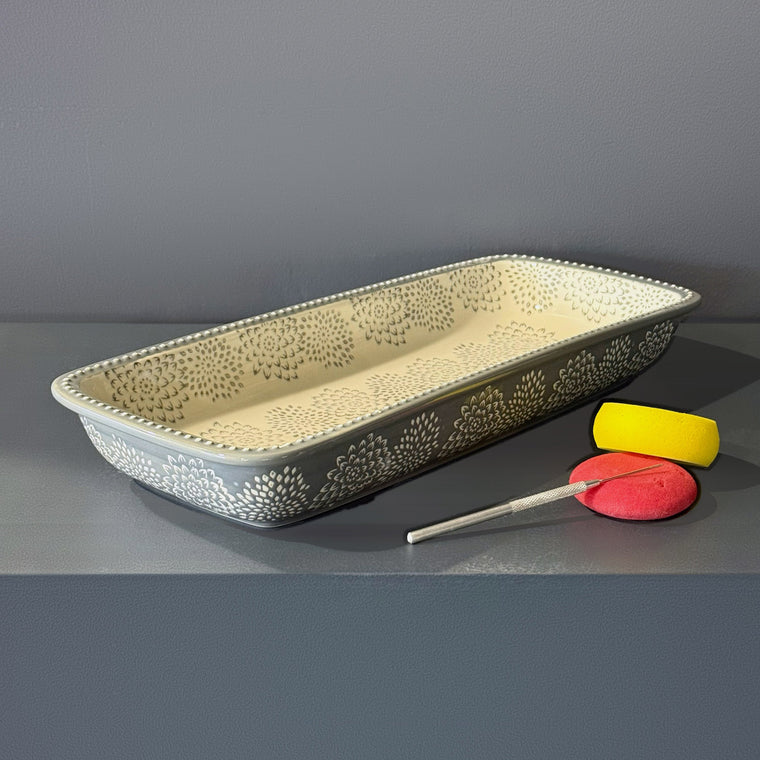 Slab mold 20
Rectangular Baker
A found-object mold that works in either direction, though a slump is the natural way to use it - press clay down into the open dish and you get a deep rectangular vessel with square-ish corners that would be g
13.5 lbs of clay to start, rolled 1/2 in thick

Traditional Kintsugi with Urushi and Gold
The real one. Urushi lacquer and powdered precious metal, cured over months rather than an evening, and food safe at the end of it.

Nerikomi, Patterned Colored Clay
Building a patterned loaf out of stained clays and slicing it, so every cut face carries the design. Thrown on the wheel it is called neriage.

Ceramic Lamp Bases, Holes and Wiring Included
Built around hardware you have to buy first, with a cord hole and enough weight to stay put.
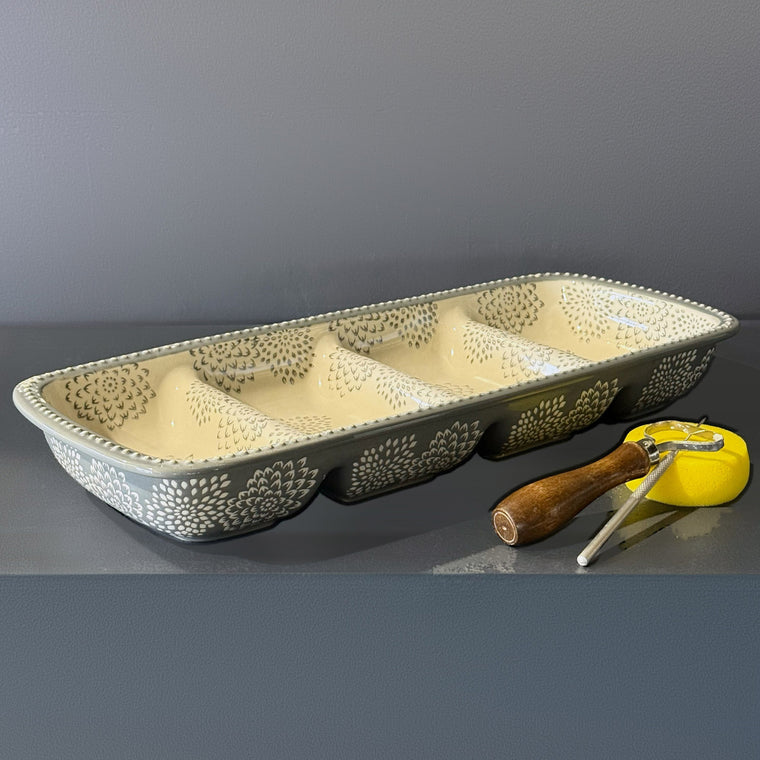 Slab mold 21
Four-Well Loaf Tray
Four loaf-shaped wells in a row, and slumping is the natural way to use it - press clay down into the wells and you come away with a tray divided into four bays, or four small loaf dishes if you cut them apart.
13.5 lbs of clay to start, rolled 1/2 in thick

Throwing a Tagine
A shallow base and a tall cone that have to seal against each other, after both of them shrink.
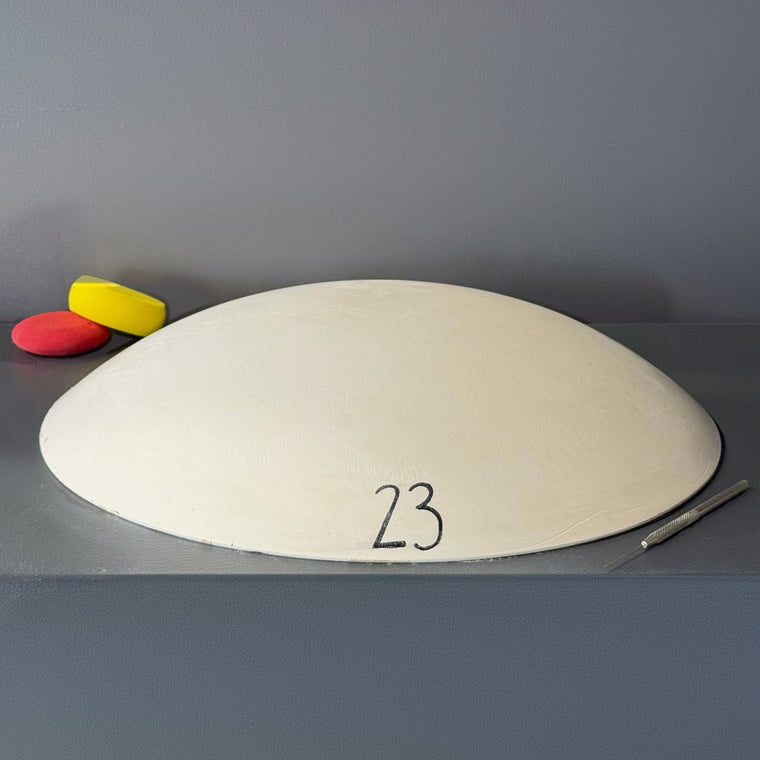 Slab mold 23
XL Leaf Platter
A big leaf or eye shape with real presence. Draped, it gives you a generous serving platter with tapered ends that direct the eye - the piece you build a cheese board around, or fill with roasted vegetables, or
10.5 lbs of clay to start, rolled 1/2 in thick

Building a Teapot, Spout and All
Body, lid, spout, strainer holes and handle, all shrinking together. The capstone project.
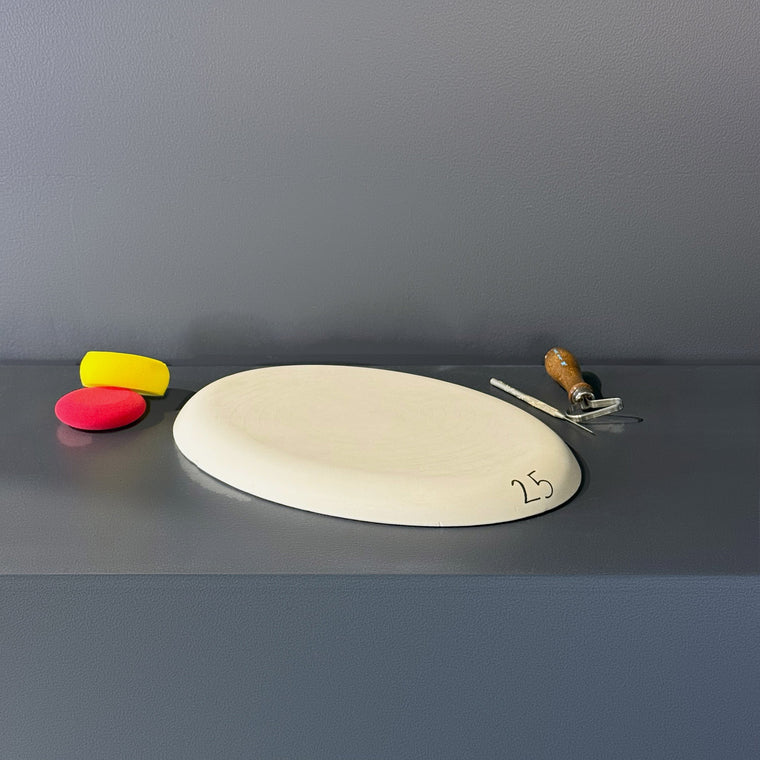 Slab mold 25
Oval Plate Blank
Almost completely flat, which makes this a shaping template as much as a mold - lay the slab over it and you get a clean oval blank with a whisper of curve.
8 lbs of clay to start, rolled 1/2 in thick

Throwing Plates
No wall to hold it up and nothing but floor. Compression, drying flat, and why a plate warps weeks after you thought it was safe.
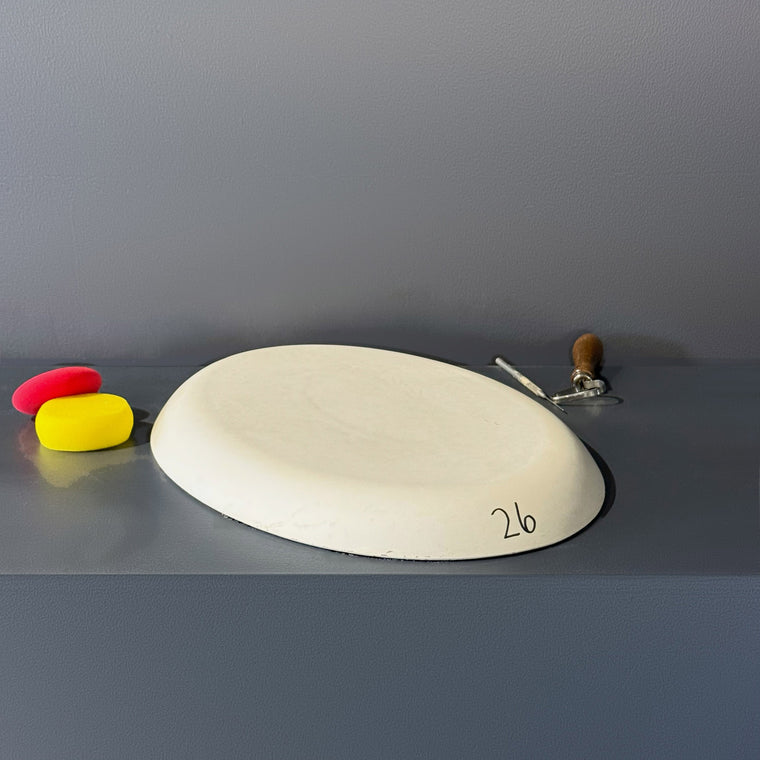 Slab mold 26
Large Oval Plate Blank
The bigger flat oval. Same idea as its smaller sibling - minimal curve, maximum surface - but at a scale that makes real serving pieces.
13 lbs of clay to start, rolled 1/2 in thick

Throwing Large Serving Bowls
Width is harder than height. Where the clay has to be left, and the point in the flare where a bowl decides to give up.
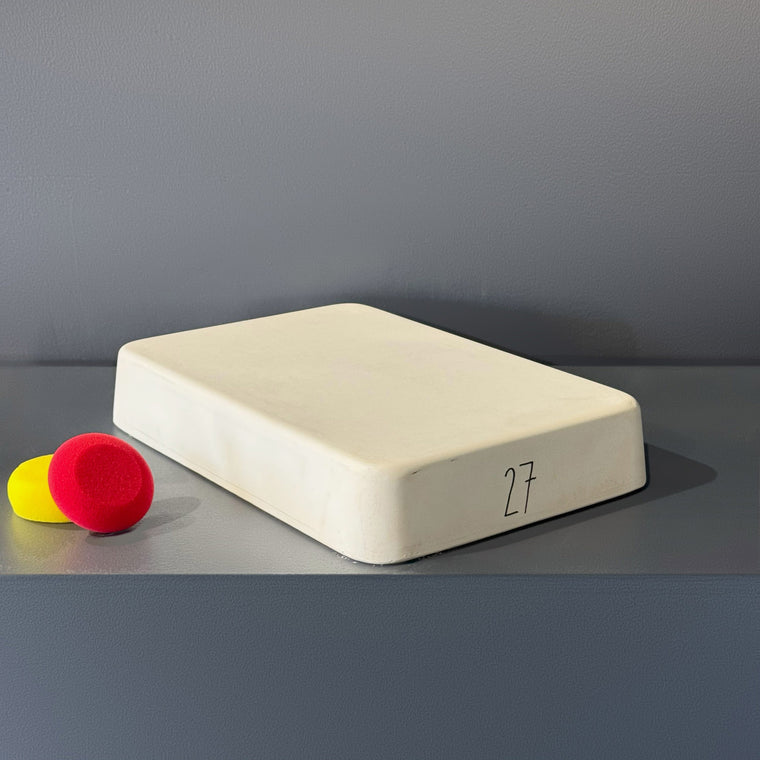 Slab mold 27
XL Rectangular Tray
A big soft-cornered rectangle - the footprint of a serving tray, a baking dish, or a deep rectangular platter.
13.5 lbs of clay to start, rolled 1/2 in thick

Throwing Moon Jars
Two thrown hemispheres joined at the belly. The classic test of whether you can make a seam disappear.
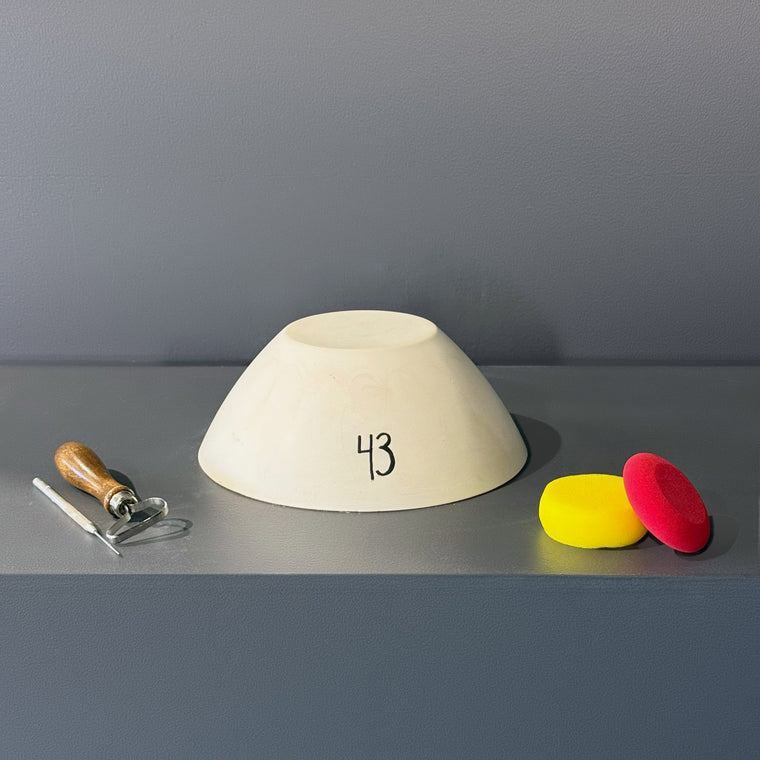 Slab mold 43
Flared Mixing Bowl
A flared bowl with a flat bottom and a straight, honest wall - the profile of a classic mixing bowl or a diner-style serving bowl.
7 lbs of clay to start, rolled 1/2 in thick

Throwing a Donut Vase
A sealed hollow ring with two openings cut into it. It teaches closed forms, collaring and joining all at once, and it looks impossible.
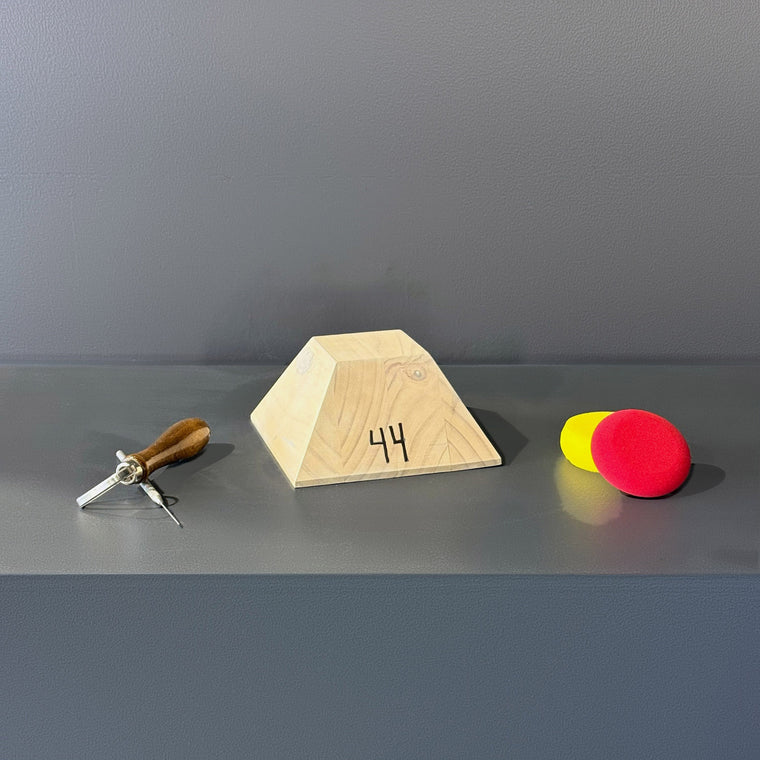 Slab mold 44
Faceted Wedge Form
Flat faces and hard edges - the opposite of every dome in this collection.
4 lbs of clay to start, rolled 1/3 in thick

Gooseneck and Skinny Neck Pots
Collaring is the move everything hangs on. A quarter inch of diameter per pass, why a thin wall will not collar, and three routes to the same shape.
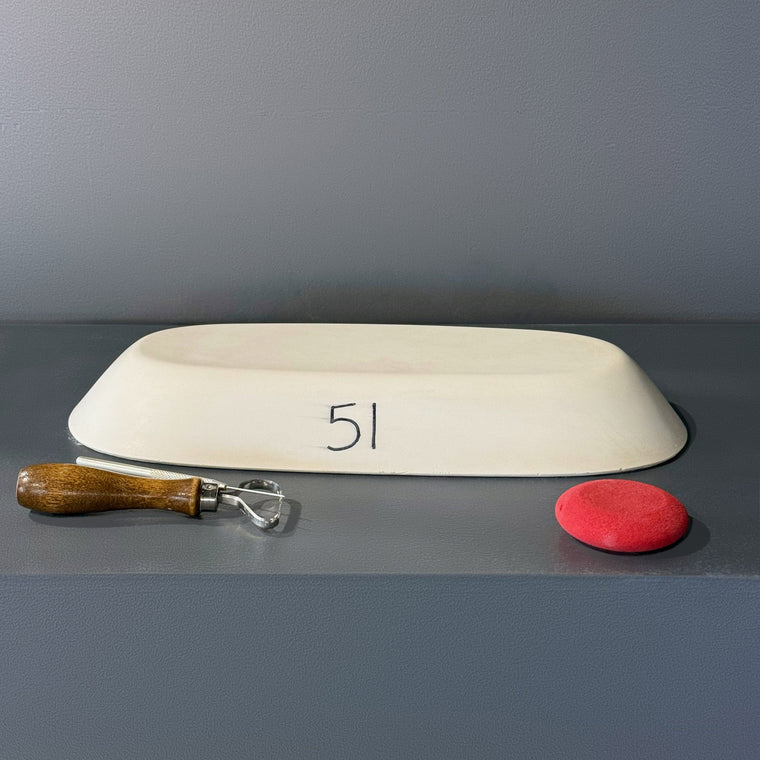 Slab mold 51
Catch-All Dish
Long and low, which is a shape with one obvious job: serving things in a row.
5.5 lbs of clay to start, rolled 1/2 in thick

Open and Closed Spheres
What actually reads as round: a narrow base, the widest point a touch above center, and one decision in the last minute that changes everything after.
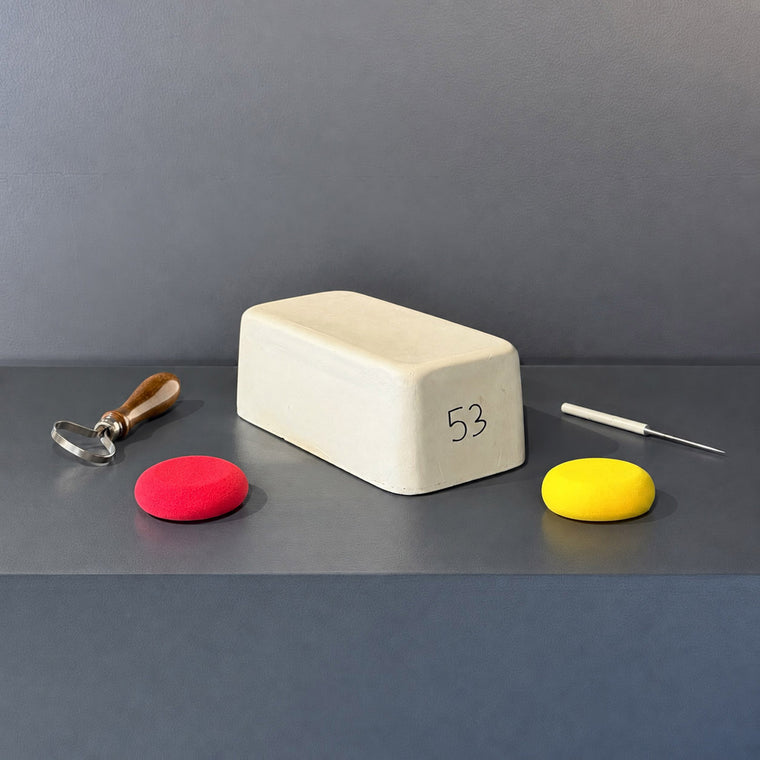 Slab mold 53
Loaf Pan Form
A loaf-pan silhouette, which opens up a whole category most slab molds cannot reach: bread pans, planters for a windowsill herb row, a utensil box, a deep rectangular server.
5 lbs of clay to start, rolled 1/2 in thick

Throwing Enclosed Forms
The air does half the work. Why a sealed pot carries a belly that would fold an open one, and the pinhole that has to go in before it ever sees a kiln.
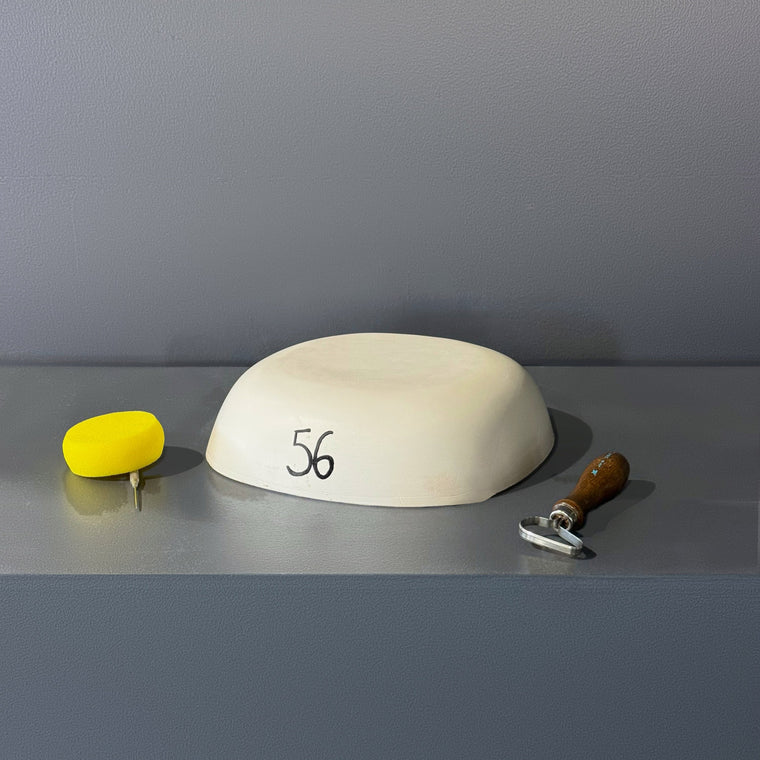 Slab mold 56
Large Mixing Bowl
The proportion here is the sweet spot between the shallow serving bowls and the deep hemispheres - wide enough to serve from, deep enough to hold a real quantity without spilling.
5 lbs of clay to start, rolled 1/2 in thick

Double-Walled Pots
A sealed pocket inside the pot's own wall. Two methods, ten steps, and the vent hole you drill at leather hard.
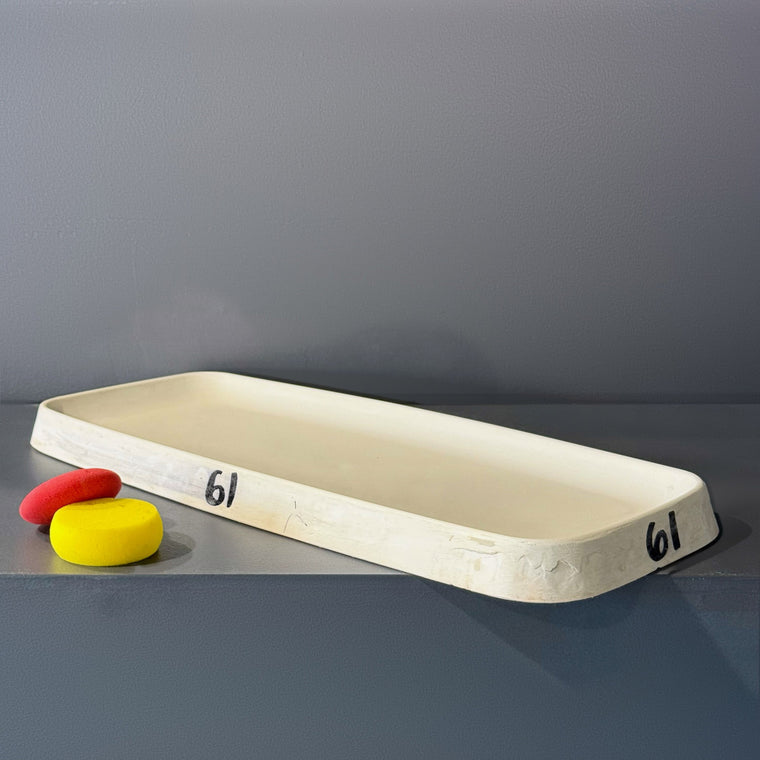 Slab mold 61
XL Baguette Tray
The longest mold in the collection, and unlike most of these it is used the other way round - clay is pressed down into the cavity rather than draped over the top.
14.5 lbs of clay to start, rolled 1/2 in thick

Throwing Pottery in Sections
Throwing in pieces and joining them, which is how anything taller than your arm actually gets made.
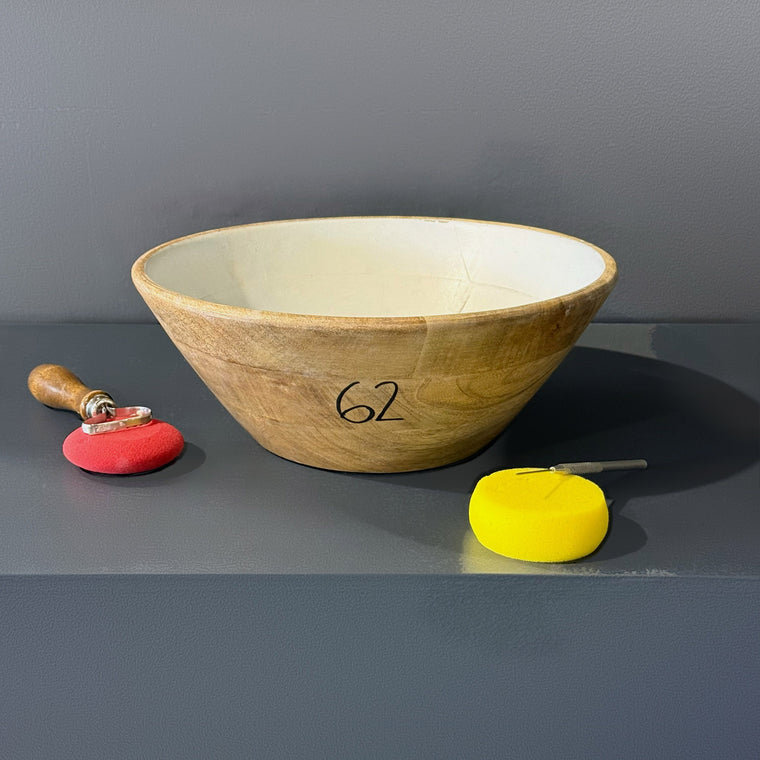 Slab mold 62
Painted Wood Bowl Form
A wooden bowl pressed into service as a slump mold - clay goes inside and takes the bowl's interior curve.
10 lbs of clay to start, rolled 1/2 in thick

How to Make a Ceramic Urn with a Lid
The one-cubic-inch-per-pound capacity rule, lid galleries that seal for good, and full wheel and hand-built paths. A serious project, treated seriously.
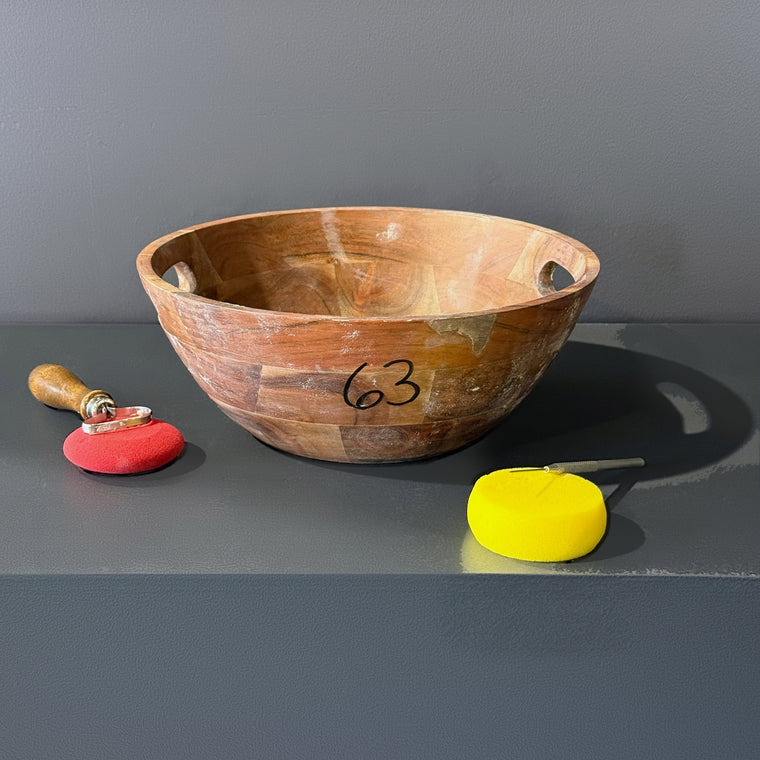 Slab mold 63
Handled Bowl Form - Medium
The cut-out handles are the interesting part - press clay inside and the openings give you a natural place to carve matching handles into the finished rim, turning a plain bowl into something with a grip and a
9.5 lbs of clay to start, rolled 1/2 in thick

How Dan Throws Giant Sectional Pots
The 25-pound-bag math of scale, the ten-to-fifteen-section stacking loop, and the heavy-grog clay spec behind the studio giants. Yours can start at two sections.
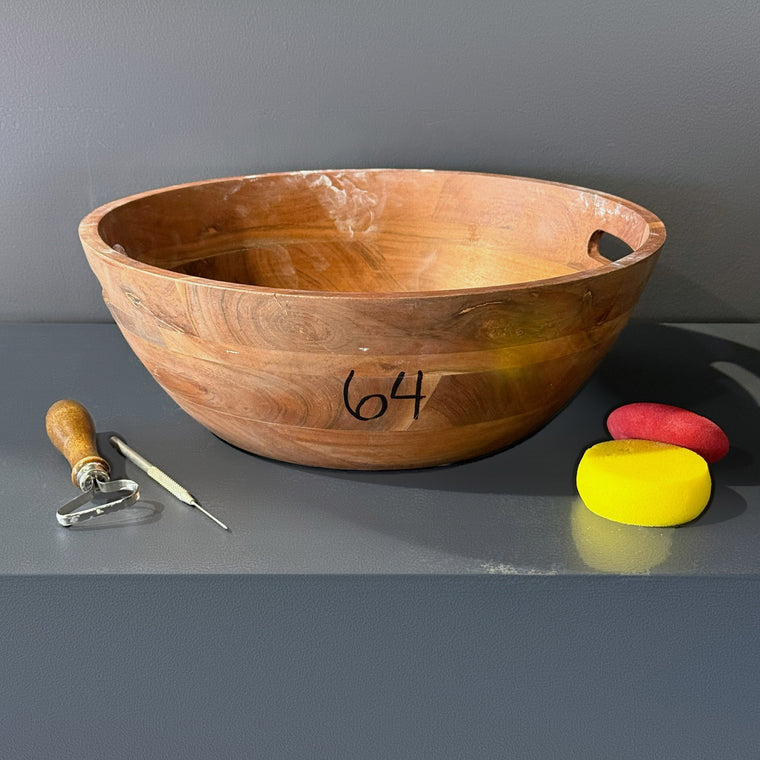 Slab mold 64
Handled Bowl Form - Large
The largest of the wooden bowls and a serious slump mold. Fifteen inches across with real depth gives you a statement serving bowl - the one that holds a whole salad for a dinner party, or lives on a counter fu
15.5 lbs of clay to start, rolled 1/2 in thick

Neriage, Throwing with Colored Clay
Marbling, done properly. Stained clays wedged together and thrown, so the pattern runs right through the wall rather than sitting on it. Its hand-built sibling is nerikomi, over in Hand Building.
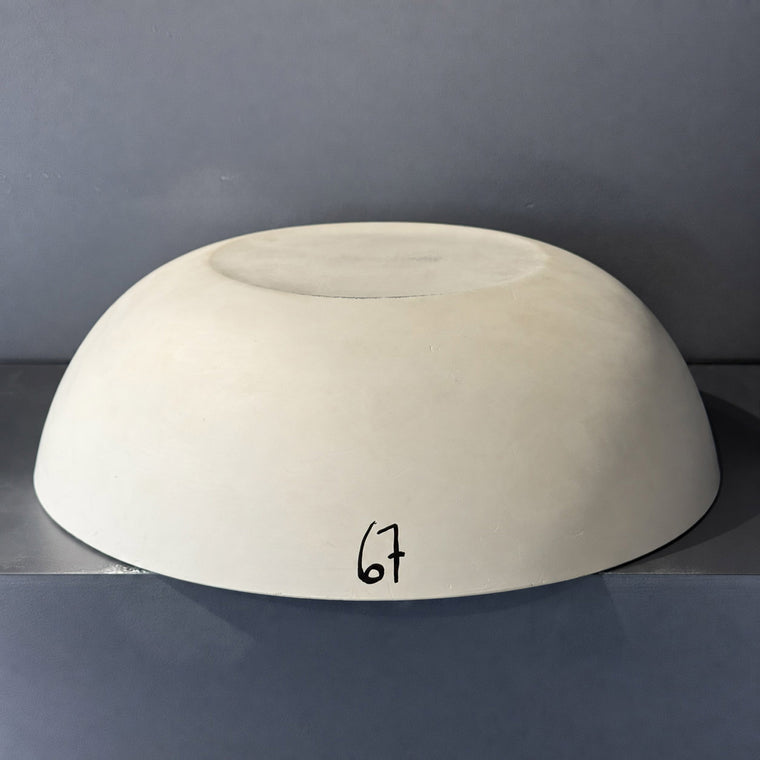 Slab mold 67
The Behemoth
This is one of the biggest molds in the collection and it makes a piece that stops a room.
21 lbs of clay to start, rolled 1/2 in thick

Onggi: Korea's Giant Fermentation Jars
The chest-high jars that breathe, the coil-and-paddle method masters use to raise them in a session, and what your own big pots can steal from the tradition.
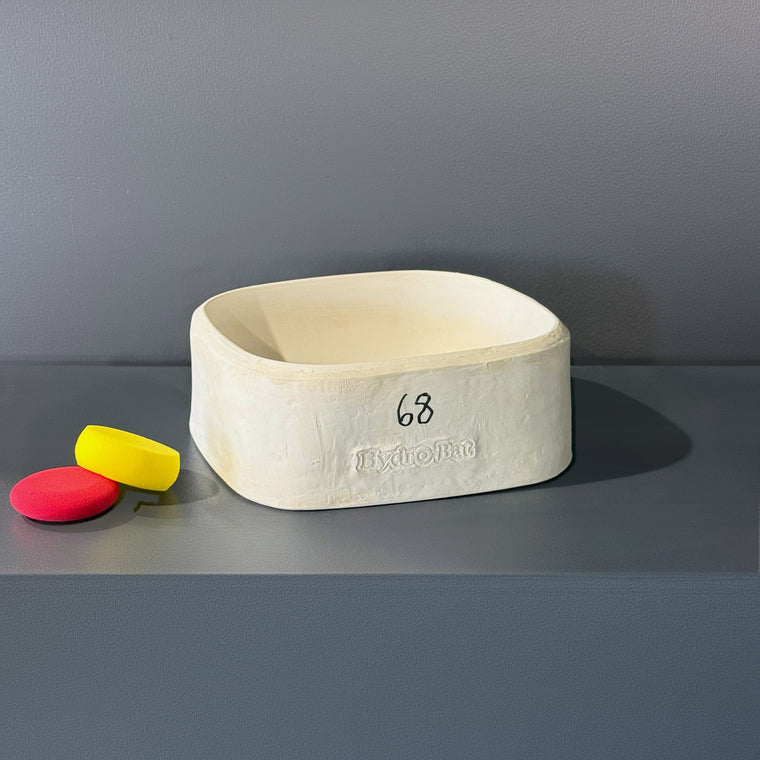 Slab mold 68
Deep Square Baker
A deep, soft-cornered box mold - press clay into the cavity and you get a genuinely deep rectangular vessel, which is hard to achieve any other way with slabs.
14 lbs of clay to start, rolled 1/2 in thick
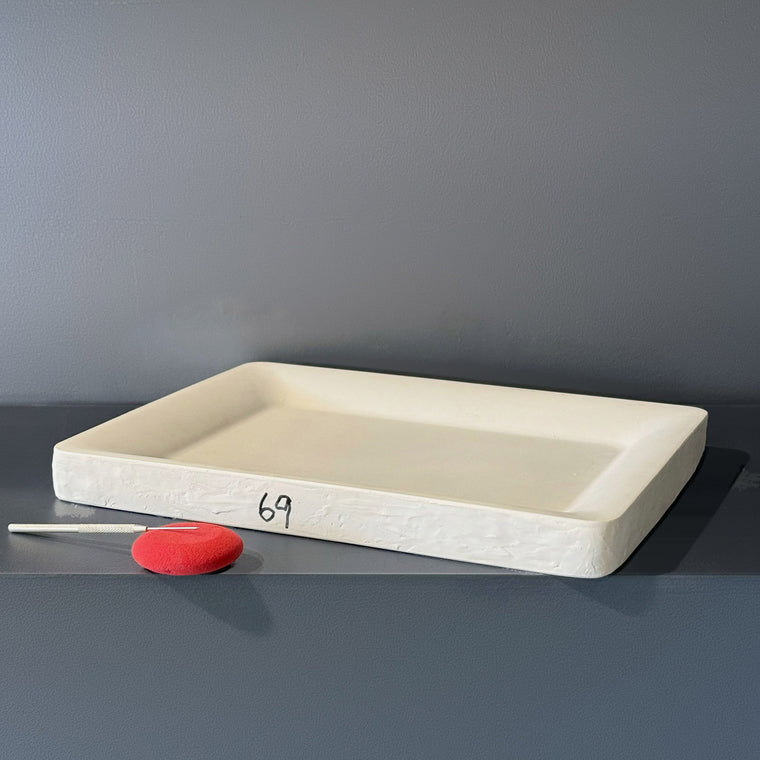 Slab mold 69
XL Rectangular Platter
A big shallow rectangle, pressed rather than draped. The result is a substantial flat tray with a low retaining wall - a serving tray for drinks, a large rectangular platter, a shallow baking dish, or a decorat
15.5 lbs of clay to start, rolled 1/2 in thick
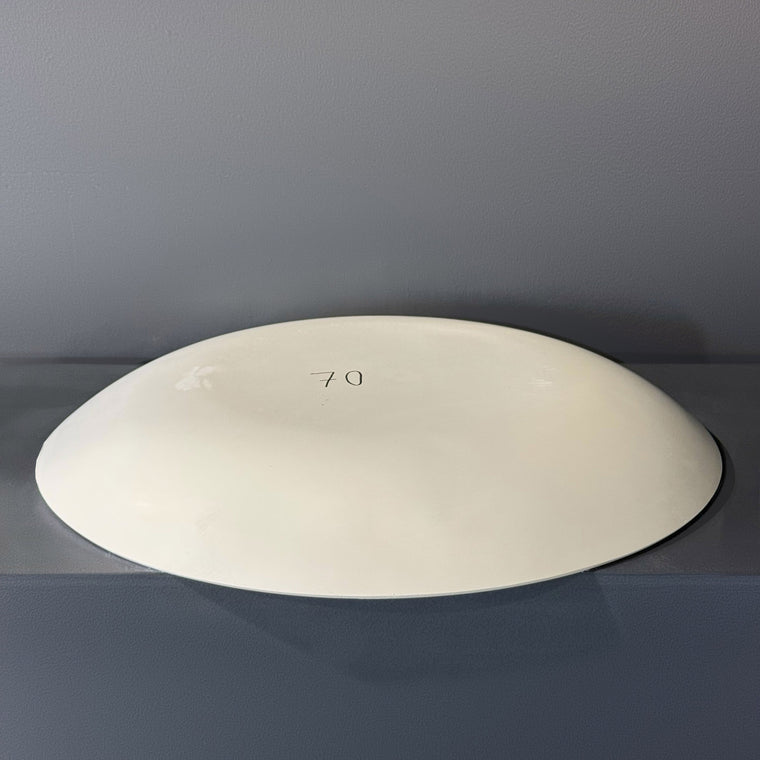 Slab mold 70
Baby Behemoth
Enormous and barely curved, which produces a wide shallow platter rather than a bowl.
16.5 lbs of clay to start, rolled 1/2 in thick
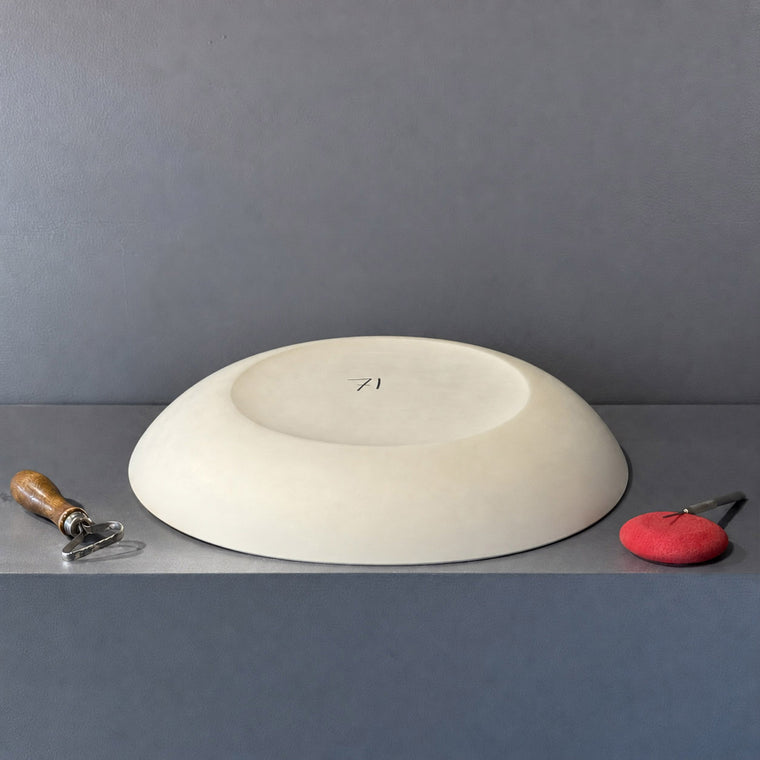 Slab mold 71
Big Bertha Bowl
The inner ring turns this from a generic oval into a proper platter with structure - a defined well for the food and a wide rim to hold onto.
12 lbs of clay to start, rolled 1/2 in thick
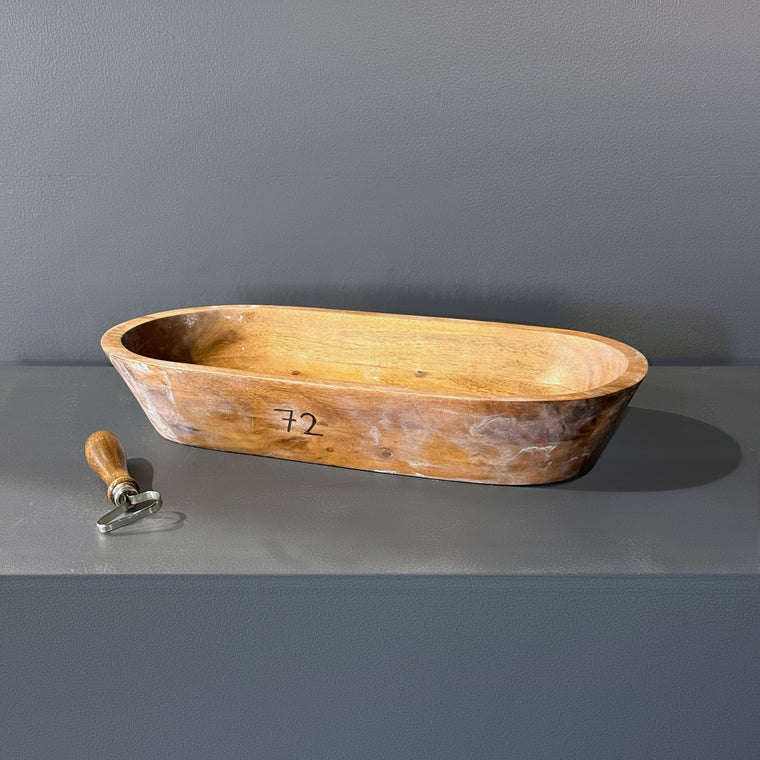 Slab mold 72
Dough Bowl Trough
A long carved dough bowl, used as a slump mold so the clay picks up its trough shape and its slightly uneven hand-hewn interior.
6.5 lbs of clay to start, rolled 1/2 in thick
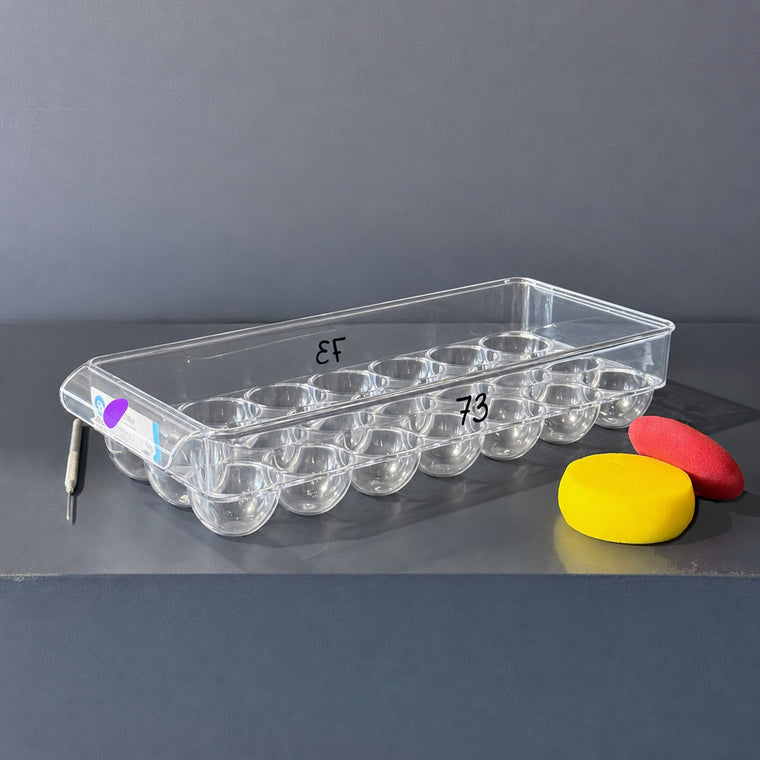 Slab mold 73
Dimpled Egg Tray
A found plastic egg holder, and one of the more inventive molds in the collection.
10 lbs of clay to start, rolled 1/2 in thick
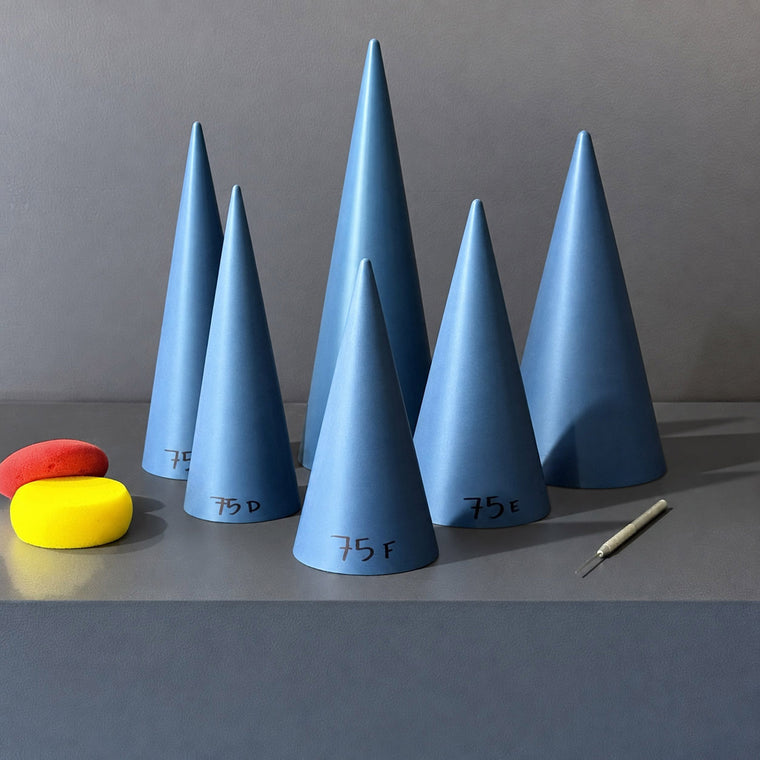 Slab molds 75
Cone Tree (set of 6)
The tallest cone in a set of six galvanised metal forms. Wrapped in a slab it gives a slender, elegant cone - a bud vase for a single tall stem, a hanging planter, or a pierced lantern.
1.5 to 3 lbs of clay to start, rolled 1/3 in thick
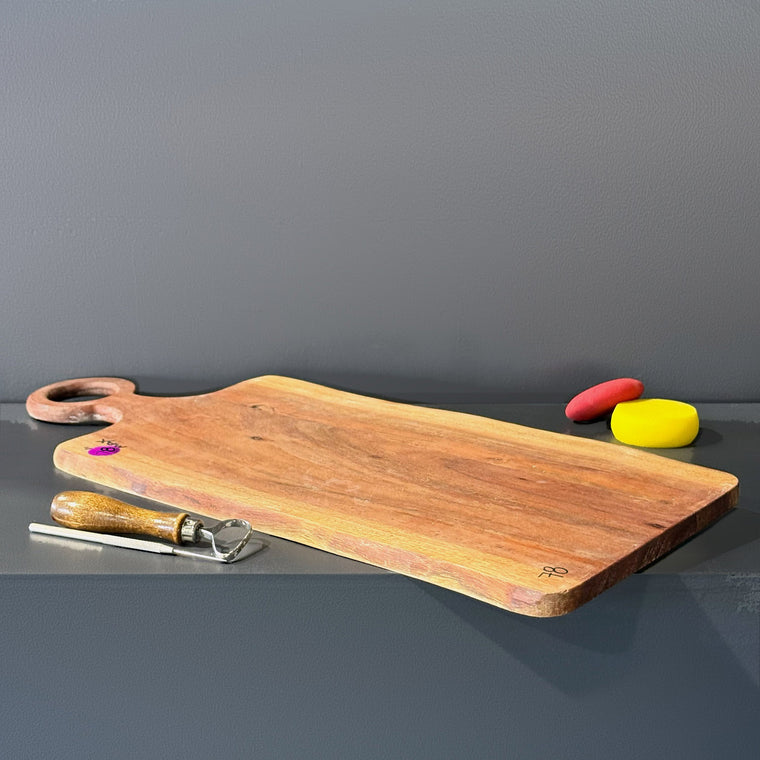 Slab mold 78
Handled Serving Board
A charcuterie board with a ring handle, used flat as a shaping surface and a template.
13 lbs of clay to start, rolled 1/2 in thick
Nothing matches all of that at once. Take one filter back off and it will.
Making something for a season
These come around every year and the pages stay up all year. Start earlier than feels necessary. Drying and two firings are not fast.
- HalloweenEvery Halloween idea in one place
- HalloweenPumpkin face bowls
- HalloweenCeramic ghosts
- HalloweenHaunted house lanterns
- HalloweenMonster mugs and goblets
- HalloweenCandle holders
- HalloweenTree stump candle holders
- HalloweenTombstones
- HalloweenWitches boots
- HalloweenHanging bat planters
- HalloweenGhost ships
- HalloweenFigurines and small projects
- HalloweenTrick or treat candy bowls
- ChristmasChristmas pottery ideas
- Mother's DayTwenty gift ideas
- This yearThe 2026 planter contest
Then chase the skill instead of the object
Plenty of people go looking for a project and find out they were really looking for a technique. Learn to pull a wall that does not thin out at the top, and suddenly half this page is available to you. The object follows the skill.
The Clay Hole University runs 204 free lessons, from centering a lump of clay to throwing a moon jar. The Mold Room holds all 248 slab molds with what each one makes and how much clay to start with.