

 Pottery Date Night
 Bring All Your Friends Free Week
 Give a Month of Pottery
 Private Pottery Parties

 The Welcome Booklet
 Your First Ten Sessions
 The Pottery Process
 Finding the Studio
 Your Classes Never Expire
 The Four Tables
 Who’s Who
 The Rewards Program
 Flux Glazes
 The Calculators
 Kiln Tracker
 Holiday Kiln Deadlines

 Beginner’s Tool Set
 Fingernail Clippers
 Mayco Clay Mender
 Epoxy for Kintsugi
 Applicator Bottles
 Large Bead Rack
 Raku Workshop
 Nighttime Raku
 Horsehair and Feather Raku
 The Clay Hole T-Shirt
 Embroidered Crewneck
 Zip-Up Hoodie
 Pre-Made Bisqueware
 Glaze Catchers
 Kiln Cookies
 Clay Cubby Rental
 The Glaze Bible, Printed
 The Book of Molds, Printed
 Printable Pottery Guides
 Free Printable Trackers
 Gifts for Potters
 Christmas Pottery Ideas
 Mother’s Day Gift Ideas
 Pottery Date Night
 Studio Calendar
 2027 Studio Events
 What Should I Do Today?
 How to Throw on the Pottery Wheel
 How to Make a Pinch Pot
 How to Tap Center a Pot
 The Five Stages of Clay
 Is Pottery Hard to Learn?
 Pottery Wheel Practice Drills
 20 Easy Hand-Building Projects
 Everything That Sounds Wrong

 A Beautiful Piece, Every Time
 Slab Roller Tips
 Any Dish as a Slump Mold
 Slab Roller & Slab Mold Certification
 The Pottery Skill Tree
 Clay & Pottery Calculators
 Logging Your Pottery and Glazes
 The Pottery Dictionary
 Why Did My Pottery Do That?
 The Pottery Cone Chart
 Pottery Myths, Fact-Checked
 Is Handmade Pottery Food Safe?
 Incredible Ceramic Artist Videos
 How Dan Throws Giant Pots
 How to Dry Your Pottery
 The Pottery Wheel Introduction
 Pottery by Zodiac Sign
 Personality and the Pottery Wheel
 Pottery for Engineers
 ADHD, Hyperfocus, and Never Running Out
 Hobbies for Burnout
 Screen-Free Hobbies for Adults
 Every Addiction I Ever Had Lost to Art
 Functional Pottery Is Engineering
 How Do We Compare?
 Pottery Classes by City
 Every Pottery Studio in Utah
 Pottery in Draper
 Featured Members
 The Signature Wall
 Making Friends as an Adult Is Brutal
 The Clay Hole Commandments
 2027 Pottery Contests
 2027 Studio Parties
 Gallery Night

 Scream It Into the Void
 Destroy the Glaze Wall
 Daily Affirmation Cards
 Everything That Can Go Wrong
 Subscribe to Our Newsletters
 Contact The Clay Hole
 Corporate Team Building

 Glaze Combinations
 Glazes We Do Not Carry
 Making Glaze Test Tiles
 The Mega Glaze Tool
 How to Use the Mega Glaze Tool

 Glaze Brushing Techniques
 How to Use Underglaze
 How to Use Dipping Glazes
 Glaze Problems, Causes and Fixes
 The Dipping Glaze Guide

 Making a Glaze Catcher
 Fused or Sharp After Firing
 The Signature Wall
 His Viral Videos
 His Own Ceramics
 Meet Mud
Glazing · Mixing your own glazes
What is actually in a glaze, and what mixing one involves.
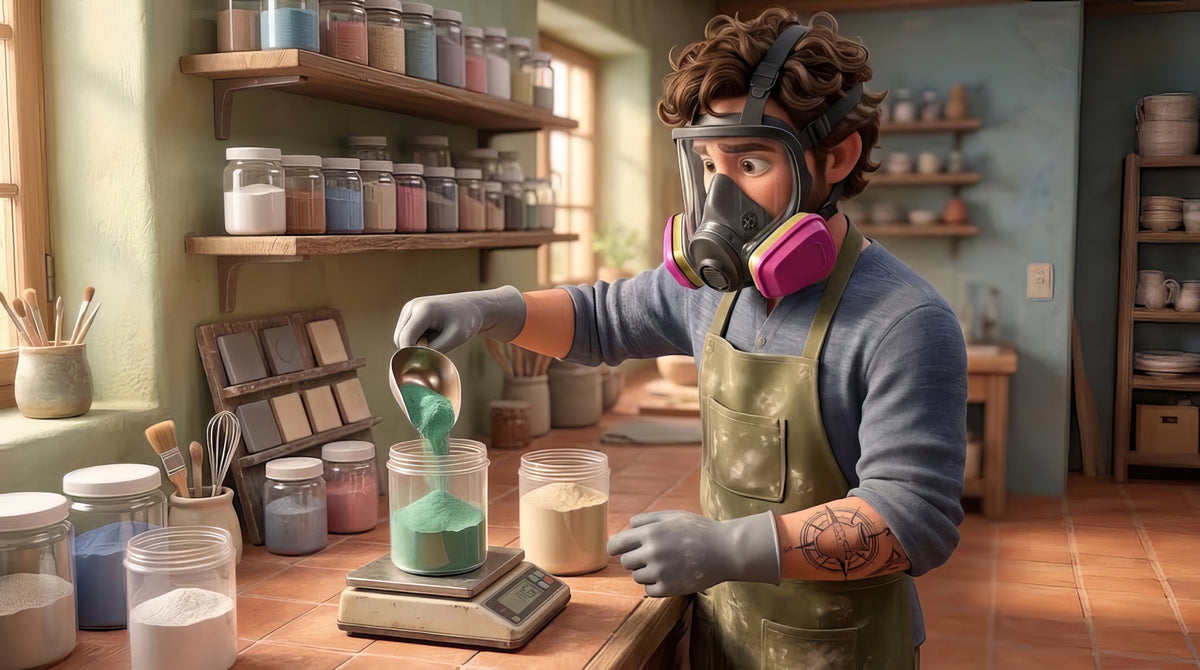
So the rabbit hole is yours to go down. A glaze is glass, a flux to melt it and clay to hold it, with color on top. A recipe is a base to a hundred and additions. Mixing is a scale, a sieve, a respirator and a garage. We do not teach recipes or mixing here, and this page says why.
Four steps with a tick list at each: what a glaze is, reading a recipe, the mixing itself with the safety rules, and testing. Six things that go wrong, and five videos, one of them an hour long for the day you have decided.
This is the short version: the three jobs, the recipe, the respirator and the sieve, the tile, each with a tick list. The material notes, the entry-fee arithmetic and the questions are in the comprehensive version.
Read it, then watch it
Why this is written down and filmed, both.
This page is a map of a rabbit hole, not a trip down it. What a glaze is, how a recipe reads, what mixing one involves, and what it costs in equipment and lungs: those are facts, and a page holds them. What a page cannot show is how a glaze looks as it goes through a sieve, and how the powder behaves when it meets water, and those are the videos. We do not teach recipes or mixing here, and this page explains why.
Use both, in this order
Read what a glaze is and what the entry fee is. Watch a glaze mixed from powders. Decide whether the rabbit hole is yours. If it is, the long video and the tick lists are the start.
The whole idea
Glass, a flux to melt it, clay to hold it, and a respirator to weigh it.
A glaze is silica melted by a flux and stiffened by alumina, with color on top. A recipe is a base to a hundred plus additions, never the water. Mixing is weighing dry with a respirator on, sieving twice, thinning to heavy cream, and a tile before any pot. It is a garage job, and we do not teach it here.
The five-minute version
The whole process in six moves.
If you have mixed anything from powders before and you just want the shape of it, this is the shape of it. Everything below is these six moves, slowed down and with the places they fail marked.
Before you buy a bag of anything
What you need in the garage.
Six things, and the respirator is the first of them and the reason this is a garage job. The scale is the second.
A P100 respirator, a gram scale, buckets, an 80 mesh sieve and a mixer, a damp towel, recipes for your cone, a garage, and test tiles.
Step one
Know what a glaze is: three jobs and some color.
A glaze is glass that stayed on a pot. Silica is the glass, and alone it melts far hotter than a studio kiln goes. A flux, feldspar or frit or whiting, brings the melt into the kiln’s range. Alumina, from kaolin, stiffens it so it clings instead of running. Every recipe is those three jobs.
Silica
Flint, quartz, and the silica hiding inside feldspar and clay. Half or more of most recipes. The thing that becomes the shiny surface, and the dust that must never be breathed.
Flux
Feldspars, frits, whiting, dolomite, talc, zinc. Each melts the glass a different way and gives a different surface: the fluxes are where matte and gloss and the color response come from.
Alumina
Kaolin and ball clay. Too little and the glaze runs off the pot; too much and it is dry and rough. The reason a glaze can be on a vertical wall at all.
Then the additions: colorants (oxides or stains, per our stains lesson), opacifiers like tin or zircopax that make it white, and a suspender like bentonite that keeps it from settling into cement. Every jar on the glaze wall is exactly this, made by a company with a laboratory and a lot of testing behind it, which is the argument for buying it.
Step two
Read a recipe, and check its cone before anything else.
A base that adds to one hundred, and additions on top. The base is glass, flux and alumina by weight. The additions are color, opacity and suspension, as percentages of the hundred. The water is never in the recipe. The cone is on the first line, and it is the first thing to check.
A recipe is a report of what happened once, somewhere else, with those materials, on that clay, in that kiln. A cone 10 recipe at cone 5½ is dry and rough. A recipe from 1985 may call for a feldspar that no longer exists under that name, or for lead. The internet does not date its recipes or vouch for them. Glazy, the free glaze database, is the place to start because recipes there carry a cone, a source and fired photos, and John Britt’s mid-range books are the next step.
And the poisonous branches: no lead, ever. Barium only in non-food glazes and only if you understand why. Raw chrome, cadmium and manganese in amounts you would not want in a mug. A recipe that does not say where it came from is a recipe to skip; there are a thousand safe ones at cone 5½.
Step three
Respirator on. Weigh dry, wet it, sieve it twice, thin it to cream.
The bag does not open without a P100 respirator. Not a paper mask. Every glaze is mostly silica, and silica dust does not leave lungs. Weigh each material to the gram over a damp towel, into a bucket with the water already in it, and wipe the bench down wet when the bags are closed.
Then mix with a whisk or a drill mixer, and sieve: two passes through 80 mesh, pushing it through with a stiff brush. Lumps and grit are unsieved glaze every time, and a glaze sieved once is a glaze with something in it. Then the water: a little at a time until a dipped finger comes out coated like heavy cream, and the amount written down so the next batch is the same. A hydrometer or a weighed cup gives a number to repeat.
Label the bucket with the recipe, the date and the cone, and stir it before every use, because a glaze that has settled is a bucket of cement under a layer of water. A spoon of bentonite in the recipe or a pinch of epsom salts keeps most glazes suspended. All of this is a garage job: not a kitchen, not a shared studio, and not here.
Step four
Tile before pot, catcher under the tile, one change at a time.
The first three recipes will disappoint. That is not a warning; it is the process. A test tile of your clay, the glaze at the thickness you will use, fired at your cone in your kiln, on a catcher because a new glaze has nobody standing behind it. Then the tile tells you: too dry, too runny, wrong color, crazed, right.
Change one thing. A little more flux for a drier glaze; a little more clay for a runnier one; a percent more colorant for a paler one. Scratch a number on the back of every tile before it goes in the kiln, write each change against that number in your log, and keep the tiles, because the drawer of tiles is the glaze notebook, and the fourth or fifth one is usually yours. Our test tiles lesson is the method.
Then, if the rabbit hole is yours, it goes a long way down: line blends, triaxials, unity formulas, the Stull map, materials analyses. Glazy and Digitalfire are where that lives, and good elephant pottery’s hour-long video below is a full step by step demonstration from raw materials. This page stops here on purpose.
Watch it done
Now watch five people mix from powders.
Watch this one, then decide if the rabbit hole is yours.
None of these potters work here or know we exist. Between them they cover a glaze from powders in eight minutes, reading a recipe, the whole process slowly, the sieve, and an hour-long demonstration from raw materials. Nothing but the still frame loads until you press play.
A glaze from a recipe: reading it, measuring, sieving and a test run, in eight minutes. The other four videos are in the comprehensive version.
When it goes wrong
Six ways it goes wrong, and what to do about each.
The three failures that happen on the first bucket.
Pick the one that looks like your bucket. The first three are the mix and your lungs. The last three are the recipe.
Pick the one that looks like your bucket. The three about the recipe are in the comprehensive version.
The glaze is lumpy, gritty or settles into cement
Not sieved, or sieved once, or left to sit. Dry materials clump in water and some of them sink like sand. A glaze that has settled hard at the bottom of a bucket has to be scraped and remixed, every time.
Two passes through an 80 mesh sieve, every batch. A spoon of bentonite or epsom salts in the recipe keeps it suspended. Stir before every use.
Sieve it again, twice. Scrape the bottom of the bucket up. It is the same glaze; it just needed the work.
It went on like paint, or like water
Water. A recipe never includes the water, and the right amount depends on the materials and on how you apply it. Too thick crawls and blisters; too thin fires dry.
Add water a little at a time until a dipped finger comes out coated like heavy cream, and write the amount down. A hydrometer or a weighed cup gives a number to repeat.
Thin it with water. Thicken it by letting it settle and pouring water off the top. Then a tile.
You breathed it
Silica. Every glaze recipe is mostly silica in one form or another, and dry silica dust does not leave lungs. The moment the bag opens is the dangerous moment, and the hour after, when it is on the bench.
A fitted respirator with P100 cartridges, not a paper mask, every time a bag is open. Weigh over a damp towel, wet the powder as soon as it is weighed, wipe every surface down wet afterwards. Never at a shared table, and never here.
Close the bag, wipe everything down wet, and put the respirator on for the rest of the job.
It fired nothing like the picture
The recipe was written for a different cone, a different clay, a different kiln, or a material that has changed since it was written. A recipe is a report of what happened once, somewhere else.
Recipes for the cone you fire at, tested on a tile of your clay, in your kiln, before any pot. Expect the first three to disappoint and the fourth to be yours.
Keep the tile, write what it did on the back, and change one thing at a time.
It ran onto the shelf
Too much flux, too thick, or a recipe at the top of its range. A homemade glaze has nobody standing behind it, and a runner in somebody else’s kiln is their shelf.
A catcher under every test of a new glaze, thinner in the bottom third, and a tile before a pot.
Tell the studio team. A drip on a shelf is ground off wet and the shelf rewashed, and it is far better said than found. Then put a catcher under the next one.
The recipe calls for something you should not use
Old recipes call for lead, barium, and raw colorants in amounts nobody would fire on a food surface now. The internet does not date its recipes.
No lead, ever. Barium only in non-food glazes and only if you understand why. Cadmium and chrome stains only in their encapsulated forms, and only if your firing stays under the stain’s heat ceiling, and even then keep them off anything that holds food unless the finished piece has been tested. If in doubt, skip them. A recipe that does not say where it came from is a recipe to skip.
Skip it. There are a thousand safe recipes at cone 5½ and the rabbit hole is long enough without the poisonous branches.
How it works here
At The Clay Hole, mixing is a home job and the wall is the alternative.
This page is written for potters everywhere, and the job it describes happens in a garage. Here is where the studio stands.
Three things to know here
We do not teach recipes or mixing, and members do not mix glaze from raw materials in the building. The wall carries 650+ brush-on glazes and seven dipping buckets. The Food Safe Lookup shows which are rated for food by their maker. A glaze mixed at home is a conversation with the studio team before it goes near a kiln, and a test tile on a catcher first.
Why not here
Dry glaze materials are silica dust in a room where everyone breathes, so members do not mix glaze from raw materials here. Mixing happens in a garage, per the safety rules above.
The wall instead
650+ brush-on glazes, 150+ underglazes and seven dipping buckets, fired here at cone 5½ apart from the gold sticker raku and low fire jars. The Food Safe Lookup shows which ones are rated for food by their maker. The glaze finder is the shortcut, and the brush-on certification comes first: a video, the studio rules, a quick check and a signed agreement. Your Level decides which jars you can use.
A glaze you mixed at home
Talk to the studio team before it goes anywhere near a kiln, and expect a test tile on a catcher first. An untested glaze can run onto a shelf or spit onto the pot next to it, and our staff load kilns for everyone. Tell them the cone it was written for and whether it has anything on the poisonous list in it. A glaze you mix yourself has no food rating from a maker, so keep it off anything used for food.
Firing
Bisque is cone 05 and free. The glaze firing is cone 5½ at five cents a cubic inch, $4.80 minimum. Recipes written for the mid-range usually behave at cone 5½; recipes for cone 10 do not. A test tile is small enough that one tile is one flat charge, and several small tiles that fit together on one kiln cookie, within the size limit of one flat charge, are charged as one piece, so put a batch on one cookie.
Questions people actually ask
The ones that come up most.
What is actually in a glaze?
Glass, held on a pot. Silica is the glass, and it melts at a temperature no studio kiln reaches. A flux, feldspar or a frit or whiting, brings the melting point down to something a kiln can do. Alumina, usually from a clay like kaolin, stiffens the melt so it stays on the pot. Colorants, opacifiers and a suspender are the additions. Every recipe is those three jobs in some proportion, plus what makes it look like something.
How do I read a recipe?
A base that adds to one hundred parts by weight, then additions on top of the hundred: a colorant at two percent, an opacifier at ten, bentonite at two to keep it suspended. The water is never in the recipe; you add it to consistency. The cone the recipe is for is the first thing to check, because a cone 10 recipe fired at cone five and a half is a dry disappointment.
Is it cheaper?
Per gallon, much cheaper; a five-gallon bucket of a base glaze from dry materials costs a fraction of the same volume in jars. Per pot, it depends on how many you make, and on the scale, the sieve, the buckets, the respirator and the space, which are the real entry fee. It is cheaper for a potter with a kiln and a garage. It is a hobby of its own for everyone else.
What do I need to start?
A respirator with P100 cartridges, a scale that reads to a gram, a set of buckets, an 80 mesh sieve, a whisk or a drill mixer, a damp towel to weigh over, a few recipes for the cone you fire at, and somewhere that is not a kitchen and not a shared studio. Then test tiles, a lot of them.
Can I use a glaze I mixed at The Clay Hole?
Mixing is a home job; we do not teach recipes or mixing, and members do not mix glaze from raw materials in the building. A glaze you mixed at home and want to fire here is a conversation with the studio team before it goes anywhere near a kiln, and expect a test tile on a catcher first: an untested glaze can run onto a shelf or spit onto the pot next to it, and our staff load kilns for everyone.
Why do studios buy glazes instead?
Consistency, mostly. A jar from a maker like Mayco or Amaco is made to one recipe, so it behaves more predictably than a glaze you weigh yourself, and does not need a respirator to open, and many are rated for food by their maker. It varies jar by jar, so check the Food Safe Lookup. A wall of 650+ of them is a lot of somebody else’s testing. Mixing your own gives you a glaze nobody else has, at the cost of doing that testing yourself.
Where do I learn more?
The videos on this page are the start. After that, Glazy, the free online glaze database, John Britt’s books on mid-range glazes, and Digitalfire for the chemistry. Our page stops where the rabbit hole starts, on purpose.
Related lessons
Six lessons that sit next to this one.
Three to read next.
A mixed glaze is a stain, a tile and a catcher away from a pot. These are the pages around it.
That is the map
Glass, flux, alumina. Read the cone. Respirator. Sieve twice. Tile before pot.
Your first bucket will be lumpy because you sieved it once, and your first tile will be dry because the recipe was for a hotter kiln. That is normal, and the fourth tile is usually yours. Or you will read this page and decide the wall of 650+ jars is the better deal, which is also the page working.
If you want the material notes, the entry-fee arithmetic, the poisonous list and the answers to the questions everybody asks, switch to the comprehensive version at the top. Otherwise, go look at the glaze finder first.
Written for potters everywhere. Where our studio does things differently, the page says so.
Which version would you like to print?
Both print clean, with the videos turned into labeled boxes you can search for later.