

 Pottery Date Night
 Bring All Your Friends Free Week
 Give a Month of Pottery
 Private Pottery Parties


 The Welcome Booklet
 Your First Ten Sessions
 The Pottery Process
 Finding the Studio
 Your Classes Never Expire
 The Four Tables
 Who’s Who
 The Rewards Program

 Flux Glazes
 The Calculators
 Kiln Tracker
 Holiday Kiln Deadlines


 Beginner’s Tool Set
 Fingernail Clippers
 Mayco Clay Mender
 Epoxy for Kintsugi
 Applicator Bottles
 Large Bead Rack

 Raku Workshop
 Nighttime Raku
 Horsehair and Feather Raku

 The Clay Hole T-Shirt
 Embroidered Crewneck
 Zip-Up Hoodie
 Pre-Made Bisqueware
 Glaze Catchers
 Kiln Cookies
 Clay Cubby Rental

 The Glaze Bible, Printed
 The Book of Molds, Printed
 Printable Pottery Guides
 Free Printable Trackers

 Gifts for Potters
 Christmas Pottery Ideas
 Mother’s Day Gift Ideas
 Pottery Date Night

 Studio Calendar
 2027 Studio Events
 What Should I Do Today?

 How to Throw on the Pottery Wheel
 How to Make a Pinch Pot
 How to Tap Center a Pot
 The Five Stages of Clay

 Is Pottery Hard to Learn?
 Pottery Wheel Practice Drills
 20 Easy Hand-Building Projects
 Everything That Sounds Wrong


 A Beautiful Piece, Every Time
 Slab Roller Tips
 Any Dish as a Slump Mold
 Slab Roller & Slab Mold Certification

 The Pottery Skill Tree
 Clay & Pottery Calculators
 Logging Your Pottery and Glazes

 The Pottery Dictionary
 Why Did My Pottery Do That?
 The Pottery Cone Chart
 Pottery Myths, Fact-Checked
 Is Handmade Pottery Food Safe?

 Incredible Ceramic Artist Videos
 How Dan Throws Giant Pots
 How to Dry Your Pottery
 The Pottery Wheel Introduction

 Pottery by Zodiac Sign
 Personality and the Pottery Wheel
 Pottery for Engineers
 ADHD, Hyperfocus, and Never Running Out
 Hobbies for Burnout
 Screen-Free Hobbies for Adults
 Every Addiction I Ever Had Lost to Art
 Functional Pottery Is Engineering

 How Do We Compare?
 Pottery Classes by City
 Every Pottery Studio in Utah
 Pottery in Draper

 Featured Members
 The Signature Wall
 Making Friends as an Adult Is Brutal
 The Clay Hole Commandments

 2027 Pottery Contests
 2027 Studio Parties
 Gallery Night


 Scream It Into the Void
 Destroy the Glaze Wall
 Daily Affirmation Cards
 Everything That Can Go Wrong

 Subscribe to Our Newsletters
 Contact The Clay Hole

 Corporate Team Building


 Glaze Combinations
 Glazes We Do Not Carry
 Making Glaze Test Tiles

 The Mega Glaze Tool
 How to Use the Mega Glaze Tool


 Glaze Brushing Techniques
 How to Use Underglaze
 How to Use Dipping Glazes
 Glaze Problems, Causes and Fixes

 The Dipping Glaze Guide


 Making a Glaze Catcher
 Fused or Sharp After Firing

 The Signature Wall
 His Viral Videos
 His Own Ceramics
 Meet Mud
Optional glazes · not included with membership
Four bottles that make a glaze move.
Every other glaze in this building is built to stay where you put it. These four are built to melt further than that. To run, pool, break, and drag color down the side of the pot with them. That is the whole product. It is also the whole risk.
You buy your own pint, it is yours to keep, and there is no up-charge on top of it. Any membership level. What follows is everything worth knowing before you open the lid, including the part where a runaway glaze welds your bowl to a kiln shelf.
- The four fluxes
- What flux actually does
- Under, over, sandwiched
- Combinations
- Glaze catchers
- Pitfalls
The collection
The four we carry.
Three of these are sold as flux glazes on purpose. One of them, Running Hot Chowder, is a full stoneware glaze that happens to flow so hard the pottery world uses it like a flux. All four are cone 5/6, which is exactly what our kilns fire.
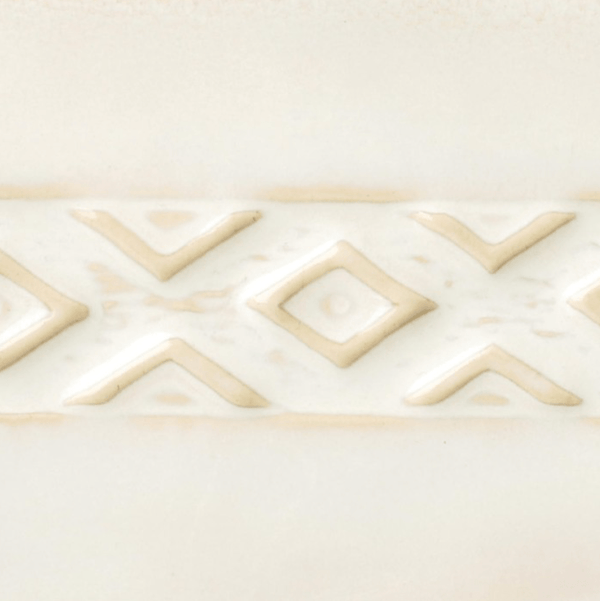
Amaco · Potter’s Choice PC-17
Honey Flux
$26.00
Pint · in-studio purchase · yours to keep
A creamy amber that increases flow when layered over another glaze. Opaque honey and cream at cone 5, and at cone 6 it shifts to a fluid white with honey flecks, the same bottle behaves like two different glazes one cone apart.
The Amaco families, because it was designed alongside them: Potter’s Choice, Celadon and the Shinos. It is at its best over dark iron glazes (Temmoku, Iron Lustre, Ancient Jasper, Deep Firebrick) where the amber tears open the dark surface.
Amaco is blunt about application: too thin and the surface goes splotchy and incomplete. It wants three thick coats. Over pale, already-stable satins it mostly reads as murky cream rather than drama.
- Amber and cream
- Loves iron glazes
- Changes at cone 6
- Wants 3 thick coats
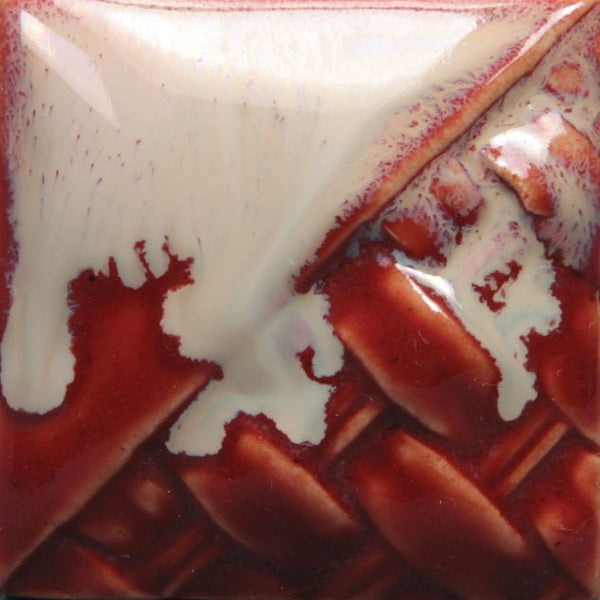
Mayco · Stoneware SW-401
Light Flux
$22.00
Pint · in-studio purchase · yours to keep
A translucent cream on its own, and a pure flow agent underneath that. This is the least opinionated of the four: it adds movement and pulls hidden colors out of whatever it touches without pushing the color much in one direction.
Mayco designed it to layer with their Stoneware glazes and with Stroke & Coat, both of which we carry by the wall-full. The livelier the partner glaze, the more it does, Mayco’s Classics and Crystals move far more than their Gloss line.
It turns matte glazes glossy. If you picked a matte for its surface, flux erases that decision. Also, a single coat changes the color but barely moves anything, movement starts at two to three coats.
- Translucent cream
- Most neutral of the four
- Built for Stroke & Coat
- Kills matte surfaces
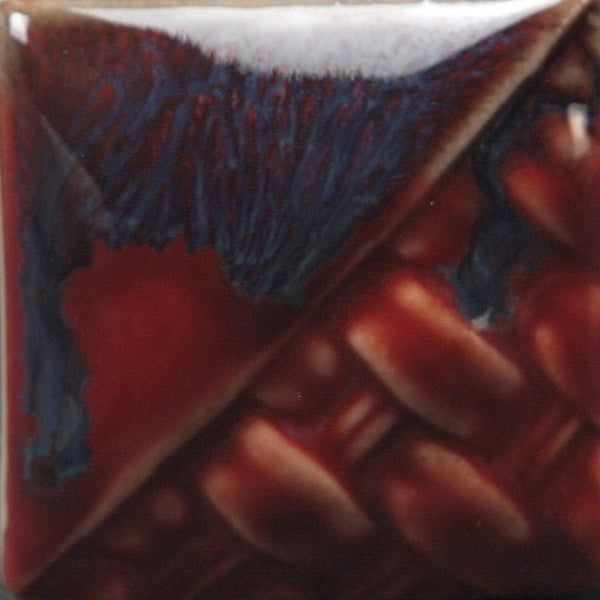
Mayco · Stoneware SW-402
Dark Flux
$22.00
Pint · in-studio purchase · yours to keep
Chemically Light Flux’s twin, visually its opposite. Translucent brown on its own, so everywhere it thins out over a rim or an edge you get a warm dark line, and everywhere it pools you get depth the partner glaze could not produce alone.
Mid and light glazes that need a shadow: the Mayco Stoneware colors, the pale Stroke & Coats, anything cream, sage, blue or sand that currently looks flat. It is the one to reach for when a piece is pretty but reads like paint.
Over an already-dark glaze you spent $22 to make it slightly darker. It can also mud a bright Stroke & Coat. The browns eat oranges, hot pinks and reds first.
- Translucent brown
- Adds shadow and depth
- Rescues flat colors
- Mutes brights
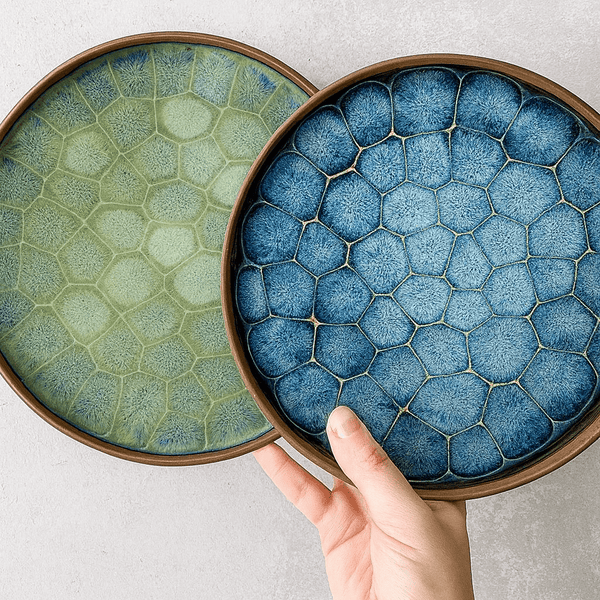
Spectrum · 1173
Running Hot Chowder
$21.00
Pint · in-studio purchase · yours to keep
The outlier. Spectrum sells this as a glossy, creamy stoneware glaze that is formulated to flow, and the pottery world adopted it as a flux because of how it behaves over everything else. It floods into carving and pools in every low spot on the pot.
Texture. If you carved, stamped, faceted or threw heavy rib marks, this is the bottle. It also has a long history over the Spectrum Floating and Texture families, which sit on our shelves already.
It is the least flux-like of the four, because it brings its own creamy body along. On a smooth pot with no texture and no partner glaze it is just a nice cream glaze that runs. It will lighten and dominate whatever it lands on.
- Creamy and glossy
- Built for carved texture
- A glaze, not an additive
- Dominates its partner
The movement bars are our read, not a measurement. They come from what each manufacturer says about their own product and from how these four behave in general use. Nobody has run a controlled melt-flow test on all four side by side, and if anyone tells you they have, ask to see the tiles.
The one idea worth understanding
A flux is not a color. It is the melter.
Every glaze on our wall is doing three jobs at once. Silica is the glass. Alumina is the stiffener that keeps the glass from sliding off the pot. And flux is the melter, the ingredient that drops the melting point far enough that a normal kiln can do the job at all.
Silica on its own does not melt until roughly 3,100°F. Our kilns finish around 2,200°F at cone 5½. That gap of nearly 900 degrees is closed entirely by flux. Without it there is no such thing as a glaze, just dust that survives the firing.
So when you buy a bottle labeled flux, you are buying a jar of extra melter with just enough of the other two ingredients to behave like a glaze. Brush it on next to a finished, balanced recipe and you have not simply added a runny glaze on top. You have rewritten the recipe of both.
This is why your reliable glaze suddenly ran. Two materials that each melt high can melt much lower when mixed, chemists call it a eutectic, and it is the single most useful thing a potter can know about layering. A stable glaze plus a flux does not average out to “a bit runnier.” It can melt dramatically lower than either one alone.
Hidden colors
Mayco calls the effect “hidden colors,” and the name is accurate. Colorants that sat locked inside a stiff melt get carried, spread and thinned by the flux. Iron that read as flat brown breaks into amber. Rutile that read as beige throws blue. You are not adding pigment. You are releasing what the partner glaze was already holding.
Which is also why nobody, including the manufacturers, can tell you exactly what your combination will look like. They publish test tiles fired flat, on their clay body, in their kiln. You are firing a vertical wall, on our clay, in our kilns. Close, but not the same pot.
Know what you are layering onto
Reactive glazes vs stain-based glazes.
Flux behaves completely differently depending on which of these two camps your other glaze sits in. Almost nobody teaches this, and it explains most of the surprise results people get.
Stain-based: the color is the point
These get their color from ceramic stains, manufactured, stable, predictable pigment. They are engineered to land where you put them and stay that color. Two mugs glazed the same way come out looking like twins. On their own they do very little that surprises you, which is exactly why people love them and also why people get bored of them.
What flux does to them: it gives a flat color something to do. The stain survives the extra melt, so the color stays recognizable while the surface starts to streak, blur, break over edges and pool in the low spots. You keep your red; you just get a red that moves.
Families on our wall that lean stain-based- Mayco Stroke & Coat
- Stroke & Coat Speckled
- Coyote Gloss
- Coyote Satin
- Coyote Vibro-Color
- Amaco Satin Matte
- Mayco Stoneware Matte
- Amaco Velvet Underglaze
- Speedball Underglaze
Start here. Flux over a stain-based glaze is a controlled experiment. You can predict roughly what you will get, the color will not vanish on you, and the failure mode is usually “less interesting than I hoped” rather than “where did my glaze go.”
One catch. Underglazes are not glazes. Flux over bare underglaze still needs the underglaze to be sealed by something, and the flux will drag the design as it moves. Beautiful when intended, heartbreaking when it happens to lettering.
Reactive: the kiln is the point
These are formulated to be a little unstable on purpose. Their color comes from metal oxides, rutile and titanium rather than a fixed stain, and the recipe is tuned so the melt separates, crystallises, breaks over texture and pools. Two mugs glazed identically come out siblings, not twins. They already do half of what a flux does, before you add any flux at all.
What flux does to them: it doubles down on a glaze that was designed to be dramatic. This is where the spectacular results come from, and where pots end up fused to shelves. A reactive glaze plus a flux, applied thick, on a vertical wall, is the highest-risk thing you can do in our kilns.
Families on our wall that lean reactive- Amaco Potter’s Choice
- Amaco Celadon
- Amaco Shinos
- Amaco Cosmos
- Amaco Kiln Ice
- Amaco Phase
- Coyote Fantasy
- Coyote Constellation
- Coyote Crystalline
- Coyote Mottled
- Coyote Copper & Iron
- Coyote Archie’s
- Spectrum Floating
- Spectrum Texture
- Mayco Classics and Crystals
- Speedball Mid-Fire
Go slower here. Fewer coats, keep the flux higher up the pot, and treat every result as information rather than a plan. Nothing in this camp repeats exactly, so a combination that worked once is a lead, not a recipe.
Crystalline and crawling glazes are their own animal. Adding a flux to a glaze that is engineered to crawl, bead or grow crystals usually erases the effect you paid for, the extra melt smooths out exactly the surface you were trying to build.
Families are grouped by how they generally behave, not by an official manufacturer category. A few glazes inside any family will misbehave in the other direction, another argument for a test tile.
The decision that changes everything
Under it, over it, or sandwiched?
Mayco says it plainly: the order in which you apply flux, above or beneath another glaze, changes the fired result. Same two bottles, same pot, same kiln, completely different piece. Tap through the three.
The dramatic one
The flux melts on top and travels downward, dragging the color underneath along with it. This is where the rivulets, the tears and the pooled edges come from, the look most people actually want when they buy their first pint. It is also the version that ends up on a shelf, because everything that moves is moving toward your foot ring.
Reach for it when: you want visible drips and movement, and the piece has somewhere safe for the glaze to land.
The honest summary
There is no universally better order. What there is, is a trade: the further up the stack you put the flux, the more movement you get and the less control you keep. Underneath is the conservative choice, on top is the expressive one, and sandwiched is a coin flip with excellent odds of being your favorite piece of the month.
The variables that decide the outcome are not mysterious. Manufacturers list them: how fluid the companion glaze is, how thick you apply, how many coats, whether the surface is vertical or horizontal, and how hot and how slow the firing runs. You control four of those five.
One coat is not a layering. A single coat of flux will change the color of what it touches but barely affects mobility at all. If you brushed one thin coat and nothing happened, that is not a failed combination. That is a combination you have not tried yet. Two to three coats is where the behavior starts.
All four, side by side
The straight comparison.
Scroll sideways on a phone. Everything here comes from the manufacturers except the movement line, which is our read.
| Honey Flux | Light Flux | Dark Flux | Running Hot Chowder | |
|---|---|---|---|---|
| Maker and code | Amaco PC-17 | Mayco SW-401 | Mayco SW-402 | Spectrum 1173 |
| Price | $26.00 | $22.00 | $22.00 | $21.00 |
| On its own | Opaque honey and cream at cone 5; fluid white with honey flecks at cone 6 | Translucent cream | Translucent brown | Glossy, creamy, opaque |
| Movement | Strong | Very strong | Very strong | Strong, floods low spots |
| Designed to pair with | Amaco Potter’s Choice, Celadon and Shino families | Mayco Stoneware glazes and Stroke & Coat | Mayco Stoneware glazes and Stroke & Coat | Anything; it is a standalone glaze that flows |
| Coats recommended | 3 thick | 2 to 3 | 2 to 3 | 2 to 3 even |
| What it adds | Amber and cream breaking through dark glazes | Movement with minimal color shift | Shadow, depth and a warm dark edge | Cream flooding and heavy pooling in texture |
| Struggles with | Pale stable satins; thin application goes splotchy | Mattes, which it turns glossy | Dark glazes and bright oranges, reds and pinks | Smooth untextured pots, where it just reads as cream |
| Firing range | Cone 5 to 6 | Cone 5 to 10 | Cone 5 to 10 | Cone 4 to 6 |
| Food surfaces | Manufacturer rates it food safe | Manufacturer rates it non-toxic and dinnerware safe | Manufacturer rates it non-toxic and dinnerware safe | Manufacturer rates it food safe and dinnerware safe |
Our kilns fire cone 5/6, so the two Mayco fluxes are working at the calm end of their range. That is not the same as safe. It is still more than enough movement to ruin a shelf.
Not sure which one
Which flux is your flux?
Three taps. This picks the bottle most likely to give you the result you just described, not the only one that will work.
Answer the three above
Your recommendation shows up here, with the reason and a link to the bottle.
The good stuff
Twenty-two combinations, all using glazes we stock.
Every partner glaze below is on our wall right now. Filter by flux, or by the look you are chasing.
Read this before you plan a piece around one. These come from manufacturer layering guidance and from what the wider pottery world reaches for, not from tiles fired in our kilns on our clay. Treat every one as a strong starting point, not a recipe. Fire a test tile, then tell us how it went so we can start marking the proven ones.
Showing all 22 combinations.
Honey Flux over Temmoku
Amaco Potter’s Choice · flux on top · 3 coatsThe reference combination for this bottle. Amber and cream tear open a near-black iron surface and run in warm rivers wherever the wall goes vertical.
Why it works: Temmoku is loaded with iron, and iron is exactly what a flux carries and re-colors as it moves.
Honey Flux over Ancient Jasper
Amaco Potter’s Choice · flux on top · 3 coatsJasper already breaks rust and blue over texture. The flux stretches those breaks into long vertical veins with honey pooling at the bottom of each one.
Why it works: two rutile-driven surfaces stacked, with extra melt to move them.
Honey Flux over Iron Lustre
Amaco Potter’s Choice · flux on top · 3 coatsMetallic bronze-black split by warm amber. One of the most photographed layerings in mid-fire ceramics, and a genuine shelf hazard on a straight-sided pot.
Why it works: Iron Lustre is already close to saturated; the flux pushes it over the edge into full flow.
Honey Flux over Oatmeal
Amaco Potter’s Choice · flux on top · 2 to 3 coatsWarm speckled oatmeal goes glossier and gathers into a honeycomb of pooled amber. The quiet one on this list, and the easiest to put on a mug you actually want to use.
Why it works: Oatmeal is comparatively stable, so the flux adds surface interest without a landslide.
Honey Flux under Blue Rutile
Amaco Potter’s Choice · flux underneath · 2 coatsUnderneath rather than on top. The rutile blue keeps its own surface but mottles harder and breaks warmer, with far less risk of anything reaching the shelf.
Why it works: the flux melts below and lifts the glaze above it, so you get movement inside the layer instead of down the pot.
Honey Flux over Cacao Shino
Amaco Shino · flux on top · 2 to 3 coatsAmber over cocoa. The shino stays rustic and dry-looking where it is thin, then turns glassy and golden wherever the flux gathers.
Why it works: Amaco built Honey Flux to layer with its own Shino and Celadon lines.
Light Flux over Tuxedo
Mayco Stroke & Coat · flux on top · 3 coatsSolid black opens into gray, blue and cream streaks. The single best demonstration of what a flux does to a flat color, and the one to try first if you have never used a flux.
Why it works: Mayco specifically designed the fluxes to layer with Stroke & Coat.
Light Flux over Blue Yonder
Mayco Stroke & Coat · flux on top · 2 coatsThe blue keeps its identity but softens into bands, with pale cream breaking over every rim and edge. Reads expensive on a simple form.
Why it works: the stain survives the extra melt, so you gain movement without losing the color.
Light Flux over Blue Hydrangea
Mayco Crystal · flux on top · 2 coatsMaximum drama, maximum danger. Mayco says their Crystal and Classic glazes move far more with flux than their gloss line does, and this is that warning in glaze form.
Why it works: a dynamic glaze plus extra melter. Keep it off the bottom third and put it on a catcher.
Light Flux over Wrought Iron
Mayco Stoneware Matte · flux on top · 2 coatsA matte black-brown turns glossy and starts breaking rust at every edge. Go in knowing the matte surface is gone. That is the trade you are making.
Why it works: flux converts matte surfaces to gloss, which on an iron matte is a feature rather than a loss.
Cotton Tail, Light Flux, then Moody Blue
Mayco Stroke & Coat · sandwiched · 2 coats eachThe sandwich. Cream and blue bleed into each other through the flux layer instead of sitting in two separate zones, and the boundary becomes the interesting part of the pot.
Why it works: the flux melts between the two and lets them exchange color across the join.
Light Flux over Sour Apple Speckled
Mayco Stroke & Coat Speckled · flux on top · 2 coatsThe speckle stays put while the green moves around it, so you get scattered dark flecks suspended in a glaze that is clearly flowing. Excellent on a bowl interior.
Why it works: speckle particles do not travel with the melt, so they mark where the glaze used to be.
Dark Flux over Birch
Mayco Stoneware · flux on top · 2 coatsCreamy off-white with warm brown rivulets running through it. This is the fix for a piece that came out pretty but flat, and it is the most forgiving thing on this whole list.
Why it works: Dark Flux is translucent brown, so it reads as shadow wherever it thins and depth wherever it pools.
Dark Flux over Vanilla Dip
Mayco Stroke & Coat · flux on top · 2 coatsVanilla with a burnt edge. Brushed only on the top third it gives you a warm dark rim that fades into clean cream, which suits a mug better than almost anything else here.
Why it works: partial application is a legitimate technique, flux does not have to cover the whole pot.
Dark Flux over Alabaster
Mayco Stoneware Matte · flux on top · 2 coatsA pale matte gains a glossy amber-brown wash that settles into every throwing line and every thumbprint. The matte becomes satin to glossy in the process.
Why it works: the flux finds the low spots, so any surface record of how you made the pot gets emphasized.
Dark Flux under Sandstone Shino
Coyote Shino · flux underneath · 2 coatsUnderneath a shino, the flux deepens the break so the surface reads older and more weathered without the glaze visibly running anywhere.
Why it works: flux beneath adds movement inside the layer, not down the wall, the low-risk way to use it.
Dark Flux over Seafoam
Amaco Satin Matte · flux on top · 2 coatsPale green with brown breaking through it, somewhere between celadon and old bronze. Expect the satin surface to gloss up.
Why it works: brown over green is one of the oldest good ideas in ceramics; the flux is just the delivery method.
Chowder over Floating Blue
Spectrum Floating · chowder on top · 2 to 3 coatsCream flooding down over a blue that was already floating and breaking. The most requested version of this bottle, and one of the messiest if you take it low on the pot.
Why it works: both are Spectrum glazes formulated to flow, so they melt into each other rather than sitting in layers.
Chowder over Texture Dark Cloud
Spectrum Texture · chowder on top · 2 coatsCream gathers in every carved line and pulls thin over every raised edge, so the pattern you cut into the clay becomes the pattern in the glaze.
Why it works: a flowing glaze on a textured surface always tells you where the low spots are.
Chowder on carved stoneware, alone
No partner glaze · 2 to 3 even coatsWorth saying out loud: on a deeply carved or faceted pot this needs no partner at all. It pools dark in the cuts and pulls to near-white on the ridges, and looks like a far more complicated glazing job than it was.
Why it works: it is a complete glaze in its own right, which the other three are not.
Chowder over Espresso Bean
Coyote Shino · chowder on top · 2 coatsHard contrast: near-black shino under thick cream, breaking into tan where the two meet. Keep it to the upper half and let the dark hold the bottom of the pot.
Why it works: maximum value contrast, so every bit of movement is visible from across the room.
Chowder over Temmoku
Amaco Potter’s Choice · chowder on top · 2 coatsCream poured over deep iron brown. Where the chowder thins you get tan and rust; where it gathers you get an almost porcelain white sitting on top of the dark. Brutal contrast, and it photographs beautifully.
Why it works: an opaque flowing glaze over a saturated iron glaze gives you the widest tonal range available from two bottles.
Want the visual reference for any glaze named here? The Glaze Bible has them all, and the full text list shows what is on the wall this month.
Before you load it
How much is this going to run?
Five questions about the piece in your hands. This is a judgment aid built from what the manufacturers publish about their own products, not a guarantee, and never a substitute for a catcher.
Moderate run risk
Expect real movement and some visible travel down the wall. Keep the flux out of the bottom third, and check the piece is sitting where a run can be caught.
Glaze catcher required. There is flux on the outside of this piece, so it goes into the kiln on a catcher you supply. No exceptions, at any height.
The one rule on this page
Flux on the outside means a glaze catcher. Every time.
Any pottery with flux applied to the exterior must go into the kiln sitting on a glaze catcher that you supply. Not most pieces. Not the risky-looking ones. Every piece, at any height, no exceptions.
Members are financially responsible for any damage to kiln shelves, and for the wages I pay my studio manager to fix the problem. Just don’t do it. Not to mention, glazes running onto shelves destroy your pot too.
What a catcher actually does
It is a sacrificial dish that sits under your piece and takes the run instead of the shelf. Glaze that reaches it is glaze that did not weld your pot to $200 of kiln furniture.
It does not save the pot
Worth being clear about. A catcher protects the shelf and the studio. Once glaze has run off the foot, your piece has a hard ring of glass on the bottom and usually a grinder in its future.
Keep it off the bottom third
Mayco’s own instruction for their fluxes: to prevent run-off, avoid applying flux to the bottom third of your ware. Amaco says the same thing differently, leave room at the foot for the glaze to move.
Where to get one
We sell them pre-made, along with kiln cookies. Grab them with your pint so the decision is already made when you are standing at the glaze wall with wet hands.
The unflattering part
Ten ways flux will disappoint you.
None of this is a reason not to buy a pint. It is the reason to buy one and start on a test tile.
It runs
That is not a side effect, that is the entire product. Every other item on this list is a consequence of it.
Matte surfaces become glossy
Flux will turn a matte glaze glossy. If you chose that matte for the way it feels in the hand, flux deletes that choice.
Thin looks like a mistake
Amaco is blunt about it: applied too thin, the surface looks splotchy and incomplete. Under-applying is how most first attempts fail.
One coat does nothing
A single coat shifts the color but barely moves the glaze. If nothing happened, you did not test the combination, you tested one coat.
Vertical is a different glaze
The same pair behaves completely differently on the wall of a mug than in the well of a bowl. Manufacturer chips are fired flat, which flatters everything.
It does not repeat
A combination that worked beautifully once is a lead, not a recipe. Anyone selling a matched set of flux-layered mugs is doing it the hard way.
It erases the effects you paid for
Crawl glazes, crackles and crystal glazes are engineered around a controlled melt. Extra melter smooths out the exact surface you were trying to build.
Rough is not a food surface
All four are rated food safe by their makers, and we are fine with them inside a mug or bowl. But combining glazes can produce a rough or pitted result, and rough traps food. If it comes out of the kiln textured, treat that piece as decorative.
It mutes brights
Dark Flux especially will eat oranges, reds and hot pinks. If the color is the point of the piece, flux is working against you.
Your pint outlives your patience
A pint is a lot of flux when you are using two or three coats on the top half of a pot. Most people run out of ideas long before they run out of bottle.
Things worth knowing
Twelve facts about flux.
Pure silica, the glass in every glaze, does not melt until roughly 3,100°F. Cone 6 finishes near 2,230°F. Flux closes a gap of nearly 900 degrees, and nothing else in the bucket can.
It is the same word as the flux in soldering and welding, from the Latin for flowing. Both trades use it for the same job: make the melt happen lower and move better.
The first glazes in history were accidental flux. Wood ash drifting onto pots in early Chinese kilns melted the clay surface into glass, because ash is full of calcium and potassium. Every bottle on this page is a controlled version of that accident.
Two materials that each melt high can melt much lower together than either does alone. It is called a eutectic, and it is why a stable glaze plus a flux does not average out to slightly runnier.
“Hidden colors” is Mayco’s own official phrase for what flux does. Colorants locked inside a stiff melt get carried and thinned until you see color that never appears when that glaze is used on its own.
Honey Flux is effectively two glazes in one bottle. At cone 5 it is opaque honey and cream. At cone 6 it shifts to a fluid white with honey flecks. One cone apart.
The Mayco fluxes are rated all the way to cone 10, where they move dramatically more. We fire cone 5/6, so everything you see here is these glazes at the calm end of their range.
Manufacturers warn that application on vertical pieces produces significantly more movement than on horizontal ones. Gravity is a bigger variable in this than your firing schedule.
Mayco’s own recommendation is to test flux combinations inside a piece, or on a cookie. When the people who made it assume you will have a run, believe them.
Running Hot Chowder is not sold as a flux at all. Spectrum lists it as stoneware glaze 1173. Potters adopted it as one because of how it behaves over everything else, and the name stuck.
Silica and alumina build the structure of every glaze on our wall. The flux choice is most of what decides whether a recipe ends up glossy, matte, stiff or runny. Hundreds of glazes, a short list of melters.
With these products, thickness beats temperature. Mayco puts it simply: the thicker the application, the more mobility there will be. You have more control with your brush than with the kiln.
Questions we get
The short answers.
Are flux glazes included with my membership?
No. That is why this collection is called Optional Glazes. You buy your own pint, it is yours to keep, and there is no up-charge on top of the purchase price.
Which membership level do I need?
Any of them. Every level can buy and use a flux glaze.
Can I use flux with the studio dipping buckets?
Yes. Flux works with any studio glaze, dipping buckets included. The catcher rule still applies to anything on the outside.
Is it food safe?
All four manufacturers rate their product food safe or dinnerware safe, and we are fine with flux on the inside of a mug or bowl. One caveat that has nothing to do with the rating: layered glazes sometimes come out rough or pitted, and a rough surface traps food. If a piece comes out textured, keep it decorative.
Do I need a catcher if the flux is only inside the piece?
The rule covers flux on the exterior. Inside a bowl, a run has nowhere to go except the bottom of your own bowl. Use your judgment on anything that wraps over a rim, if it can reach the outside, it is exterior.
What happens if I skip the catcher?
Members are financially responsible for any damage to kiln shelves, and for the wages I pay my studio manager to fix the problem. Just don’t do it. Not to mention, glazes running onto shelves destroy your pot too.
Can I order one online and have it shipped?
No. These are in-studio purchases only, we do not ship. Buy it here, pick it up at the studio.
How do I know what my combination will do?
You fire a test tile. That is not a dodge, the manufacturers fire their sample chips flat, on their own clay body, in their own kilns, so even their photographs are only an indication. A tile costs you a scrap of clay and one shelf space.
Pick your bottle
Buy the pint. Fire the tile. Then go big.
Nobody’s first flux piece is their best one, and that is fine. This is the one corner of the glaze wall where the kiln gets a vote. Start on something you can afford to lose, put it on a catcher, and find out what your favorite combination is.
In-studio purchases only. We do not ship. All four fire cone 5/6, which is what our kilns run.