

 Pottery Date Night
 Bring All Your Friends Free Week
 Give a Month of Pottery
 Private Pottery Parties

 The Welcome Booklet
 Your First Ten Sessions
 The Pottery Process
 Finding the Studio
 Your Classes Never Expire
 The Four Tables
 Who’s Who
 The Rewards Program
 Flux Glazes
 The Calculators
 Kiln Tracker
 Holiday Kiln Deadlines

 Beginner’s Tool Set
 Fingernail Clippers
 Mayco Clay Mender
 Epoxy for Kintsugi
 Applicator Bottles
 Large Bead Rack
 Raku Workshop
 Nighttime Raku
 Horsehair and Feather Raku
 The Clay Hole T-Shirt
 Embroidered Crewneck
 Zip-Up Hoodie
 Pre-Made Bisqueware
 Glaze Catchers
 Kiln Cookies
 Clay Cubby Rental
 The Glaze Bible, Printed
 The Book of Molds, Printed
 Printable Pottery Guides
 Free Printable Trackers
 Gifts for Potters
 Christmas Pottery Ideas
 Mother’s Day Gift Ideas
 Pottery Date Night
 Studio Calendar
 2027 Studio Events
 What Should I Do Today?
 How to Throw on the Pottery Wheel
 How to Make a Pinch Pot
 How to Tap Center a Pot
 The Five Stages of Clay
 Is Pottery Hard to Learn?
 Pottery Wheel Practice Drills
 20 Easy Hand-Building Projects
 Everything That Sounds Wrong

 A Beautiful Piece, Every Time
 Slab Roller Tips
 Any Dish as a Slump Mold
 Slab Roller & Slab Mold Certification
 The Pottery Skill Tree
 Clay & Pottery Calculators
 Logging Your Pottery and Glazes
 The Pottery Dictionary
 Why Did My Pottery Do That?
 The Pottery Cone Chart
 Pottery Myths, Fact-Checked
 Is Handmade Pottery Food Safe?
 Incredible Ceramic Artist Videos
 How Dan Throws Giant Pots
 How to Dry Your Pottery
 The Pottery Wheel Introduction
 Pottery by Zodiac Sign
 Personality and the Pottery Wheel
 Pottery for Engineers
 ADHD, Hyperfocus, and Never Running Out
 Hobbies for Burnout
 Screen-Free Hobbies for Adults
 Every Addiction I Ever Had Lost to Art
 Functional Pottery Is Engineering
 How Do We Compare?
 Pottery Classes by City
 Every Pottery Studio in Utah
 Pottery in Draper
 Featured Members
 The Signature Wall
 Making Friends as an Adult Is Brutal
 The Clay Hole Commandments
 2027 Pottery Contests
 2027 Studio Parties
 Gallery Night

 Scream It Into the Void
 Destroy the Glaze Wall
 Daily Affirmation Cards
 Everything That Can Go Wrong
 Subscribe to Our Newsletters
 Contact The Clay Hole
 Corporate Team Building

 Glaze Combinations
 Glazes We Do Not Carry
 Making Glaze Test Tiles
 The Mega Glaze Tool
 How to Use the Mega Glaze Tool

 Glaze Brushing Techniques
 How to Use Underglaze
 How to Use Dipping Glazes
 Glaze Problems, Causes and Fixes
 The Dipping Glaze Guide

 Making a Glaze Catcher
 Fused or Sharp After Firing
 The Signature Wall
 His Viral Videos
 His Own Ceramics
 Meet Mud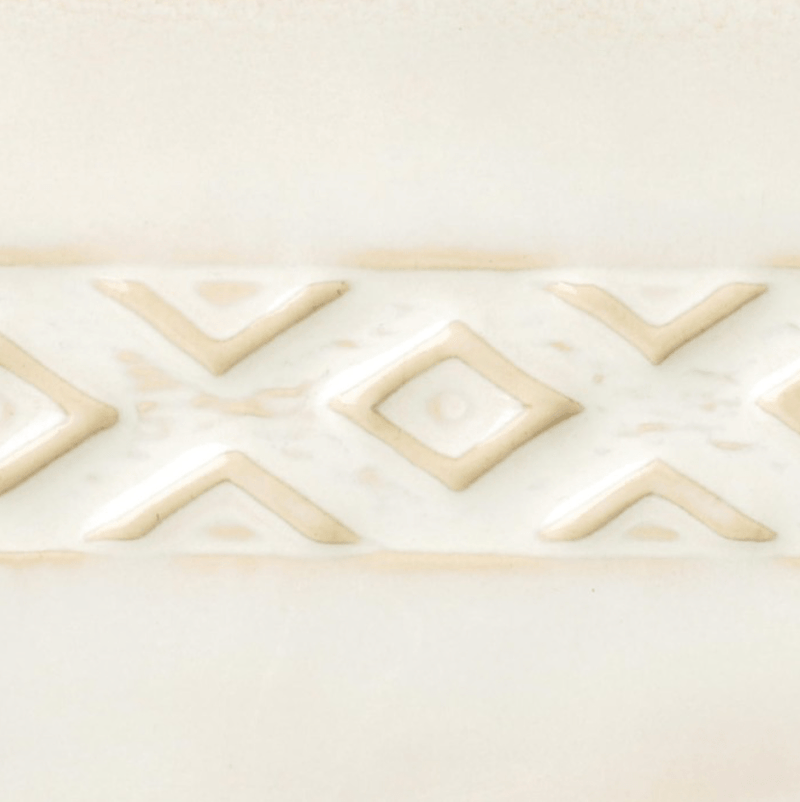
Amaco · Potter’s Choice PC-17
Honey Flux
$26.00
Pint · yours to keep · no up-charge, any membership level
A creamy amber that increases flow when layered over another glaze. Opaque honey and cream at cone 5, and at cone 6 it shifts to a fluid white with honey flecks. It is the bottle to reach for when you want amber tearing through a dark, iron-heavy glaze.
How you get it: show your receipt to one of our main instructors and they’ll grab you your bottle.
- Fires atCone 5 to 6
- SizePint
- Apply3 thick coats
- Food surfacesRated food safe
Using it
Three thick coats, and stop well before the foot.
Honey Flux is not a color you brush on and hope. It is extra melter, and it behaves according to how much of it you put where. Two things decide your result: thickness, and how far down the pot you take it.
Three coats, thick
Amaco is blunt about this one: applied too thin, the surface comes out splotchy and incomplete. Under-applying is how most first attempts fail.
Thin it out as you go down
We recommend going thinner the closer you get to the bottom. The glaze is travelling downward the whole firing, so the bottom of the pot is where it piles up.
Know your cone
At cone 5 this is opaque honey and cream. At cone 6 it becomes a fluid white with honey flecks. Same bottle, one cone apart, two different glazes.
Test each new batch
Amaco recommends firing test tiles before using a new batch number, because raw materials vary between manufacturing runs. Worth knowing when a combination stops behaving the way it used to.
How far down should it go?
This is the decision that costs you time later. The closer to the bottom you take it, the more of it drips into your catcher, which usually means a lot more grinding afterward. It is also, deliberately, where a lot of the beauty comes from.
About a third of the way down
Leaves two thirds of the clay naked. Usually beautiful, and the least grinding of the three. Good on a piece where the clay body is worth showing.
About two thirds of the way down
The other line that tends to look right. More glaze, more movement, a strip of naked clay at the foot, and more drips reaching the catcher.
All the way down
Maximum movement and maximum cleanup. Everything that runs lands in the catcher, and you are grinding the foot afterward. Go in expecting that.
Amaco says the same thing their own way: leave a little room at the foot for the glaze to move.
Six starting points
What to put it with.
Amaco built Honey Flux alongside their own families, so it is happiest over Potter’s Choice, Celadon and the Shinos. All of which are on our wall. These are researched starting points, not tiles fired in our kilns. Test first, then tell us how it went.
Over Temmoku
Flux on top · 3 coatsThe reference combination for this bottle. Amber and cream tear open a near-black iron surface and run in warm rivers wherever the wall goes vertical.
Over Ancient Jasper
Flux on top · 3 coatsJasper already breaks rust and blue over texture. The flux stretches those breaks into long vertical veins with honey pooling at the bottom of each one.
Over Iron Lustre
Flux on top · 3 coatsMetallic bronze-black split by warm amber. One of the most photographed layerings in mid-fire ceramics, and a genuine shelf hazard on a straight-sided pot.
Over Oatmeal
Flux on top · 2 to 3 coatsWarm speckled oatmeal goes glossier and gathers into a honeycomb of pooled amber. The quiet one, and the easiest to put on a mug you actually want to use.
Under Blue Rutile
Flux underneath · 2 coatsUnderneath rather than on top. The rutile blue keeps its own surface but mottles harder and breaks warmer, with far less risk of anything reaching the shelf.
Over Cacao Shino
Flux on top · 2 to 3 coatsAmber over cocoa. The shino stays rustic and dry-looking where it is thin, then turns glassy and golden wherever the flux gathers.
Sixteen more combinations across all four fluxes are on the flux collection page, and every glaze named here is in the Glaze Bible.
Plan it before you brush it
Where it sits, and how much it will run.
Under, over or sandwiched
The dramatic one
The amber melts on top and travels downward, dragging the color underneath with it. This is where the rivulets and pooled edges come from, and it is the reason most people buy this bottle in the first place.
Best over: Temmoku, Iron Lustre, Ancient Jasper, anything dark and iron-heavy.
How much will it run?
High run risk
This is the drippy end of the scale, which is probably why you are here. Assume glaze reaches the foot and plan for it. Keep the bottom third clear.
Glaze catcher required. There is flux on the outside of this piece, so it goes into the kiln on a catcher you supply. No exceptions, at any height.
The one rule
Honey Flux on the outside means a glaze catcher.
Any pottery with Honey Flux applied to the exterior must go into the kiln sitting on a glaze catcher that you supply. Every piece, at any height, no exceptions.
Members are financially responsible for any damage to kiln shelves, and for the wages I pay my studio manager to fix the problem. Just don’t do it. Not to mention, glazes running onto shelves destroy your pot too.
A catcher protects the shelf and the studio. It does not save the pot. Once glaze has run off the foot you have a hard ring of glass on the bottom and a grinder in your future. The further down the pot you took the flux, the more of that there will be.
Before you commit a good pot to it
Where Honey Flux disappoints people.
Thin looks like a mistake
Amaco’s own warning: too thin and the surface reads splotchy and incomplete. This bottle wants three thick coats or none at all.
It wastes itself on pale glazes
Over an already-stable pale satin it mostly reads as murky cream. Honey Flux needs something dark underneath to be worth $26.
Cone 5 and cone 6 are different glazes
Opaque honey and cream at one, fluid white with honey flecks at the other. If your result changed and you did not, check which cone that load ran to.
Batch numbers drift
Amaco recommends test tiles with each new batch number. Raw materials vary between runs, so a combination you nailed last year can shift.
It does not repeat
A combination that worked beautifully once is a lead, not a recipe. Matching a set of flux-layered mugs is a genuinely hard ask.
Rough is not a food surface
Amaco rates it food safe and we are fine with it inside a mug or bowl. But layered glazes sometimes come out rough or pitted, and rough traps food. If it comes out textured, keep that piece decorative.
How it compares to the other three
Honey Flux
$26 · Amaco PC-17
Amber and cream. The one for dark iron glazes, and the only one that changes identity between cone 5 and cone 6.
Light Flux
$22 · Mayco SW-401
Translucent cream and the most neutral of the four. Pick it when the color is already right and you only want movement.
Dark Flux
$22 · Mayco SW-402
Translucent brown. Pick it to add shadow and depth to a pale or mid-tone glaze that currently reads flat.
Running Hot Chowder
$21 · Spectrum 1173
Creamy and glossy, and a complete glaze on its own. Pick it for carved texture, where it floods the cuts and thins on the ridges.