


Laguna Clay · WC436
B-Mix w/Grog Clay
B-Mix with a very fine grog stirred through it, and that one change turns a temperamental clay into the most forgiving bag on the shelf. It is the only B-Mix rated for large work, it is the one we hand you in a raku workshop, and it is the one to learn on.
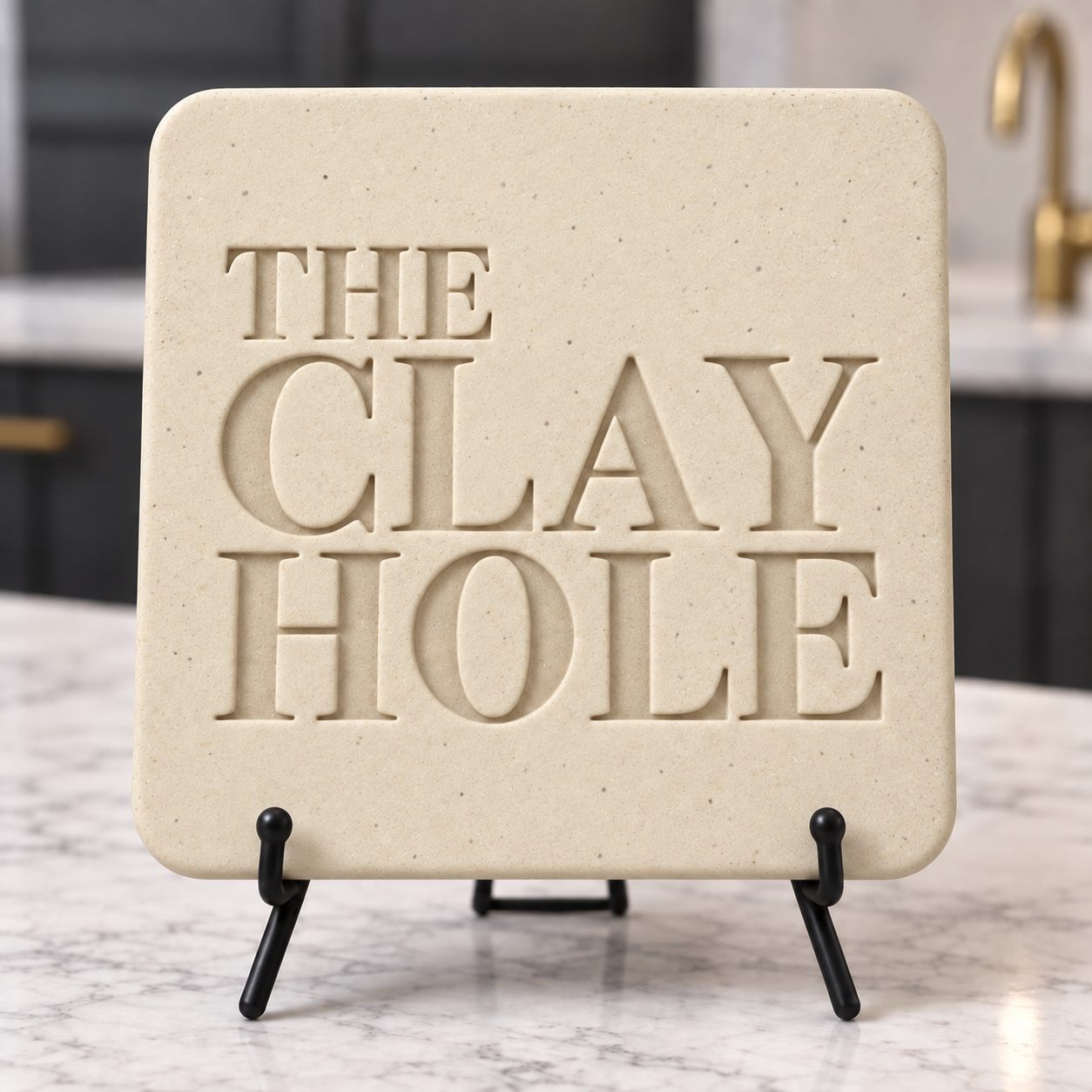
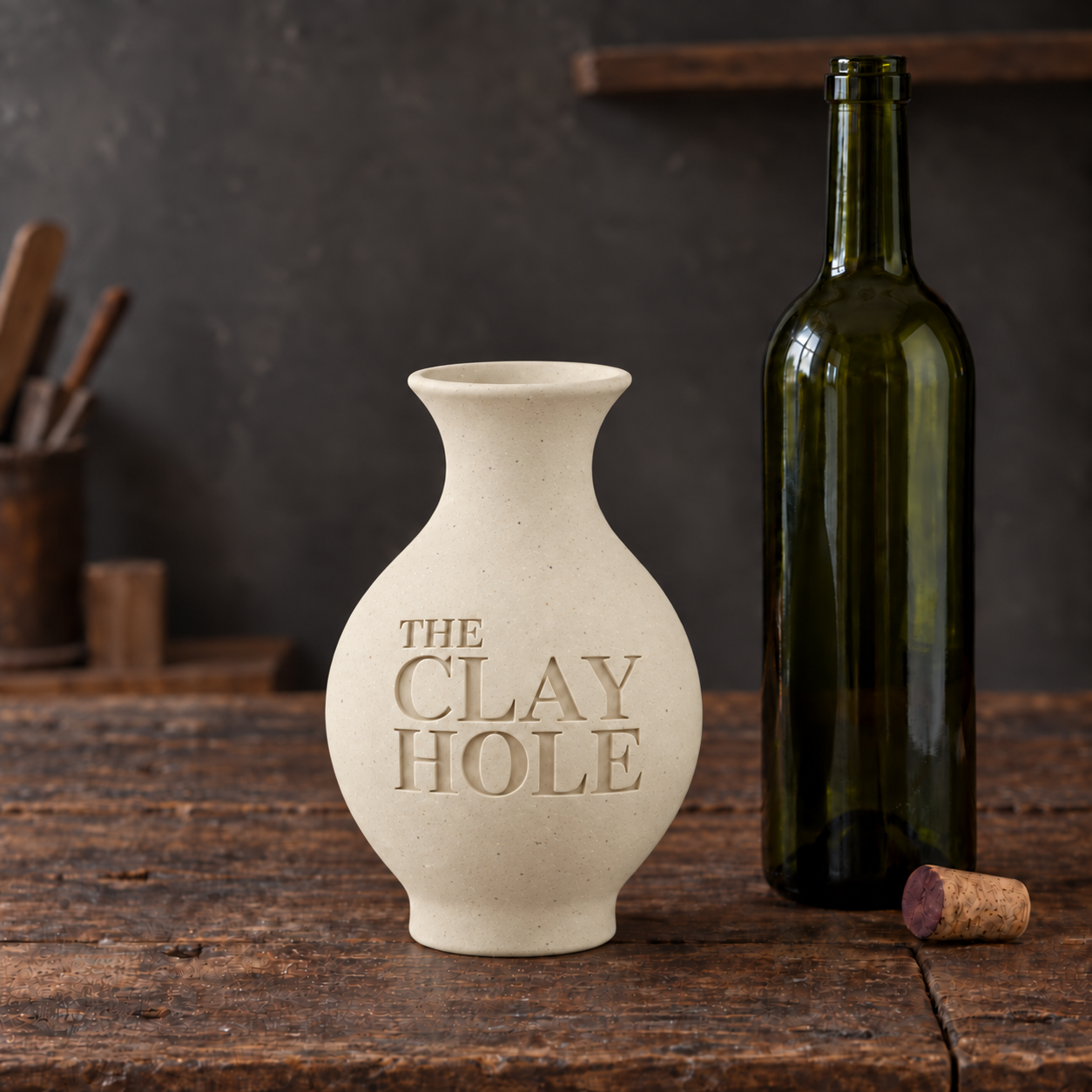
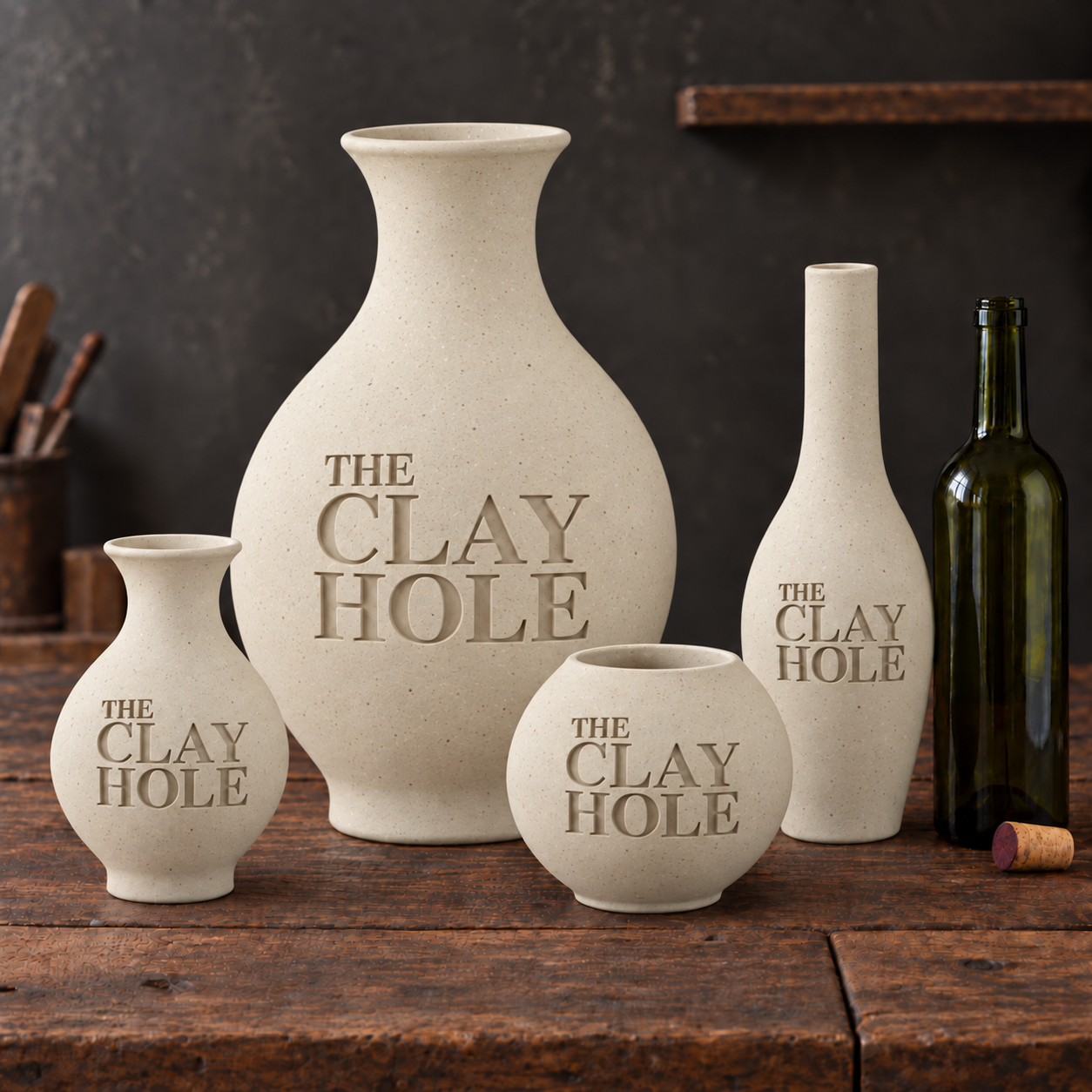
Bare B-Mix w/Grog. Unglazed, it reads closer to stone or plaster than to pottery.
Before you buy it
Is B-Mix w/Grog your clay?
If you are not sure which bag to buy, this is usually the right answer. It is the clay that forgives the most mistakes and rules out the fewest projects.
Buy it if
- You are newer to clay and you want the bag that fights you least.
- You are building something large, tall, or made of several pieces joined together.
- You are signed up for a raku workshop. This is the bag for it.
- You liked B-Mix but you got tired of losing pieces to cracks.
- You want a light fired color without the fragility that usually comes with it.
- You want one bag that can do almost anything you decide to do this month.
Buy something else if
- You want a perfectly glassy, grit-free surface. There is grog in here and your fingers will find it.
- You are carving very fine detail, where the grog blurs an edge that porcelain would hold.
- You want a true white. This one fires off-white with a faint speckle through it.
- You are chasing the absolute best throwing feel in the building. That is plain B-Mix, and it costs $4 more.
- You want warm, earthy, iron-driven glaze results. Speckled Buff and 52 Buff give those more to work with.
- You are making a pile of practice pieces and price is the point. 52 Buff is $4 cheaper again.
What it is best at
Where B-Mix w/Grog earns its keep.
Compare the manufacturer’s own use lists and the story tells itself. Plain B-Mix is rated for small and medium only. This one adds throwing large and hand building large. Same clay family, one has grog, and grog is what makes the difference.
Laguna’s own description is that the grog makes it a more forgiving body. Fewer cracks, less warping, and joins that actually hold. If your last three pieces did not survive, switch to this and see how much of that was you and how much was the clay.
The reason this bag exists on our shelf in the quantity it does. There is a whole section on it below, because the why is genuinely interesting and it changes what you should make.
Rated by Laguna for throwing large and hand building large, which plain B-Mix is not. The grog gives the wall something to stand on, so you can pull taller before it decides to lean.
Handles, spouts, feet, lids, thrown sections stacked into one tall form. Grog lowers the shrinkage to 11% and opens the body, so the two halves of a join pull against each other less as they dry.
Rated for both, and at 2.75% absorption it closes up well in our firings. A touch more open than plain B-Mix, which matters not at all for a mug and slightly for a piece that will sit in water for days.
This is what you trade away. The grog is very fine, so it will not shred your hands the way a coarse raku body would, but a carved line comes off softer here and a rim never gets truly glassy.
The nerdy part
The numbers, and what they actually mean.
These are Laguna’s published figures for WC436. The translation underneath each one is ours.
Straight answers
What is great about it, and what is not.
What it does well
- It forgives you.This is the headline and it is the manufacturer’s own word for it. Less cracking, less warping, pieces that stay attached. If clay has been breaking your heart, this bag will hand a lot of that back.
- It goes big.The only clay in the B-Mix family rated for large throwing and large hand building. When your idea outgrows a mug, this is the bag that comes with you.
- It survives raku.Nothing else on our shelf is built to be yanked out of a kiln glowing and dropped in a can of burning newspaper. Full explanation below.
- The grog is genuinely fine.Grogged clay has a reputation for feeling like sandpaper. This one does not. You get most of the toughness without most of the punishment.
- It still gives you honest glaze color.Off-white is light enough that a celadon still looks like a celadon and a bright stays bright. You are not trading color accuracy for durability.
- It is $4 cheaper than plain B-Mix.The more forgiving clay is also the less expensive one, which almost never happens.
What it does badly
- You can feel the grog.Faintly, but on a rim, under a sponge, and on your fingertips after a long session it is there. If you have thrown plain B-Mix you will notice the difference immediately.
- It does not throw as sweetly as plain B-Mix.That is the trade you are making. What you gain in survival you give up in that specific, spoiling smoothness.
- Fine detail goes soft.Carving, stamps and crisp trimmed feet all read a little blunter than they would on B-Mix or #16 Porcelain. Grog blurs an edge.
- It is not white.Off-white with minimal speckling. Lovely, but if the piece in your head is white, this is not the bag and Half & Half is.
- It is slightly more open than plain B-Mix.2.75% versus 2.3% absorption. Fine for everyday functional work, marginally less tight for anything that sits full of water for days on end.
- Grog wears things down.It is abrasive. It is harder on your ribs, your trimming tools and the skin on your hands than a smooth body is over a long night.
The fire one
Why this is the clay we hand you at a raku workshop.
Raku is the most violent thing anyone does to a piece of pottery on purpose. Most clay does not live through it. This one is on the shelf partly because it does.
What actually happens
The piece is heated to somewhere around 1800 degrees, then pulled straight out of the kiln with tongs while it is still glowing and dropped into a container of burning combustibles. The fire eats the oxygen, pulls it back out of the glaze, and leaves behind metallic lusters, copper flashes and a crackle pattern in the surface. It goes from kiln heat to open air in about two seconds.
Why most clay dies doing it
That temperature drop is called thermal shock. The outside of the wall contracts hard while the inside is still expanded, and the two halves of the same piece tear against each other. A tight, smooth, well-vitrified body has nowhere to put that stress, so it cracks or comes apart. The clay that throws the nicest is usually the clay that survives this the worst.
Why grog lives
Grog is clay that has already been fired, ground up, and mixed back into raw clay. Because it has been through the fire once it does not shrink again, and every particle of it opens up the body and leaves a path for stress to travel. That makes the clay more refractory, which is the technical way of saying it can take a temperature change without tearing itself apart.
What to make if raku is the plan. Simple, seamless, even-walled forms survive best: pinched bowls, small thrown vessels, tea bowls. No thin handles, no delicate spouts, no thick base with thin walls above it. Anything with a seam or a big change in thickness is giving the shock a place to start. Keep it modest in size, and keep the wall the same thickness the whole way around.
And the part nobody tells you first. Raku pieces are decorative, full stop. The process fires low and the glaze comes out deliberately crazed, so the finished piece is porous and comparatively fragile. It is not food safe, it is not watertight, and it does not go in a dishwasher. Some of the metallic effects will also soften over the years. Loss is normal too. Pieces crack in raku, even good ones, even ours. That is part of the deal everyone signs up for, and it is why you bring something you would enjoy making twice.
Glazing it
A light body with a little tooth.
Off-white puts this close to plain B-Mix for color accuracy, and the grog adds something B-Mix cannot give you: micro-texture for a glaze to catch on. Glazes that break over an edge have more to break over here.
What pops on it
What fights it
Satin or glossy?
Satin, slightly more often than not. A body with a faint tooth and a soft off-white color suits a matte or satin surface, and the Mayco Stoneware Matte and Coyote Satin families both look expensive on it.
Gloss is still the right call inside anything you drink from, because it cleans better, and it is the right call when the glaze itself is doing something you want to see clearly. Just know that a thin gloss is the surface most likely to reveal the grog.
Is it beautiful naked?
Yes, and in a different way to the smooth clays. Bare and sanded it goes a soft off-white with a faint speckled grain running through it, closer to a stone or a plaster surface than to a ceramic one. Bare clay is fine to fire here.
It is a very good half-naked clay for exactly that reason: a glazed interior with a raw exterior gives you two genuinely different materials on one piece. Keep the inside of anything holding liquid glazed, since at 2.75% absorption a raw surface is still slightly thirsty.
Combinations worth trying
Where these came from. These pairings come from the glaze makers’ own layering guides and from what potters consistently report on light, lightly grogged bodies. They are not photographs of a shelf of B-Mix w/Grog test tiles from this studio. Fire a test tile before you commit a piece you care about, and go dig through the Glaze Bible and our glaze combination resources while you are at it.
Getting it to the kiln in one piece
The easy one to dry.
Eleven percent shrinkage and an open body means this clay has less distance to travel and more room to travel it in. You still have to do the basics, they are just far less likely to bite you here than on plain B-Mix.
Compress the floor anyway
Grog reduces S-cracks. It does not abolish them. Rib the bottom firmly while the piece is still wet on the wheel, and you can stop thinking about it.
Score and slip properly
Joins are this clay’s big advantage, so use it. Score both faces, slip both faces, press until the seam disappears. Done properly a join in this body is genuinely strong, which is what makes big work possible.
Slow down anything wide and flat
Platters, trays and large slabs still warp if one side dries before the other, whatever is in the clay. Dry flat, dry covered, and flip large slabs partway through.
If you are heading for a raku firing. Even walls matter more than anything else. A piece with a thick base and thin sides is the piece that cracks in the reduction can, because the two thicknesses cool at different rates. Even walls, simple form, no fussy attachments.
Full walkthrough if you want it: how to dry your pottery.
Keeping it alive
B-Mix w/Grog in a desert.
Utah air pulls water out of a bag faster than most people expect. The good news on this one is that grog holds water in the body a little better than a tight smooth clay does, and stiff grogged clay is easier to bring back than stiff B-Mix. It is still not a bag to leave open.
Close the bag the second you are done
Not at the end of class. The second you cut what you need. An open bag in this climate grows a stiff skin within one session, and that skin is what makes the block miserable a week later.
Only cut off what you are using
Every cut face is a fresh surface losing water. Slice one piece, close the bag, leave the rest of the block whole.
Push the air out
Air sealed in the bag is still air drying your clay. Squeeze it flat against the block before you close it.
Use it fast
Clay is happiest going from the shelf to your hands to the kiln without a long stop in the middle. Buy what you will use this month rather than stockpiling.
When it has already gone hard. Beat it. Throw the block down on the ground hard a few times, turning it between throws, or slam wedge it on the table. Grogged clay wakes up more willingly than the smooth bodies do, so this usually works faster than you expect.
If it is past saving on the wheel, do not bin it. Stiff clay is excellent slab mold clay and a mold does not care how hard it is. Never fight hard clay on the wheel. It is bad for your wrists, your hands and your back, and throwing is about touch, not strength.
Plan it before you throw it
The B-Mix w/Grog shrinkage calculator.
This clay shrinks 11% between wet and fired. That is less than plain B-Mix and more than 52 Buff, and on a tall piece it is still most of an inch.
Works for height, width or diameter. Measure the wet piece while it is still on the wheel or the table, before it starts drying.
What a bag actually buys you
Cost per piece.
A bag of clay is 25 pounds. This one sits in the middle of the shelf on price and near the top on what it will let you get away with.
These weights are studio averages for a piece thrown at a normal thickness. Heavy throwers get fewer pieces, and there is no shame in that.
Clay only. Glaze up-charges, kiln firing fees and your membership are separate.
All eight, side by side
How B-Mix w/Grog stacks up.
Prices follow the level you picked in the buy box. Tap any clay to go to its own page.
 52 Buff
 B-Mix w/GrogYou are here
 B-Mix
B-Mix
 B-Mix w/Specks
 Speckled Buff
 Half & Half
 #16 Porcelain
 Berlin Gray
| Clay | Fired color | Texture | Best at | Shrinks | Price |
|---|---|---|---|---|---|
| 52 Buff | Warm buff tan | Slightly coarse | Mugs, bowls, tiles, hand building, slab moldsNo grog, so it slumps and cracks on anything big. | 10% | $28 |
| B-Mix w/GrogYou are here | Off white | Very fine grog | Beginners, joined pieces, bigger forms, and rakuYou can still feel the grog on a smooth rim. | 11% | $32 |
| B-Mix | Cream | Smooth, porcelain-like | Tableware, ovenware, tile, jewelry, a pleasure on the wheelWants slow drying and real compression or it cracks. | 12% | $36 |
| B-Mix w/Specks | Warm white, speckled | Smooth | Everything B-Mix does, with specks coming through the glazeSame crack risk as B-Mix, and the specks will change your glaze. | 12.5% | $36.50 |
| Speckled Buff | Desert tan brown, speckled | Smooth, low grit | Wheel throwing, warm earthy work, a reduction look in an electric kilnThe manganese specks burn through glaze, so pale colors will not stay pale. | 12% | $40 |
| Half & Half | White | Smooth | Large sculpture, multi-section wheel throwing, white functional wareHalf porcelain, so it is less forgiving than it looks. | 12% | $40 |
| #16 Porcelain | Very light gray white | Very smooth | Fine detail, carving, slab forming, true glaze colorThe highest shrinkage on the shelf, and it punishes sloppy compression. | 13.9% | $44.50 |
| Berlin Gray | Cement gray to dark gray | Impalpable grog | Throwing and modeling smooth pieces with fine detailWants to sink back down while you throw big pieces. | 12.4% | $49 |
Berlin Gray comes in a 27 lb vacuum sealed bag. Every other clay here is 25 lb.
After you buy it
How you actually get the bag.
Clay is not sitting out for anyone to grab. Once you have paid for it, a staff member goes and gets it with you, so you always leave with a fresh bag rather than the one that has been open on a shelf.
Buy it here
Pick your level, choose how many bags, and check out. The receipt lands on your phone straight away.
Show the receipt
Pull the receipt up on your phone and show it to any member of our staff. That is the whole check.
They go with you
A staff member walks back with you and hands you a fresh bag of B-Mix w/Grog.
The bag that says yes.
Bigger work, joined work, work that has to survive being pulled out of a kiln on fire. If you cannot decide which clay to buy, buy this one and go find out what you actually want to make.