

 Pottery Date Night
 Bring All Your Friends Free Week
 Give a Month of Pottery
 Private Pottery Parties

 The Welcome Booklet
 Your First Ten Sessions
 The Pottery Process
 Finding the Studio
 Your Classes Never Expire
 The Four Tables
 Who’s Who
 The Rewards Program
 Flux Glazes
 The Calculators
 Kiln Tracker
 Holiday Kiln Deadlines

 Beginner’s Tool Set
 Fingernail Clippers
 Mayco Clay Mender
 Epoxy for Kintsugi
 Applicator Bottles
 Large Bead Rack
 Raku Workshop
 Nighttime Raku
 Horsehair and Feather Raku
 The Clay Hole T-Shirt
 Embroidered Crewneck
 Zip-Up Hoodie
 Pre-Made Bisqueware
 Glaze Catchers
 Kiln Cookies
 Clay Cubby Rental
 The Glaze Bible, Printed
 The Book of Molds, Printed
 Printable Pottery Guides
 Free Printable Trackers
 Gifts for Potters
 Christmas Pottery Ideas
 Mother’s Day Gift Ideas
 Pottery Date Night
 Studio Calendar
 2027 Studio Events
 What Should I Do Today?
 How to Throw on the Pottery Wheel
 How to Make a Pinch Pot
 How to Tap Center a Pot
 The Five Stages of Clay
 Is Pottery Hard to Learn?
 Pottery Wheel Practice Drills
 20 Easy Hand-Building Projects
 Everything That Sounds Wrong
 Why Did My Pottery Do That?
 Glaze Problems, Causes and Fixes
 How to Rescue Pottery at Any Stage
 Reglazing and Refiring

 A Beautiful Piece, Every Time
 Slab Roller Tips
 Any Dish as a Slump Mold
 Slab Roller & Slab Mold Certification
 The Pottery Skill Tree
 Clay & Pottery Calculators
 Pottery Paper Templates
 Logging Your Pottery and Glazes
 The Pottery Dictionary
 The Pottery Cone Chart
 Pottery Myths, Fact-Checked
 Is Handmade Pottery Food Safe?
 Incredible Ceramic Artist Videos
 How Dan Throws Giant Pots
 How to Dry Your Pottery
 The Pottery Wheel Introduction
 Pottery by Zodiac Sign
 Personality and the Pottery Wheel
 Pottery for Engineers
 ADHD, Hyperfocus, and Never Running Out
 Hobbies for Burnout
 Screen-Free Hobbies for Adults
 Every Addiction I Ever Had Lost to Art
 Functional Pottery Is Engineering
 How Do We Compare?
 Pottery Classes by City
 Every Pottery Studio in Utah
 Pottery in Draper
 Featured Members
 The Signature Wall
 Making Friends as an Adult Is Brutal
 The Clay Hole Commandments
 2027 Pottery Contests
 2027 Studio Parties
 Gallery Night

 Scream It Into the Void
 Destroy the Glaze Wall
 Daily Affirmation Cards
 Everything That Can Go Wrong
 Subscribe to Our Newsletters
 Contact The Clay Hole
 Corporate Team Building

 Glaze Combinations
 Glazes We Do Not Carry
 Making Glaze Test Tiles
 The Mega Glaze Tool
 How to Use the Mega Glaze Tool

 Glaze Brushing Techniques
 How to Use Underglaze
 How to Use Dipping Glazes
 The Dipping Glaze Guide

 Making a Glaze Catcher
 Fused or Sharp After Firing
 The Signature Wall
 His Viral Videos
 His Own Ceramics
 Meet Mud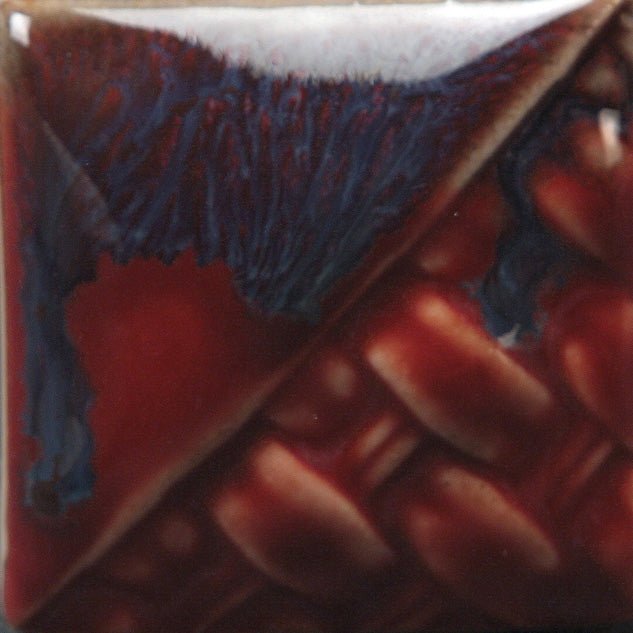
Mayco · Stoneware SW-402
Dark Flux
$22.00
Pint · yours to keep · no up-charge, any membership level
Chemically Light Flux’s twin, visually its opposite. Translucent brown on its own, so everywhere it thins out over a rim or a throwing ring you get a warm dark line, and everywhere it pools you get depth the glaze underneath could never produce alone. This is the bottle for a piece that came out pretty but reads flat.
How you get it: show your receipt to one of our main instructors and they’ll grab you your bottle.
- Fires atCone 5 to 10
- SizePint
- Apply2 to 3 coats
- Food surfacesNon-toxic, dinnerware safe
Using it
Treat it as shadow, not as paint.
Dark Flux is the one bottle here that rewards restraint. It is a translucent brown, so the more of the pot you cover, the closer you get to simply painting the whole thing brown. Used on part of a piece it does something no other glaze on our wall does.
Two to three coats
One coat will change the color of what it touches but barely move it at all. Two to three is where the flowing, pooling behavior you are buying this for actually starts.
Thin it out as you go down
We recommend going thinner the closer you get to the bottom. Mayco says the same thing their way: to prevent run-off, keep flux off the bottom third of the ware.
Partial application is the move
Brushed on the top third of a mug it gives you a warm dark rim fading into clean color. That is a legitimate technique, not a shortcut, and it usually beats covering the whole piece.
Test where it cannot hurt you
Mayco’s own recommendation is to try a new combination inside a piece, or on a cookie. When the people who made it assume you will have a run, believe them.
How far down should it go?
This is the decision that costs you time later. The closer to the bottom you take it, the more of it drips into your catcher, which usually means a lot more grinding afterward. It is also, deliberately, where a lot of the beauty comes from.
About a third of the way down
Leaves two thirds of the clay naked. Usually beautiful, the least grinding of the three, and the sweet spot for this particular bottle.
About two thirds of the way down
The other line that tends to look right. More brown, more movement, a strip of naked clay at the foot, and more drips reaching the catcher.
All the way down
Maximum movement and maximum cleanup, and the highest chance the piece just reads brown. If you go this far, make sure the glaze underneath is pale enough to fight back.
Vertical walls move dramatically more than flat surfaces. The same combination inside a bowl and on the side of a mug is effectively two different experiments.
Six starting points
What to put it with.
Dark Flux wants something pale underneath it. Mayco built the fluxes to layer with their own Stoneware glazes and with Stroke & Coat, but the rule that matters here is contrast. These are researched starting points, not tiles fired in our kilns. Test first, then tell us how it went.
Over Birch
Flux on top · 2 coatsCreamy off-white with warm brown rivulets running through it. This is the fix for a piece that came out pretty but flat, and the most forgiving thing on this list.
Over Vanilla Dip
Flux on top third only · 2 coatsVanilla with a burnt edge. Brushed only on the top third it gives a warm dark rim that fades into clean cream, which suits a mug better than almost anything else here.
Over Alabaster
Flux on top · 2 coatsA pale matte gains a glossy amber-brown wash that settles into every throwing line and every thumbprint. Expect the matte surface to become satin or glossy in the process.
Under Sandstone Shino
Flux underneath · 2 coatsUnderneath a shino, the brown deepens the break so the surface reads older and more weathered without the glaze visibly running anywhere. The safest thing on this page.
Over Seafoam
Flux on top · 2 coatsPale green with brown breaking through it, somewhere between celadon and old bronze. Brown over green is one of the oldest good ideas in ceramics.
Over Micro Pearl
Flux on top · 2 coatsThe dramatic one on this list. A pale pearly Classic is already a lively glaze, so adding brown melter on top gives you bronze streaking and heavy pooling, and a genuine chance of reaching the shelf.
Sixteen more combinations across all four fluxes are on the flux collection page, and every glaze named here is in the Glaze Bible.
Plan it before you brush it
Where it sits, and how much it will run.
Under, over or sandwiched
The dramatic one
The brown melts on top and runs downward. Everywhere it thins over a rim or a throwing ring you get a warm dark line, and everywhere it gathers you get real depth. The pale glaze underneath supplies the contrast that makes all of it visible.
Best over: Birch, Vanilla Dip, Alabaster, pale glazes that currently read flat.
Underneath is the underused option with this bottle. It buys you depth with almost none of the run risk.
How much will it run?
Moderate run risk
Expect real movement and some visible travel down the wall. Thin your coats as you get closer to the bottom.
Glaze catcher required. There is flux on the outside of this piece, so it goes into the kiln on a catcher you supply. No exceptions, at any height.
The one rule
Dark Flux on the outside means a glaze catcher.
Any pottery with Dark Flux applied to the exterior must go into the kiln sitting on a glaze catcher that you supply. Every piece, at any height, no exceptions.
Members are financially responsible for any damage to kiln shelves, and for the wages I pay my studio manager to fix the problem. Just don’t do it. Not to mention, glazes running onto shelves destroy your pot too.
A catcher protects the shelf and the studio. It does not save the pot. Once glaze has run off the foot you have a hard ring of glass on the bottom and a grinder in your future. The further down the pot you took the flux, the more of that there will be.
Before you commit a good pot to it
Where Dark Flux disappoints people.
Over a dark glaze it is wasted
You spent $22 to make something slightly darker. Dark Flux only shows up when there is something pale underneath for it to break against.
It eats bright colors
Oranges, reds and hot pinks go first. If the color is the point of the piece, this bottle is working against you, reach for Light Flux instead.
Flood it and it reads muddy
Covering an entire pot in a translucent brown is not layering, it is painting it brown. This glaze does its best work as an accent on part of a piece.
It turns matte glazes glossy
Same family trait as Light Flux. If you picked a matte for the way it feels in the hand, Dark Flux deletes that decision.
One coat does nothing
A single coat shifts the color and leaves the mobility more or less alone. Two to three is where the behavior starts.
Rough is not a food surface
Mayco rates it non-toxic and dinnerware safe, and we are fine with it inside a mug or bowl. But layered glazes sometimes come out rough or pitted, and rough traps food. If it comes out textured, keep that piece decorative.
How it compares to the other three
Honey Flux
$26 · Amaco PC-17
Amber and cream. The one for dark iron glazes, and the only one that changes identity between cone 5 and cone 6.
Light Flux
$22 · Mayco SW-401
The same chemistry as this bottle, translucent cream instead of brown. Pick it when the color is already right and you only want movement.
Dark Flux
$22 · Mayco SW-402
Translucent brown. Shadow, depth and a warm dark edge on any pale glaze that currently reads flat.
Running Hot Chowder
$21 · Spectrum 1173
Creamy and glossy, and a complete glaze on its own. Pick it for carved texture, where it floods the cuts and thins on the ridges.