

 Pottery Date Night
 Bring All Your Friends Free Week
 Give a Month of Pottery
 Private Pottery Parties


 The Welcome Booklet
 Your First Ten Sessions
 The Pottery Process
 Finding the Studio
 Your Classes Never Expire
 The Four Tables
 Who’s Who
 The Rewards Program

 Flux Glazes
 The Calculators
 Kiln Tracker
 Holiday Kiln Deadlines


 Beginner’s Tool Set
 Fingernail Clippers
 Mayco Clay Mender
 Epoxy for Kintsugi
 Applicator Bottles
 Large Bead Rack

 Raku Workshop
 Nighttime Raku
 Horsehair and Feather Raku

 The Clay Hole T-Shirt
 Embroidered Crewneck
 Zip-Up Hoodie
 Pre-Made Bisqueware
 Glaze Catchers
 Kiln Cookies
 Clay Cubby Rental

 The Glaze Bible, Printed
 The Book of Molds, Printed
 Printable Pottery Guides
 Free Printable Trackers

 Gifts for Potters
 Christmas Pottery Ideas
 Mother’s Day Gift Ideas
 Pottery Date Night

 Studio Calendar
 2027 Studio Events
 What Should I Do Today?

 How to Throw on the Pottery Wheel
 How to Make a Pinch Pot
 How to Tap Center a Pot
 The Five Stages of Clay

 Is Pottery Hard to Learn?
 Pottery Wheel Practice Drills
 20 Easy Hand-Building Projects
 Everything That Sounds Wrong

 Why Did My Pottery Do That?
 Glaze Problems, Causes and Fixes
 How to Rescue Pottery at Any Stage
 Reglazing and Refiring


 A Beautiful Piece, Every Time
 Slab Roller Tips
 Any Dish as a Slump Mold
 Slab Roller & Slab Mold Certification

 All Beginner Level Bundle
 All Intermediate Level Bundle

 The Pottery Skill Tree
 Clay & Pottery Calculators
 Logging Your Pottery and Glazes

 The Pottery Dictionary
 The Pottery Cone Chart
 Pottery Myths, Fact-Checked
 Is Handmade Pottery Food Safe?

 Incredible Ceramic Artist Videos
 How Dan Throws Giant Pots
 How to Dry Your Pottery
 The Pottery Wheel Introduction

 Pottery by Zodiac Sign
 Personality and the Pottery Wheel
 Pottery for Engineers
 ADHD, Hyperfocus, and Never Running Out
 Hobbies for Burnout
 Screen-Free Hobbies for Adults
 Every Addiction I Ever Had Lost to Art
 Functional Pottery Is Engineering

 How Do We Compare?
 Pottery Classes by City
 Every Pottery Studio in Utah
 Pottery in Draper

 Featured Members
 The Signature Wall
 Making Friends as an Adult Is Brutal
 The Clay Hole Commandments

 2027 Pottery Contests
 2027 Studio Parties
 Gallery Night


 Scream It Into the Void
 Destroy the Glaze Wall
 Daily Affirmation Cards
 Everything That Can Go Wrong

 Subscribe to Our Newsletters
 Contact The Clay Hole

 Corporate Team Building


 Glaze Combinations
 Glazes We Do Not Carry
 Making Glaze Test Tiles

 The Mega Glaze Tool
 How to Use the Mega Glaze Tool


 Glaze Brushing Techniques
 How to Use Underglaze
 How to Use Dipping Glazes

 The Dipping Glaze Guide


 Making a Glaze Catcher
 Fused or Sharp After Firing

 The Signature Wall
 My Viral Videos
 My Own Ceramics
 Meet Mud
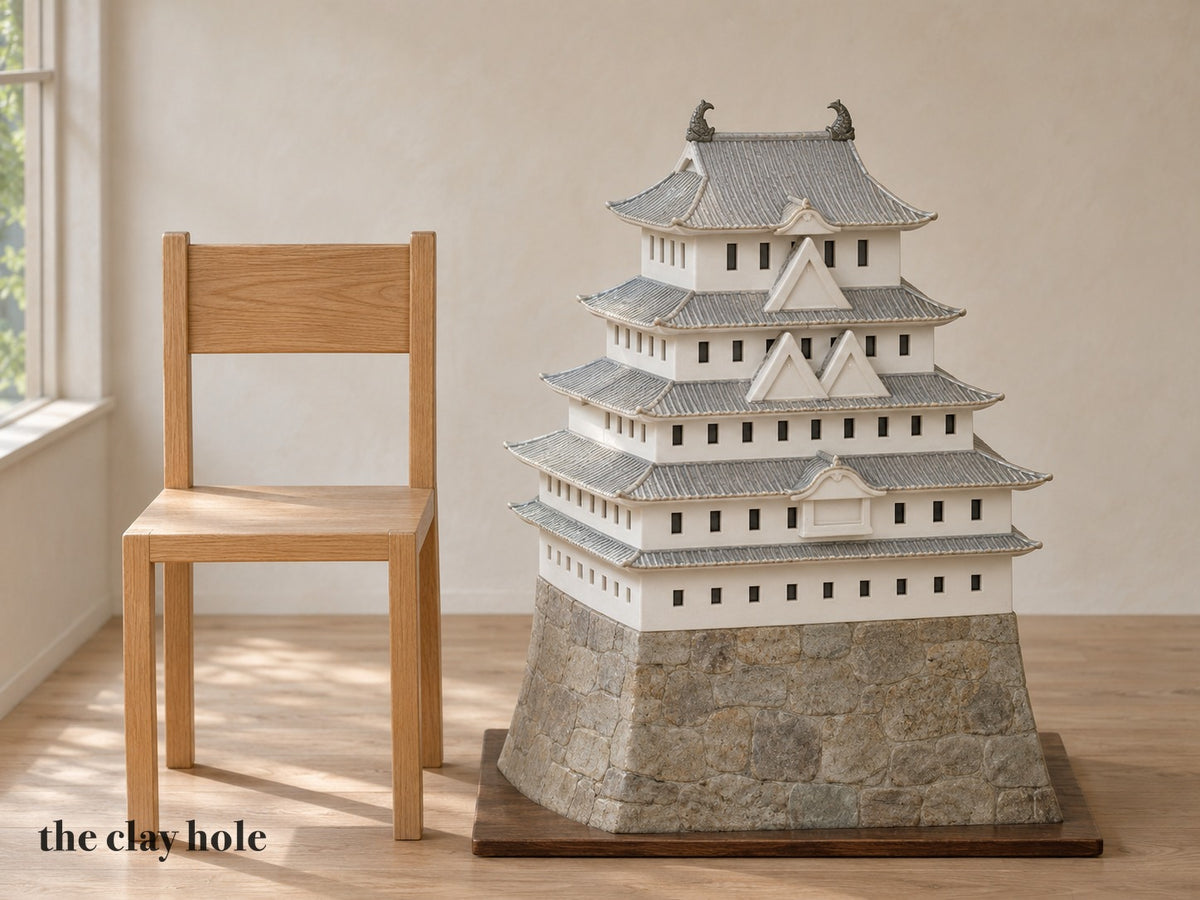
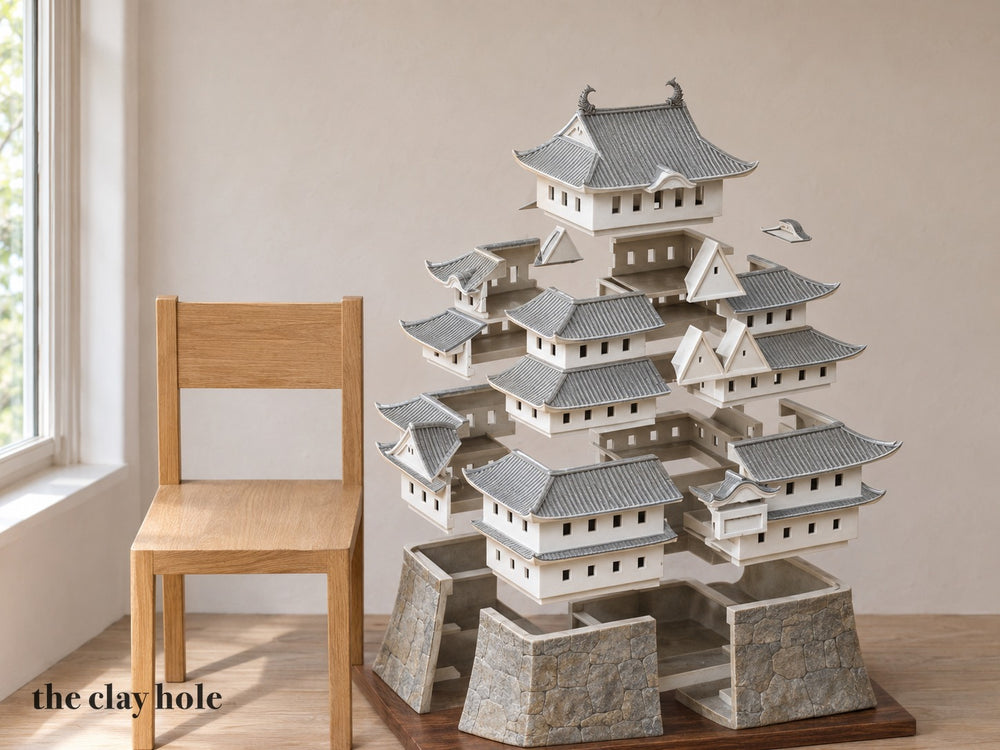
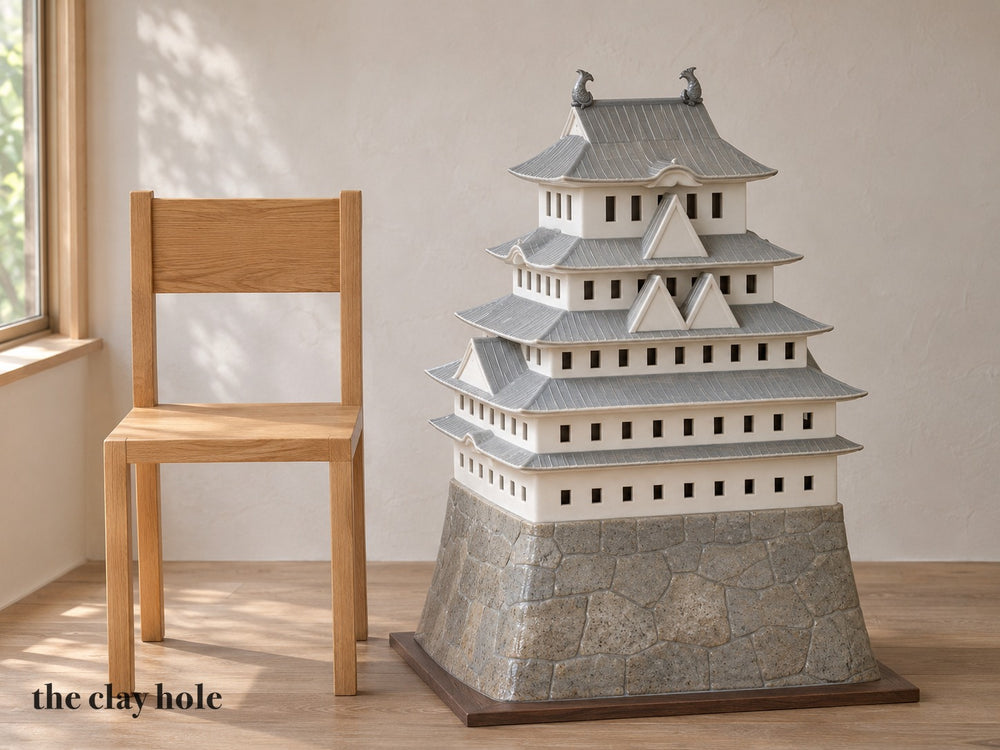
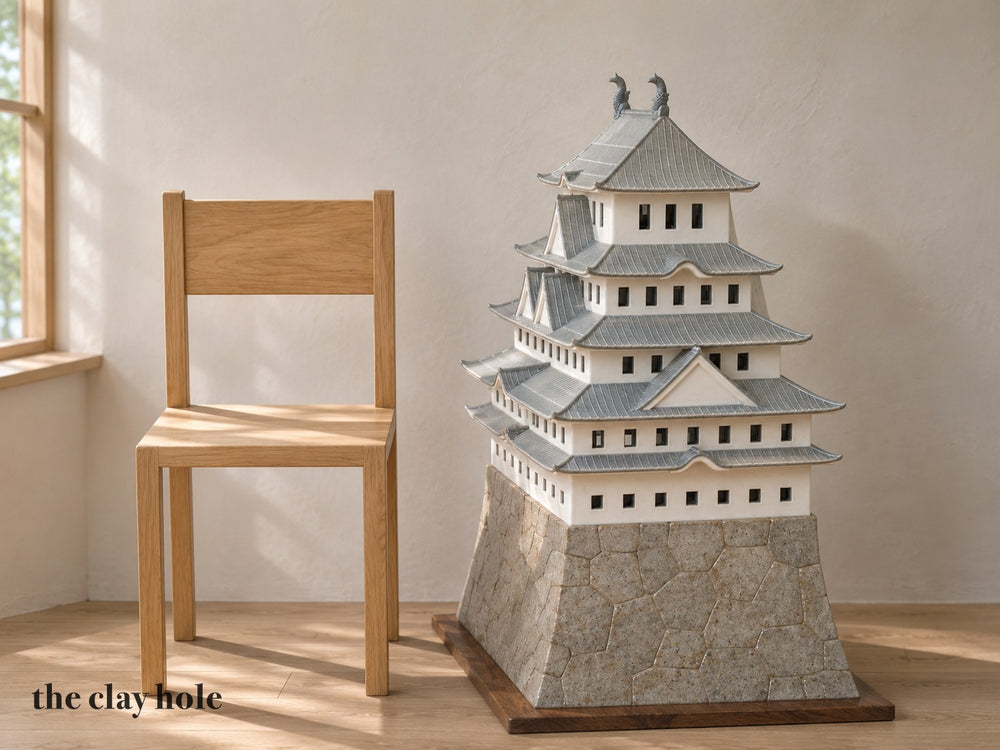
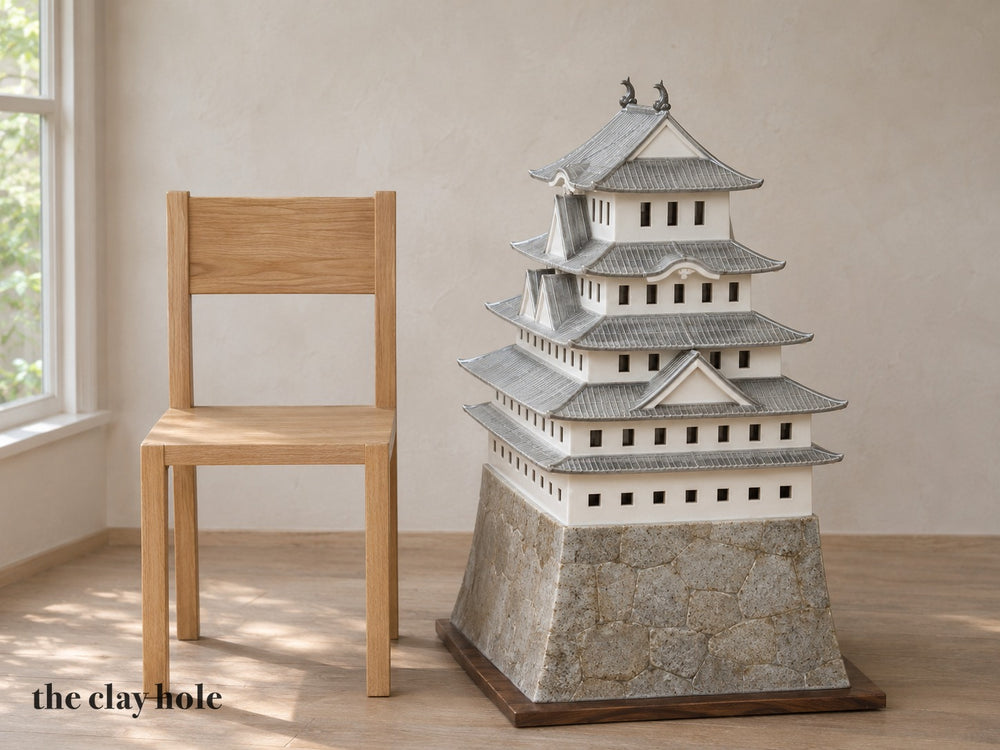
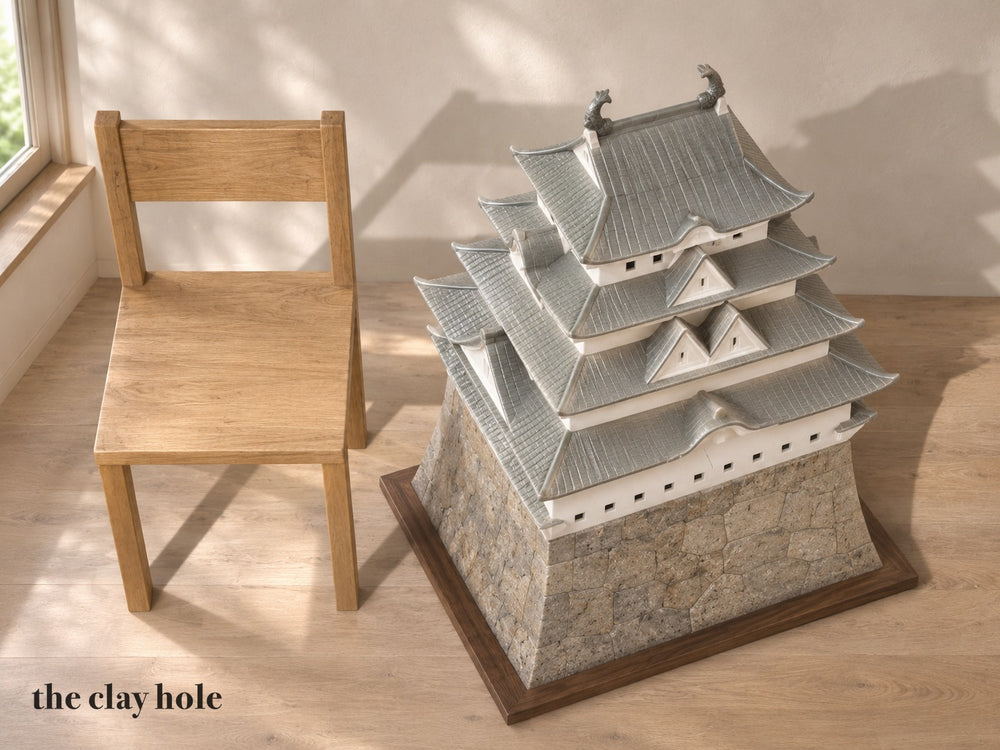
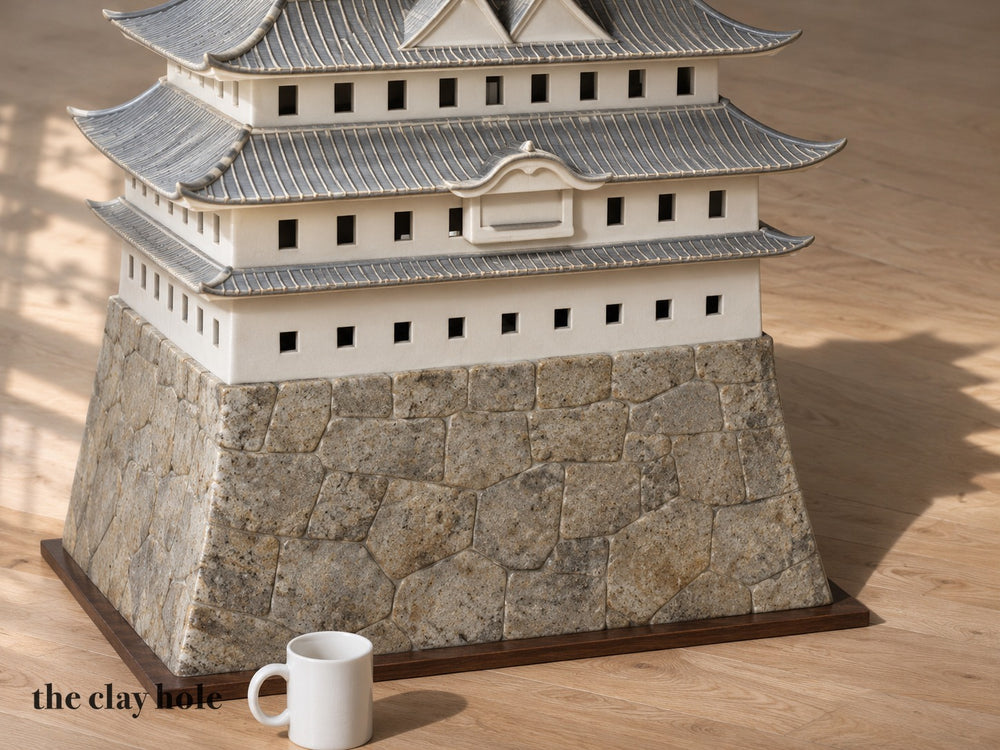
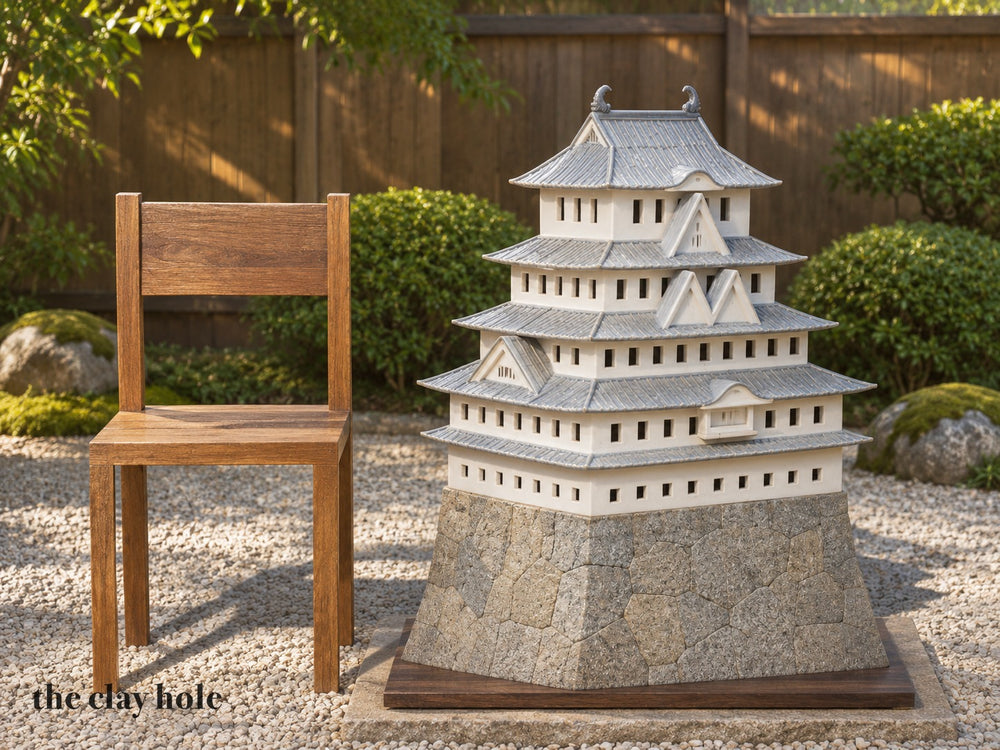
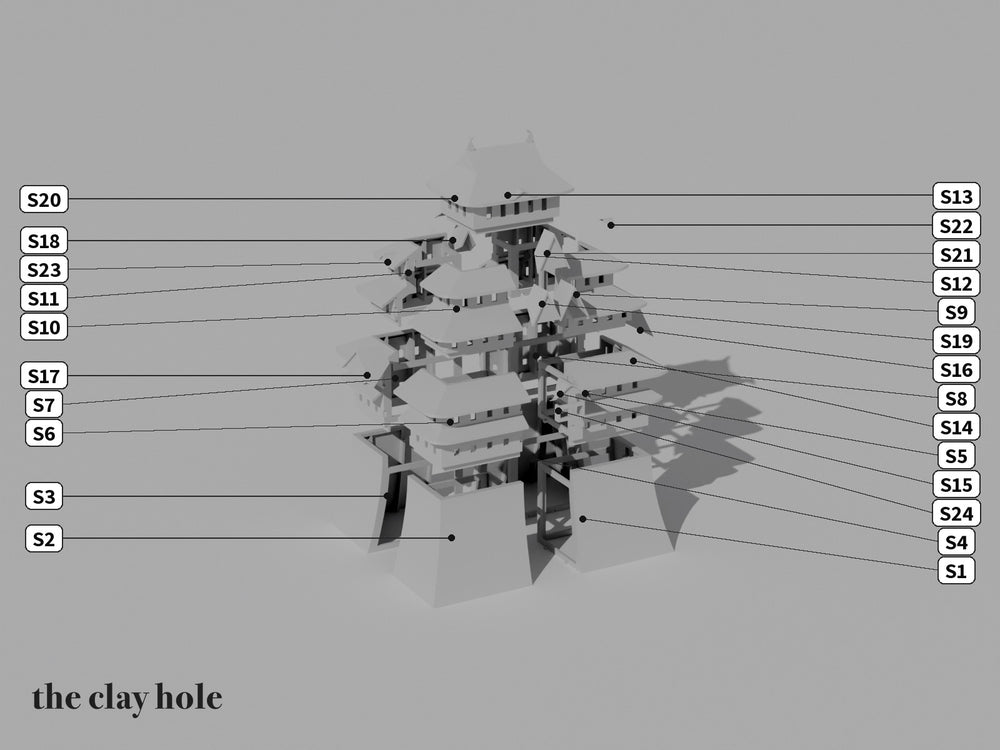
Legendary paper template 267, a world monument
Himeji Castle, Japan Legendary Level slab pottery template
A 42 1/4 in Himeji Castle keep, built in twenty-four slab sections and joined after firing. The main keep on its curved stone base, at 1:45, with five tiled roofs, curved gables and the ridge fish.
Part of World Monuments, the Legendary level, sold on its own and never in a bundle.
- Legendary Level
- 24 sections
- About 140 hours at the table
- About 337 lb of clay
- 260 pages
- Requires extra purchases
You will need epoxy putty and a slow-setting epoxy for the joints, two sheets of 1 in foam board, newspaper for the gable formers, and a flat display board at least 32 x 27 in, bought separately. The guide lists every tool and material.
Kiln: Every section fits a kiln at least 28 in across and 27 in deep inside, such as a Skutt KM-1227.
Buy any three Legendary templates and the fourth is on me. The cheapest of the four comes off at checkout by itself.
Flip through the free sample- Members get five templates free every month, and a Legendary Level template uses five of them. Log in to claim this one.
- Not a member yet: see what a membership includes.
- Delivered as a download link by email the moment the order goes through.
Community Studio License
$975Run a studio the public can join? Print this template for every member at your location, as often as they need it, for good.
Get the license
Himeji Castle, Japan, 42 1/4 in tall to the tips of the ridge fish
Five white roof tiers stepping inward, walls full of small windows, a tall stone base that flares like a fan, curved gables facing out of the roofs and a pair of ridge fish on top. Bare, it reads as Himeji Castle from across the room.
The hard part is the base and the roofs. Every stone face flares like a fan, so each one bends over curved ribs, and every roof hangs out past its wall on brackets. Each level splits into four quarters that are mirrors of each other, so the same few shapes come round again and your hands know the way by the second quarter. Every joint is lettered on both edges, and the gables are small pieces you can build at any time.
The patterns give you the keep as it stands. The tile rows on the roofs, the scales on the ridge fish, the lattices in the windows and the rough stone of the base are yours to press, carve or sprig. It already reads as Himeji Castle without them.
sections that each fit a kiln, joined for good at the end
Every section fits a kiln at least 28 in across and 27 in deep inside, such as a Skutt KM-1227. Each section dries, bisques and glazes on its own, then the joints close with epoxy putty once the last firing is done.
The sections
| Section | What it is | Wet, across x tall | Wet weight |
|---|---|---|---|
| S1 | Stone base, southeast quarter | 22.4 x 15.1 in | About 14 lb |
| S2 | Stone base, southwest quarter | 22.0 x 15.1 in | About 14 lb |
| S3 | Stone base, northwest quarter | 22.1 x 15.1 in | About 14 lb |
| S4 | Stone base, northeast quarter | 21.8 x 15.1 in | About 14 lb |
| S5 | 1st and 2nd storeys, southeast | 21.4 x 12.5 in | About 15 lb |
| S6 | 1st and 2nd storeys, southwest | 21.1 x 12.5 in | About 15 lb |
| S7 | 1st and 2nd storeys, northwest | 21.1 x 12.5 in | About 15 lb |
| S8 | 1st and 2nd storeys, northeast | 20.8 x 12.5 in | About 15 lb |
| S9 | 3rd to 5th storeys, southeast | 18.1 x 11.6 in | About 11 lb |
| S10 | 3rd to 5th storeys, southwest | 17.7 x 11.6 in | About 11 lb |
| S11 | 3rd to 5th storeys, northwest | 17.8 x 11.6 in | About 11 lb |
| S12 | 3rd to 5th storeys, northeast | 17.5 x 11.6 in | About 11 lb |
| S13 | Top storey, top roof and ridge fish | 23.4 x 13.1 in | About 20 lb |
| S14 | Curved gable on the first roof, east | 6.6 x 1.5 in | About 0 lb |
| S15 | Curved gable on the second roof, south | 9.1 x 2.0 in | About 0 lb |
| S16 | Big gable on the second roof, east | 13.1 x 4.1 in | About 1 lb |
| S17 | Big gable on the second roof, west | 13.1 x 4.1 in | About 1 lb |
| S18 | Pair of gables on the third roof, north | 11.9 x 4.4 in | About 1 lb |
| S19 | Pair of gables on the third roof, south | 11.9 x 4.4 in | About 1 lb |
| S20 | Gable on the fourth roof, north | 8.9 x 4.6 in | About 1 lb |
| S21 | Gable on the fourth roof, south | 8.9 x 4.6 in | About 1 lb |
| S22 | Curved gable on the fourth roof, east | 6.4 x 1.4 in | About 0 lb |
| S23 | Curved gable on the fourth roof, west | 6.4 x 1.4 in | About 0 lb |
| S24 | Bay window under the south curved gable | 6.2 x 1.4 in | About 0 lb |
Sizes include each section's shrink slab, the clay disc it fires on. Fired, everything comes out about 12 percent smaller.

A 46 page guide and every pattern piece, 260 pages in one PDF
- The guide: tools and materials, clay, building every section step by step, keeping clay workable for weeks, drying in a dry, average or humid room, joints, firing, glazing, assembly, and what to do when something goes wrong
- Every one of the 402 pieces, cut from 156 patterns, on 214 Letter pages. The big ones print as tiles with overlap strips, tape lines, matching marks and a tile map
- A private link to the same patterns on 14 large sheets, 24 x 36 in, for a copy shop, with every piece whole. It is the easier way to print
- A 4 in check bar on every Letter page and a 10 in bar on every large sheet, so you prove the print before you cut
- A numbered section map, a checklist for every section, every joint lettered on both of its edges, and a page of ideas for your own carving

Want to see how it reads before you commit to a month of evenings? The free sample has the contents, the first pages of the guide and a pattern page.
Flip through the free sampleThe final lap is yours
I drew these so the fiddly part is already solved. The seams line up, the lid fits, and the piece comes out the size the template says. That’s my part. Everything after the last seam belongs to you.
Press a texture into the slab before you cut it. Carve or pierce it at leather hard. Give it feet, a knob or a handle I never drew. Glaze it in something I would never pick in a million years. Two people can build the same template side by side and walk away with pieces that look nothing alike, and that’s exactly how it should go.
- Texture the slab first
- Carve, pierce or stamp
- Add feet, knobs or handles
- Sprigs and slip trailing
- Glaze it your way
One thing to keep in mind: leave the bones alone. Thinning a wall that carries weight, cutting through a seam or piling extra clay on a lid changes how the piece holds together in the kiln. Decorate the skin as much as you like.
And if you'd rather the whole piece be yours from the first seam, I'll design a custom template around your idea.
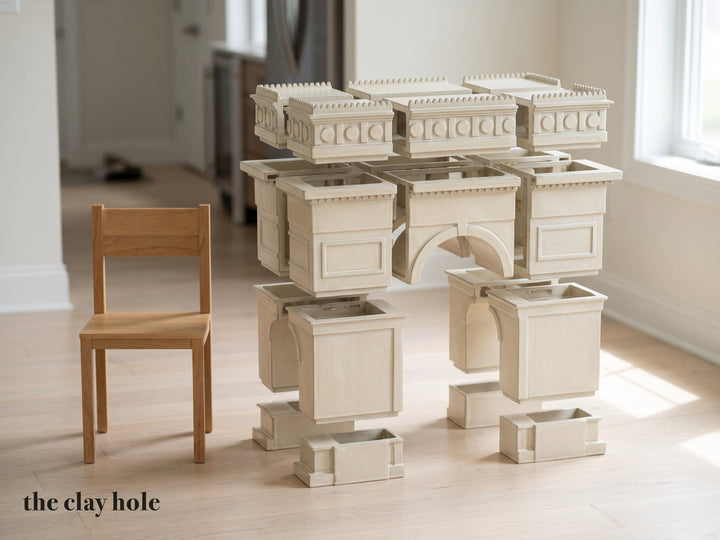
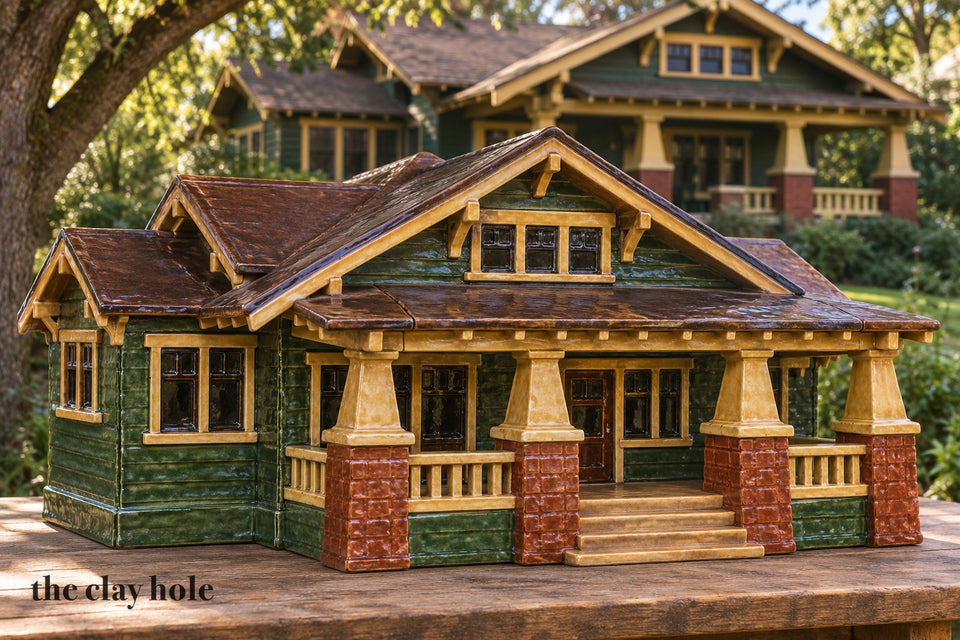
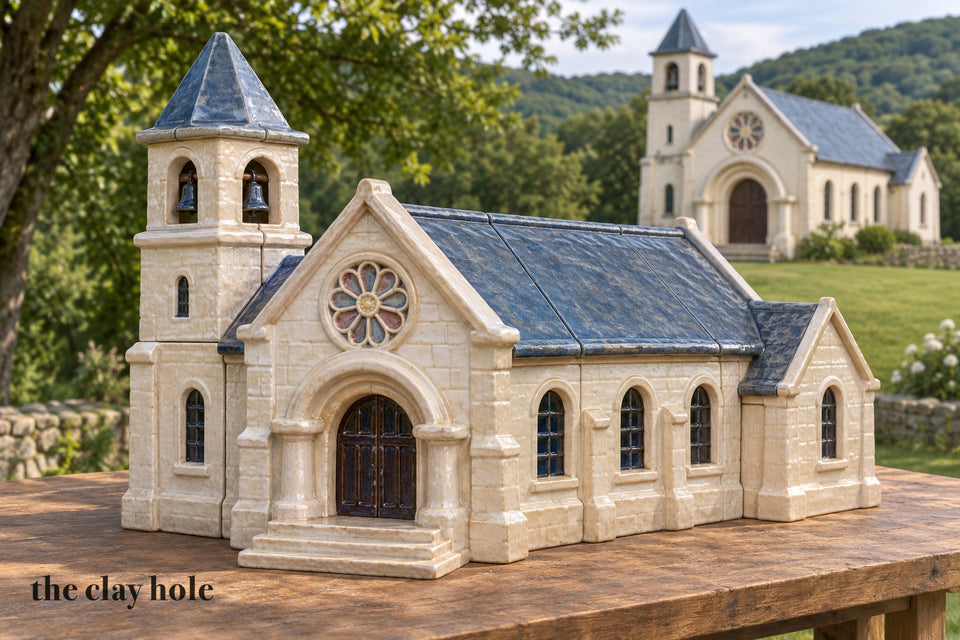
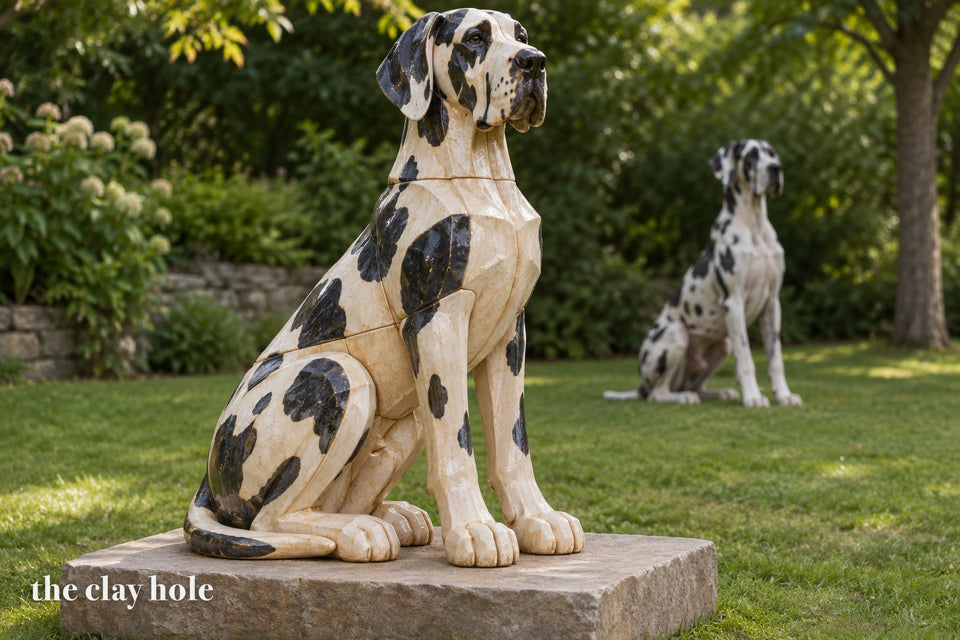
The other Legendary templates, and the Insane Level builds
Pieces with dozens of numbered parts that fire whole in one kiln. Or see every template by level.
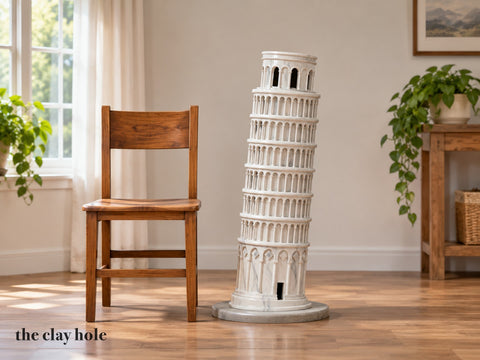
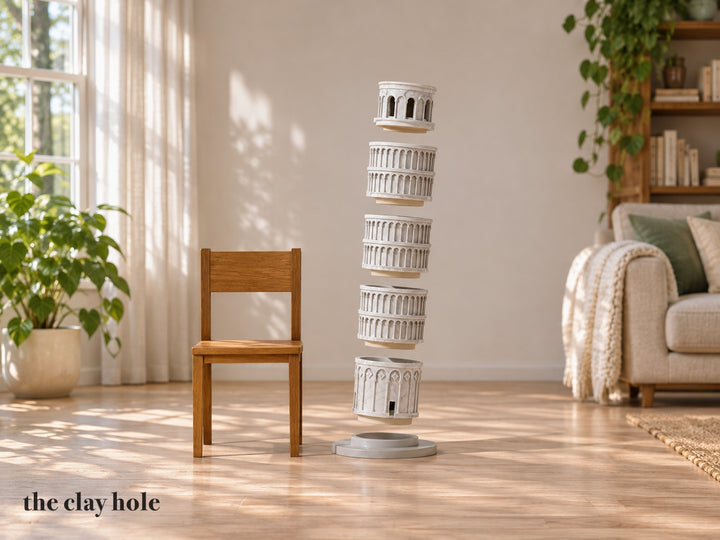
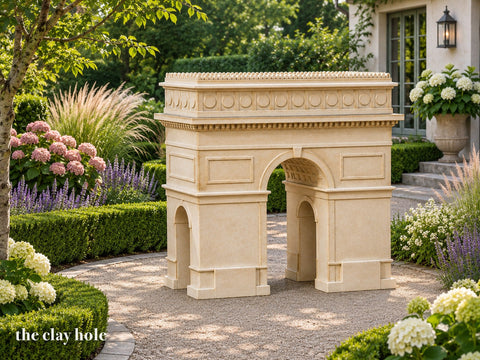


The ones that come up
What size kiln do I need
Every section fits a kiln at least 28 in across and 27 in deep inside, such as a Skutt KM-1227. That is measured with room to spare from the walls and the lid, at the wet size, which is the biggest a section ever is. A smaller kiln will not take the widest sections.
Which clay
One grogged stoneware that fires between cone 5 and cone 6, the same clay for every section, shrink slab and prop, so everything shrinks together. You need about 337 lb, which is 14 bags of 25 lb, spare clay included.
How do I cut the bevels
Every hatched edge is a bevel, and the pattern or the step gives its angle. Lean the knife to that angle and cut in one pass with the pattern still on. It is easier to see than to read, so I made a short video: How Bevels Work (2:42).
How do I print the big patterns
Take the large-format link from the guide to a copy shop and ask for 14 sheets at 24 x 36 in, printed at 100 percent. Or print the 214 Letter pages at home and tape the tiles together; the marks line up and a check bar on every page proves the size.
Do I need a membership to buy this
No. It is $325 for anyone. Current members can claim it free, and a Legendary Level template uses five of the month’s free picks.
Is it part of a bundle
No. Legendary templates are sold on their own. The one exception is The Matterhorn, which is in The Epic Mountains Bundle.
Can I sell what I make from it
Yes. What you make is yours to keep, give or sell. The pattern file is for your own use and is not to be shared.
A whole month of free picks, spent on one castle
Current members of The Clay Hole pick five templates free every month, and a Legendary Level template takes five of them. If you build it, bring it in. I would love to see it standing.